

Your AI-built app works in a demo, but can you trust it to move money, handle patient information, or stay online when customers need it? Vibe coding limitations become harder to ignore when a mistake could hurt someone, expose private data, or interrupt a service people depend on.
A working screen doesn't prove that the software handles failures correctly or restricts access to the right users. Those questions need deliberate testing and someone who understands the code well enough to take responsibility for it. AI can still help with the work; it doesn't remove that responsibility.
Knowing where to draw the line will help you decide whether your project can remain a quick prototype, needs human engineering oversight, or should stop until the risks are addressed.
Identify when vibe coding stops being enough
Avoid relying on vibe coding when errors could harm people, move money incorrectly, expose sensitive information, or disrupt essential operations. A payment workflow that succeeds once might still charge twice after a retry. A medical tool that produces a plausible answer might mishandle missing patient data.
Vibe coding means building primarily through natural-language prompts and accepting generated code without fully understanding its implementation. That differs from engineers using AI while deliberately reviewing code, testing failure cases, and checking how the system behaves beyond the happy path.
The important vibe coding limitations come from missing verification, not simply from using AI-generated code. A working demo shows that one path works under particular conditions. It does not establish production readiness, including whether access controls hold or whether recovery works after a failure.
For a broader comparison, read "Vibe Coding vs Traditional Programming" on Informer Tech. The choice depends on whether someone can verify the software before people rely on it.
Fintech software that moves or accounts for money
A payment demo can succeed while the underlying system mishandles duplicate requests, partial failures, rounding, reconciliation, or transactions that arrive out of order. A retry might charge a customer twice; a lending calculation could apply the wrong interest or payment order; a financial ledger might show a balance that does not match account activity.
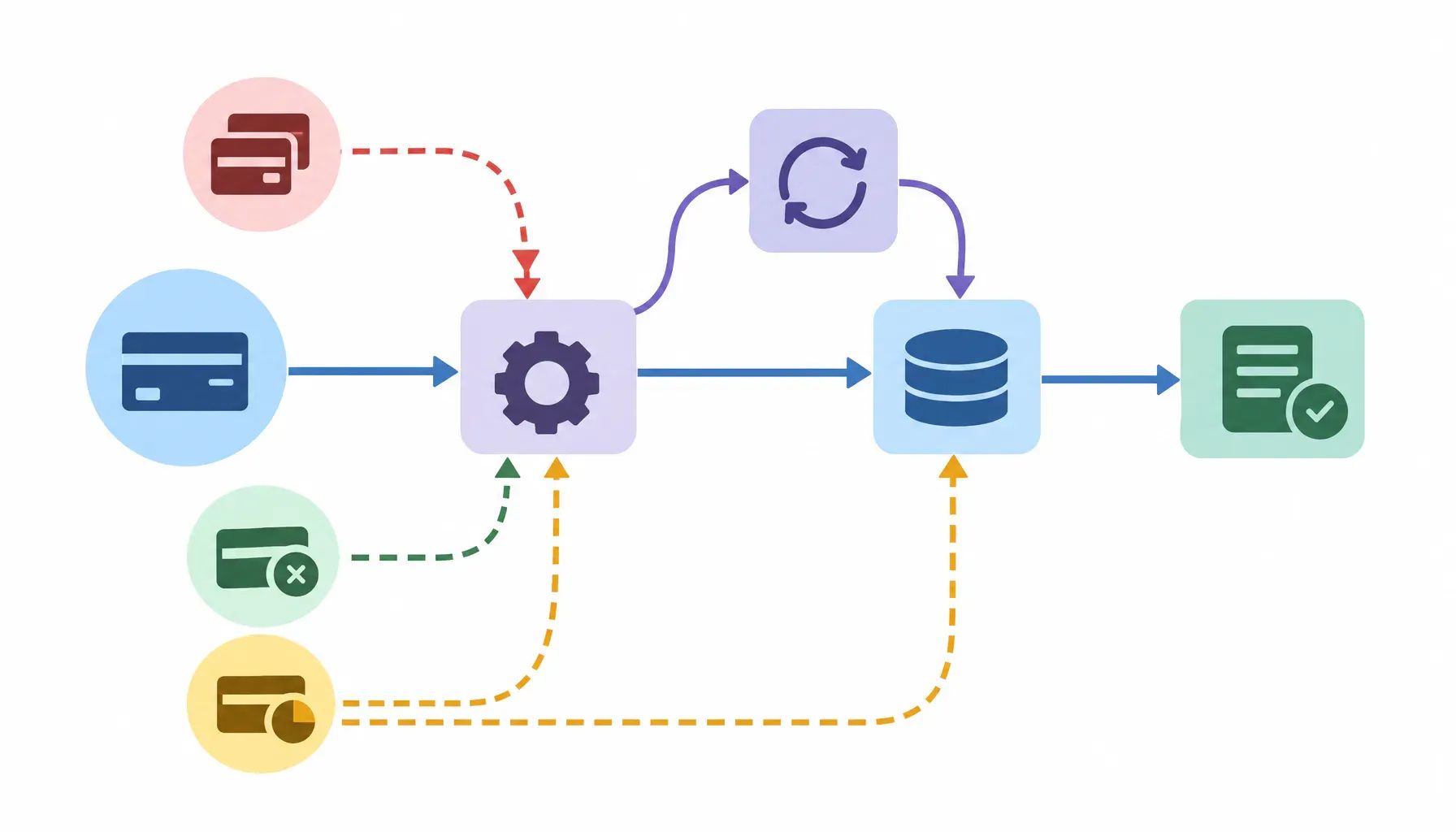
Before launch, the team needs explicit financial rules, safeguards that prevent unsafe repeats or invalid state changes, and tests for failure conditions rather than only successful flows. Independent code review matters, as do durable records that show what happened, when, and why, so someone can investigate discrepancies. Requirements vary by product because regulatory obligations depend on the service and its role.
AI can help build a prototype with simulated transactions and synthetic data. It should not own the design or approval of software that handles real money. Qualified engineers and appropriate finance or compliance owners must review the rules, controls, and operational records before release.
Medical software that influences patient care
A scheduling prototype can help test workflow, but software that recommends treatment, calculates a dose, or influences a clinical decision needs real engineering. A polished interface and plausible answer do not prove clinical correctness. A model might apply milligrams as grams, omit kidney function from a dosing decision, or produce a confident recommendation when the patient's history or lab data is missing. The system also needs a defined response to uncertain, conflicting, or incomplete inputs, rather than silently filling gaps.
Build from documented requirements with relevant clinical expertise, then validate the software against its intended use and realistic input conditions. Every change needs a controlled review process, with traceability for what changed, who approved it, and what testing supports release.
In the US, regulatory obligations depend on the software's function and intended use. FDA guidance distinguishes lower-risk health software from software that may meet the agency's definition of a medical device. Do not assume every health app is regulated or that none are. Check current FDA guidance before deployment.
Control software that can cause physical harm
Vibe coding limitations matter when software controls industrial machinery, robots, vehicles, or other physical equipment. A routine functional test might confirm that a robotic arm moves when commanded, but it may not reveal what happens when a position sensor fails, a signal arrives late, or two systems enter an unexpected state. Those faults can send the arm into a person, damage a machine, or prevent an emergency stop from working as intended.
Before deployment, engineers need a hazard analysis that identifies possible injuries and equipment damage. They must define safe failure behavior, such as stopping motion when sensor data conflicts, then test those responses under abnormal conditions. Specialists familiar with the equipment should review the design, controls, and safety mechanisms.
Generated code can be useful in a simulation or isolated experiment, where failures cannot affect people or production hardware. It should not be connected directly to operational machinery without this engineering process, independent review, and equipment-specific testing.
Systems that manage sensitive data and user permissions
A working sign-in screen does not prove that authorization works. An application might correctly identify a customer, then still allow that customer to view another customer's records by changing an ID in the URL. This can happen when access rules are implied in scattered code instead of defined and enforced centrally.
Require engineering oversight when an application stores confidential records or separates access across customers, teams, or organizations. The team should document which roles can read, create, edit, or delete each type of record. It should also test forbidden actions, including attempts to access another customer's data, use an expired session, or bypass an organization boundary. Engineers need to review how data is stored, logged, transmitted, and removed, then prepare an incident response plan before launch.
Use synthetic data during prototyping. Real records can expose people and organizations before the application's controls have been tested. See Vibe Coding Security Risks and What Can Go Wrong for specific vulnerabilities and defensive practices, but treat those safeguards as engineering work, not prompts to add after deployment.
Large-scale services with uptime commitments
A local demo can work while a customer-facing platform fails under concurrent requests, slow dependencies, retries, or a partial outage. Slow payment, database, or cloud services can hold connections open, while automatic retries multiply the load. When one component fails but others remain available, the resulting errors may be difficult to reproduce locally.
The concern is operational complexity, not a specific user-count threshold. A cloud service used by a small business may need the same discipline as a larger platform if customers depend on it continuously. Before shipping, teams need load tests, monitoring that tracks failed requests, latency, and saturation, controlled releases, and a rollback procedure. Teams also need clear responsibility when something breaks.
Maintenance matters too. Someone must understand the architecture well enough to trace failures across services, assess changes, and fix problems without creating new risks. AI-generated code may scale, but it still needs engineering ownership.
Decide whether to prototype, add engineering oversight, or stop
Before using vibe coding, rate the project on five questions: Could a bug cause physical, financial, legal, or personal harm? Will it handle sensitive data? Can mistakes be undone? Are you promising uptime or support? Can a qualified person explain and maintain the code? A payment flow or medical record raises the stakes immediately. Any high-risk answer calls for engineering oversight, not blind trust.
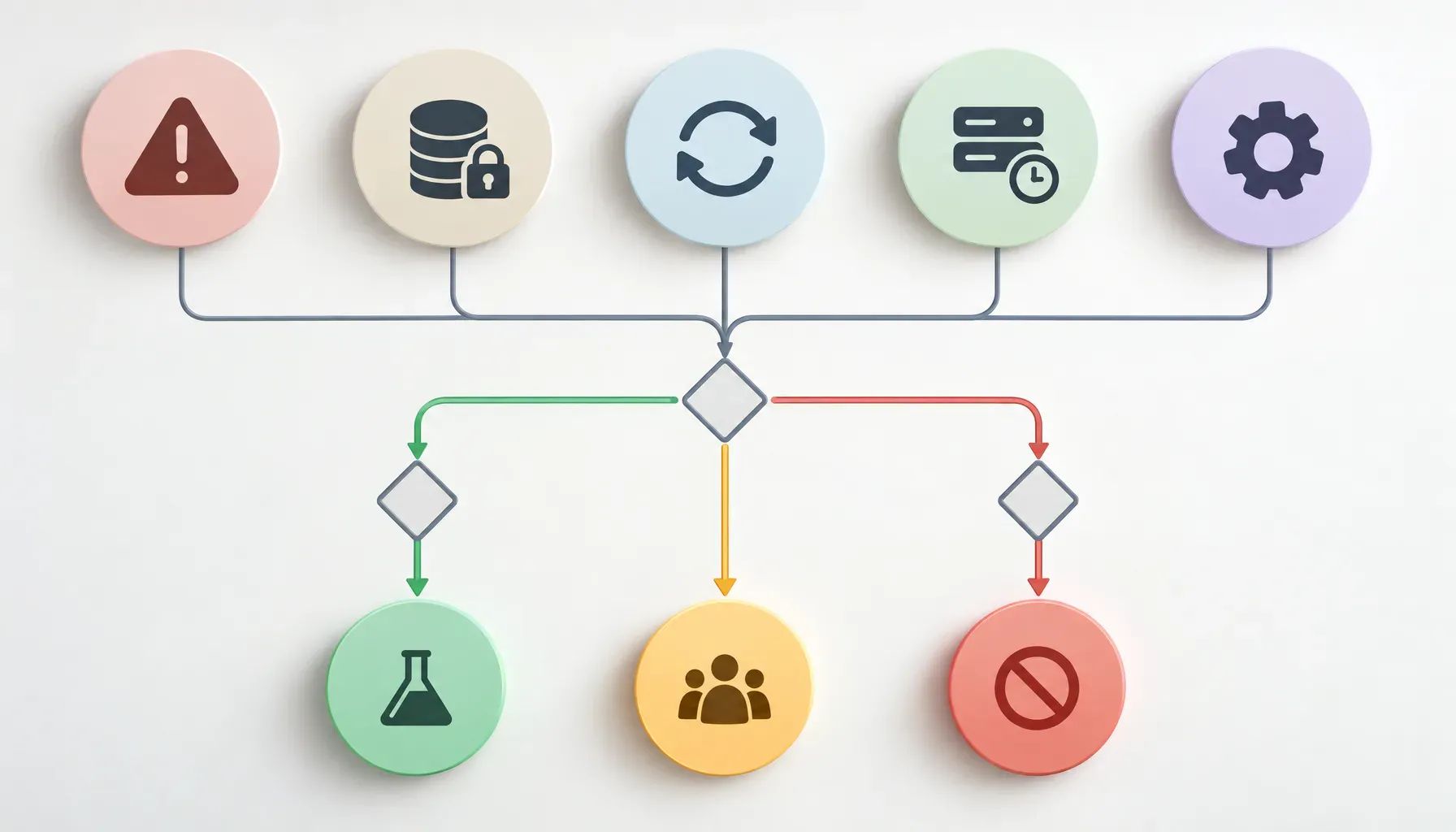
A disposable prototype can be reasonable when the experiment is tightly bounded, uses synthetic data, has limited exposure, and produces mistakes you can reverse. Keep it separate from production systems and treat its output as a draft.
Before production, document requirements, assign an accountable technical owner, review the implementation, test failure cases, and define deployment, monitoring, rollback, and recovery procedures. Pause if consequential failures are possible and nobody qualified can validate the system. Hiring an engineer alone does not guarantee reliability; review and operating practices do. For the employment question, see Will Vibe Coding Replace Programmers?.
Frequently asked questions
Can a professional developer safely use vibe coding in a regulated project?
Yes, but only as a limited development aid under close engineering oversight. A developer can use it to explore ideas, draft low-risk code, or build test scaffolding. Production code still needs requirements review, security checks, testing, documentation, traceability, and approval processes that match the project's regulatory and safety obligations.
Is vibe coding suitable for internal business tools?
It can be suitable for small, low-risk internal tools when the data is not highly sensitive and a clear owner can maintain the result. Set boundaries before building: limit permissions, test important workflows, document dependencies, and decide who fixes failures. Do not assume an internal audience makes security, privacy, or reliability requirements disappear.
What should replace vibe coding when a project is high risk?
Use a conventional engineering process with defined requirements, design review, version control, automated testing, security assessment, and staged deployment. AI tools can still assist with research, code drafts, tests, and documentation, but experienced engineers should make design decisions, review changes, and remain accountable for the system in production.
How much engineering oversight does an AI-built application need?
The required oversight depends on the consequences of failure. A disposable prototype may need a basic review, while software that handles money, patient information, physical controls, or production traffic needs formal ownership and deeper checks. At minimum, someone qualified should review the architecture, dependencies, access controls, tests, and deployment process.
Can vibe coding produce production-ready software?
It can contribute to production software, but generated code is not production ready simply because it runs in a demonstration. The team must verify behavior under expected load, inspect security and permissions, handle failures, document the system, and establish monitoring and maintenance responsibilities. For high-consequence systems, those checks are part of the engineering work, not optional cleanup.


