
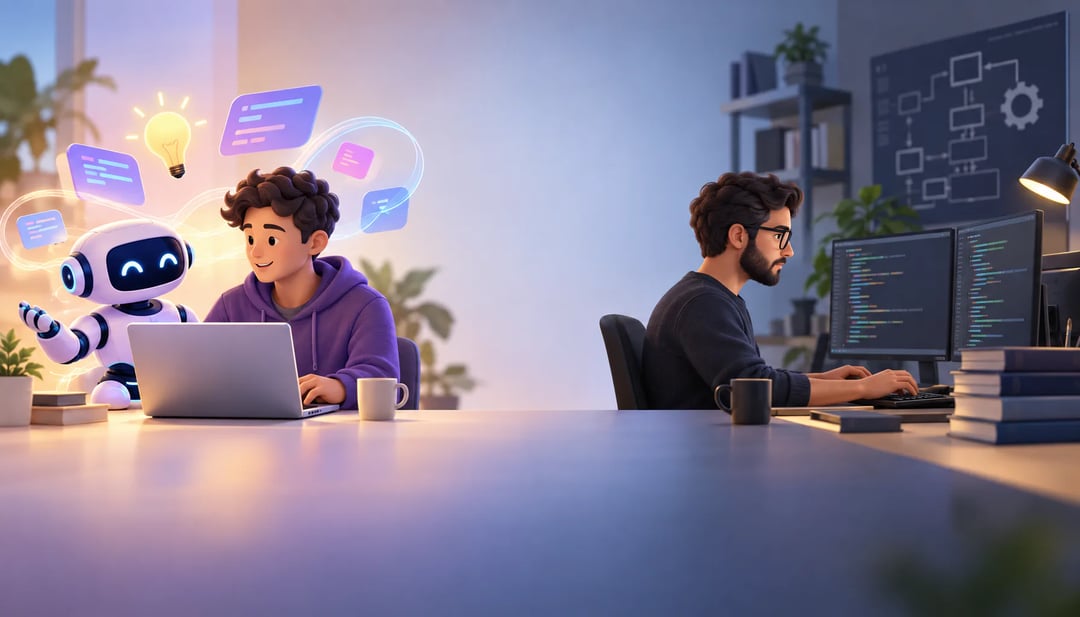
Choosing between Vibe Coding vs Traditional Programming can affect how quickly you build a project, how much control you retain, and how confidently you can maintain the finished software. AI-assisted coding may help you turn an idea into working code quickly, but speed does not guarantee reliable results or make complex projects easier to manage.
The better choice depends on how the code is created and reviewed, how difficult the project is, and how much debugging it may require. Your existing skills, the learning curve, and questions about ownership, security, and long-term maintenance matter too. By comparing these five differences, you can decide which approach fits your goals, risk tolerance, and available time before committing to a tool or development process.
How code gets created and reviewed
Vibe coding starts with a natural-language prompt. You describe what you want, such as "Create a login page that validates email addresses and shows an error for incorrect passwords," and an AI tool generates the code. You can request changes in plain language, but the tool may choose the file structure, libraries, and implementation details unless you specify them.
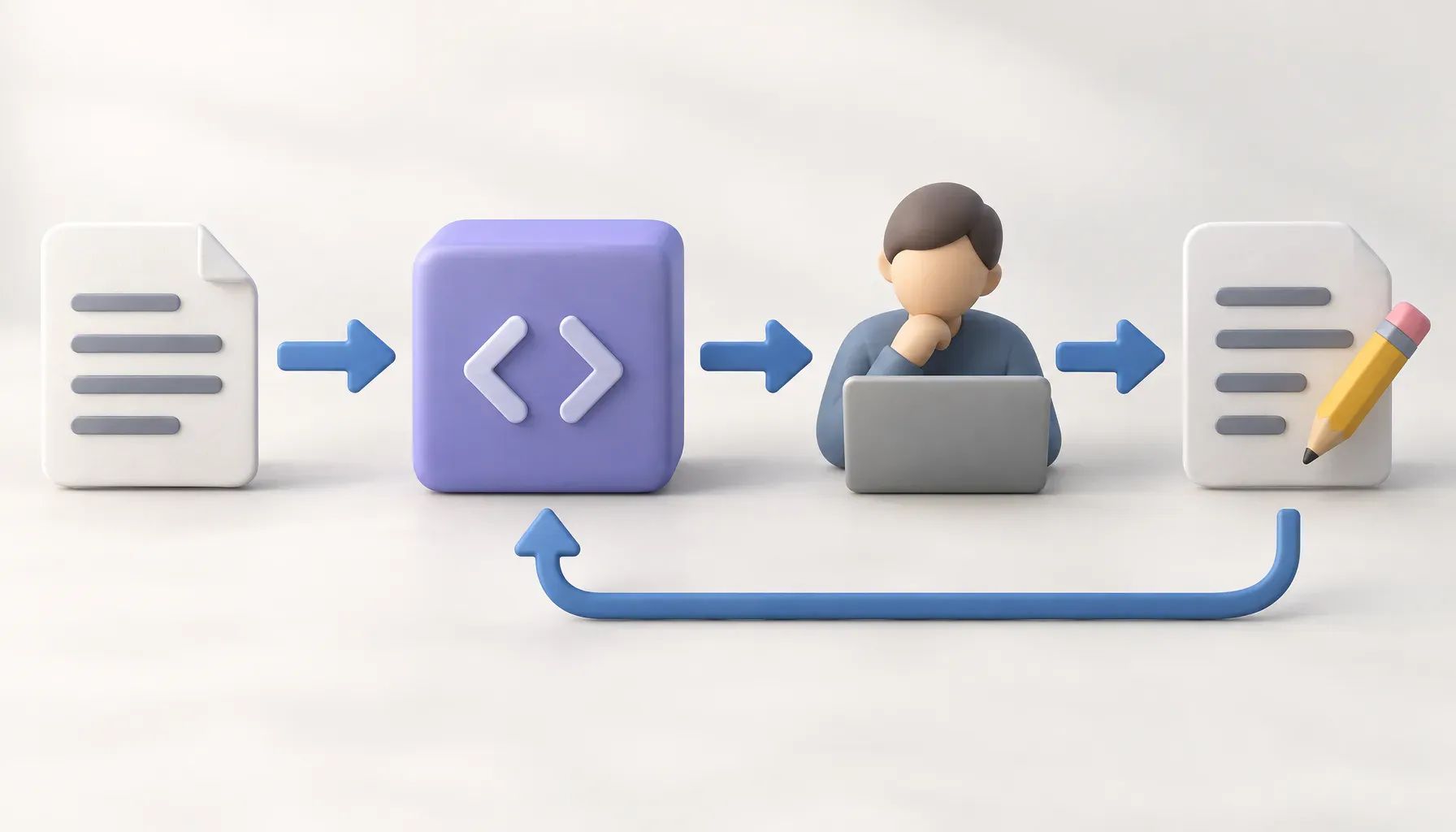
Traditional programming gives the developer more direct control. They choose the architecture, write each function, and review every change before it enters the project. That makes it easier to explain why the application works a certain way, but it also requires more time and coding knowledge.
AI-generated code still needs human review, especially when you cannot explain what a function does or why it requests certain permissions. Check the logic, dependencies, error handling, security implications, and how the change affects existing files before using it.
Neither approach excludes normal development tools. Vibe coders and traditional developers can work in code editors, run automated tests, use version control, and collaborate through pull requests. The difference is who produces the initial code and how closely the developer controls each step.
Speed, scope, and project complexity
Vibe coding can produce a working prototype, small utility, or simple website feature quickly. A prompt such as "Build a page that filters a list of PC parts by price and socket type" may generate a useful first version in minutes. Traditional programming usually takes longer to reach that first visible result because the developer must plan the structure, write the code, and connect each component manually.
That speed is most useful during early experimentation. You can test several interface ideas, automate a repetitive task, or create a basic internal tool before committing to a full build. However, a generated result is not automatically complete or production ready. It may mishandle unusual inputs, use an unsuitable dependency, expose security problems, or become difficult to change.
Traditional programming is often more practical for large systems, complex business rules, strict performance requirements, or highly customized software. A developer can design the architecture around long term maintenance instead of repeatedly correcting generated code.
The first version is only one part of the work. Refining the behavior, testing edge cases, documenting decisions, fixing bugs, and maintaining dependencies can take far longer than producing the initial output.
Debugging and software reliability
When developers write code themselves, they usually have a mental model of its inputs, state changes, and likely failure points. That makes debugging more direct: reproduce the error, inspect the relevant path, change one thing, and run the test again. With AI-generated code, the first problem may be discovering what the code should do and whether its assumptions are sound.
A vague prompt such as "make a login form" may produce code that works for a normal username and password but mishandles blank fields, expired sessions, duplicate requests, or a lost network connection. The interface can look finished while the underlying behavior is incomplete.
Testing matters in both workflows. Include normal cases, invalid input, permission failures, and boundary values, then use logs to capture the request, operation, and error without exposing secrets. Code review can catch unsafe assumptions; documentation records intended behavior and setup steps. A reproducible bug report should include exact steps, input, expected result, actual result, and relevant logs.
Vibe coding still requires enough programming knowledge to verify behavior, spot suspicious fixes, and trace failures in generated code.
Required skills and learning curve
Vibe coding lowers the entry barrier for beginners who can describe a goal in plain language. Someone might ask an AI tool to build a habit tracker, add a login screen, or filter a list without first learning a programming language. Traditional development usually requires knowledge of syntax, variables, functions, databases, and how separate parts of an application work together before the same task feels manageable.
That does not make vibe coding skill-free. You still need to break a broad request into smaller requirements, read the generated code well enough to check its behavior, and test the result with normal and unexpected inputs. You also need to spot problems such as weak authentication, exposed API keys, incorrect permissions, or logic that works only for one example.
Traditional programming gives you more direct practice with fundamentals such as data structures, control flow, debugging, and software design. Vibe coding can make those ideas easier to explore because you can experiment quickly and ask for changes. The risk is that working code can hide gaps in your understanding. If you cannot explain why a generated solution works, troubleshooting or securing it becomes much harder.
Ownership, security, and long-term maintenance
With vibe coding, the person prompting the AI still owns the result. They must review the generated code, select and update dependencies, decide what data the application stores or sends, and check protections such as authentication, authorization, and input validation. An AI tool may produce working login code while handling passwords or personal data poorly, so "it runs" is not a security review.
Maintenance also depends on structure. Generated code can use inconsistent naming, duplicate logic, outdated packages, or little documentation. That makes a later fix harder: a developer may not know which file controls a payment form, whether two functions do the same job, or what could break when a dependency changes. Traditional programming usually gives a team tighter control over conventions, testing, code review, and the people responsible for future support.
That control matters for sensitive data, regulated work, internal systems, and software expected to run for years. Use vibe coding for prototypes and bounded tasks when review is practical. Choose a traditional or hybrid workflow when reliability, security, and long-term ownership matter most.
Choosing between Vibe Coding and Traditional Programming
Choose vibe coding when you need to test an idea, build a small utility, or create a bounded feature quickly. Start with a clear description of the requirements, then inspect the generated code, test expected and edge-case behavior, and document what the project does. Do not treat a working prototype as finished software. If the project handles sensitive data, supports a regulated process, requires extensive customization, or must be maintained for years, use traditional programming or a hybrid workflow. That approach gives you more direct control over architecture, security decisions, dependencies, and future changes. Whichever method you choose, the person or team using the code remains responsible for reviewing it, fixing problems, and maintaining it. The best choice depends less on speed alone than on the level of reliability, control, and long-term ownership the project requires.


