
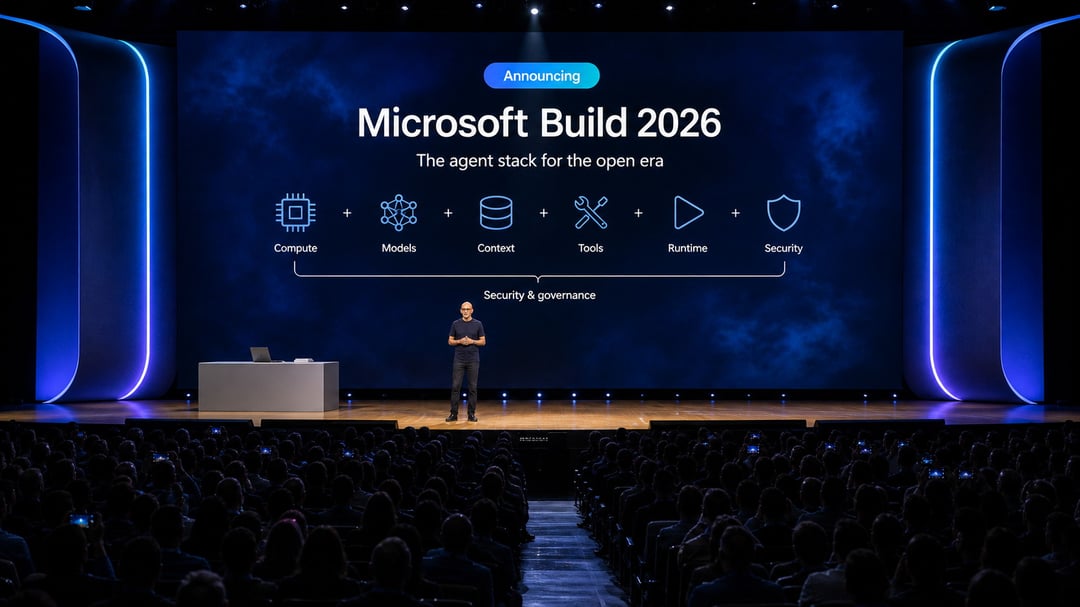
Microsoft has introduced Project Opal, an AI-powered capability for Microsoft 365 Copilot designed to plan and carry out complex tasks that may take hours or days to complete. Announced by Microsoft CEO Satya Nadella, the system moves beyond providing assistance by taking responsibility for task workflows within a user-controlled secure environment.
Project Opal is built for work that involves multiple steps, repeated actions, and ongoing monitoring. It can navigate portals, complete forms, and follow workflows in a way that resembles how a person would work through the same process.
How Project Opal Works
Project Opal uses a computer-using agent model that operates inside a dedicated Windows 365 Cloud PC. Each task is completed in its own secure Cloud PC environment, while a separate AI supervisor monitors activity, applies guardrails, and asks for human input when a decision requires it.
The user remains involved throughout the process. Opal’s activity can be viewed as it happens, reviewed afterward through replay, paused, or taken over directly within the Cloud PC.
When a workflow reaches a point that requires human judgment, Project Opal alerts the user. Notifications can appear in the activity timeline or through a browser notification, giving the user a clear moment to review the next step and decide how to proceed.
Project Opal Task Automation Capabilities
Project Opal is designed to handle extended, multi-step tasks rather than short conversational requests. Its capabilities include:
- Navigating web portals
- Filling out forms
- Completing multi-step workflows
- Working through tasks over hours or days
- Requesting user direction when human judgment is needed
- Allowing users to monitor, pause, replay, or take over an active task
This approach is suited to work that is repetitive and time-consuming, particularly when the workflow can be carried out through a series of defined actions.
Example Project Opal Use Cases
Microsoft has identified several examples of work that can fit Project Opal’s automation model:
- Compliance audits
- Employee onboarding
- Equipment ordering
These types of workflows can involve repeated steps across portals, forms, and internal processes. Project Opal is intended to carry out that work in a controlled environment while bringing the user back in when judgment is required.
Security and User Control in Project Opal
Every Project Opal task runs within a dedicated Windows 365 Cloud PC. This setup gives each task a separate work environment rather than running it directly on a user’s local device.
A separate AI supervisor oversees what the agent does during the workflow. The supervisor applies guardrails and can request user input when appropriate. Users can also watch the task in real time, review the activity later, stop the workflow, or assume direct control of the Cloud PC.
That combination of agent execution, supervisory monitoring, and user intervention is central to how Project Opal is positioned within Microsoft 365 Copilot.
Project Opal Enterprise Controls
Project Opal is opt-in and managed through the Microsoft 365 Admin Center. Administrators can decide how the feature is made available within their organization and configure the environment where tasks run.
Available administrative controls include:
- Configuring Cloud PC pools
- Creating website allow lists that limit the sites an agent can access
- Selecting which user groups receive access to Project Opal
These controls allow organizations to define access and restrict the websites available to the agent during automated workflows.
Project Opal Availability for Microsoft 365 Copilot
Project Opal first entered public preview in November 2025. It remains an early-access offering through Microsoft’s Frontier program for Microsoft 365 Copilot customers.
Access is managed through the Microsoft 365 Admin Center, where administrators can enable the feature and determine the user groups that can use it.
Microsoft’s Broader Copilot AI Agent Strategy
Project Opal is part of Microsoft’s effort to extend Copilot beyond conversational assistance. Earlier in the year, Microsoft introduced multi-model intelligence in its Researcher agent, allowing users to choose between OpenAI and Anthropic models for deep research tasks.
Microsoft has also been developing a unified Copilot “super app,” planned for broader availability by October 2026. The platform is intended to bring chat, coding, research, and autonomous agents together in one place.
With Project Opal, Microsoft 365 Copilot is being positioned to support longer-running workflows where the system can perform actions, manage task steps, and involve the user when a decision cannot be automated.