
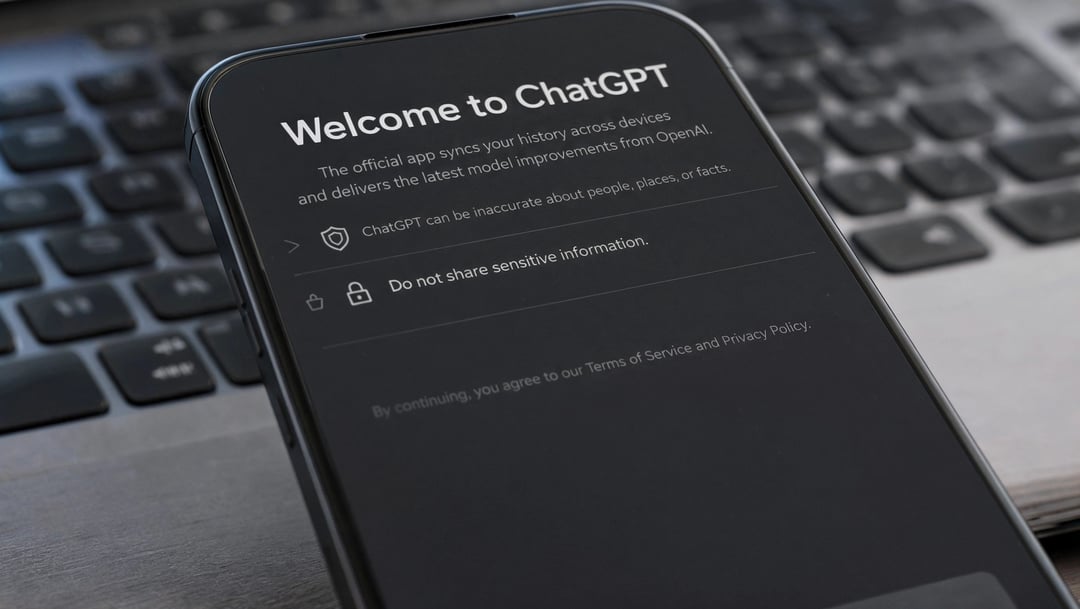
Asking ChatGPT for help on your phone could soon mean letting it look at your screen, dial your contacts and send texts. An APK teardown of ChatGPT's Android app, version 1.2026.328, turned up permission prompts that haven't been released yet. The hidden strings point to placing calls, reading and sending texts, controlling music and viewing what's on your display.
All of this is unreleased code, and it may never ship.
What ChatGPT Could Do on Your Android Phone
The code hints at three groups of abilities: phone and messaging actions, music control and screen reading. Here's what each one seems to involve.
Calls, Contacts and Text Messages
Based on the hidden code, ChatGPT may be able to read your recent calls and search your contacts. It could also place a call when you ask for one, and read or send messages for you.
Music Control Through Notification Access
The code doesn't suggest ChatGPT could open your music app or pick a new song. It could still control playback through Android's notification access. That would let it pause, resume or change tracks.
Reading Your Screen
Like Gemini's "Ask about screen" feature, ChatGPT might be able to read what's on your display. You could then ask follow-up questions about it, so you wouldn't need to share screenshots. The teardown suggests you'd first have to switch on an option called "Use screen and app data."
ChatGPT Dots and Android
Dots are always-on AI agents. They were introduced in September, and you can reach them through their own app or directly inside ChatGPT on mobile, desktop and web. OpenAI has been adding to them gradually, including messaging through iMessage and RCS, Wallet integration and Health integration.
A Dedicated Dot Card
The teardown points to a new way of connecting Dots to Android: a dedicated Dot card. A permission prompt suggests you may need to grant notification access in Android Settings first. After that, you'd go back to the card and tap Connect or Continue.
Access While Locked and Default Assistant Support
Two code references stand out. One, "allowedWhileLocked," suggests a Dot might be reachable while your phone is locked. The other, "useDotAsAssistant," suggests a Dot could serve as your default digital assistant on Android.
What's Still Unclear
These references hint at upcoming features in ChatGPT for Android, and they may eventually reach the iOS version too. But it isn't clear how any of these functions would work in practice, or when they'd arrive.


