
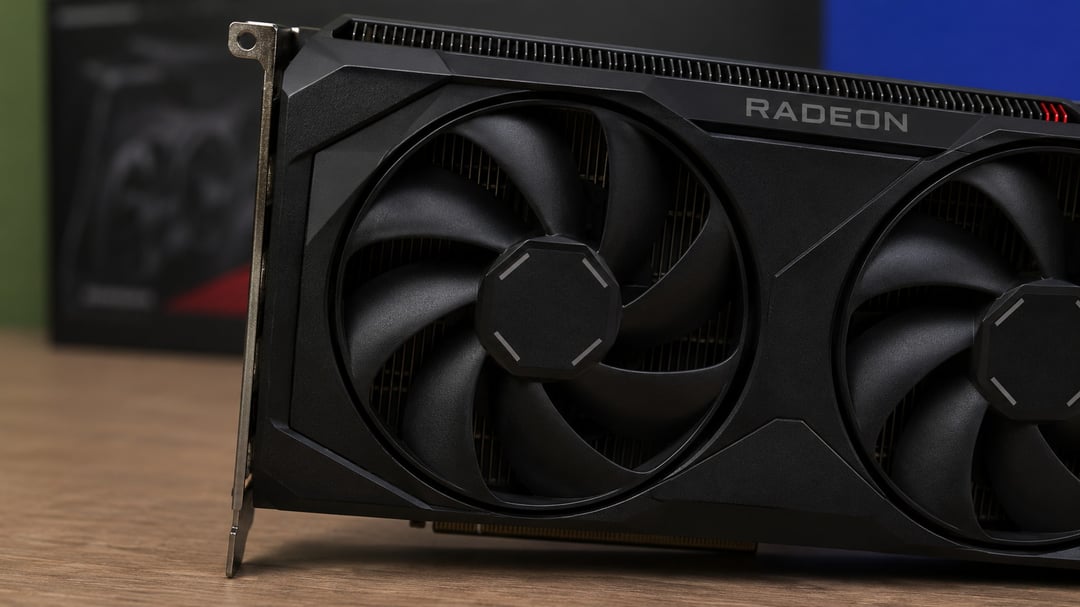
AMD has confirmed a Radeon graphics driver bug that keeps some Windows PCs writing to their system SSDs, including while the computers sit idle. A fix is undergoing testing, but AMD has not announced a release date or identified the driver version that will include it.
The issue involves AMD External Events Utility, a background service associated with the atieclxx.exe process. Reported write speeds differ: some users have observed roughly 5MB/s continuously, while others have recorded rates between 0.3 and 1.5MB/s, according to Wccftech.
What Causes the Radeon SSD Write Bug?
An AMD representative on Reddit linked the behavior to an interaction between External Events Utility and Microsoft’s PCIe filter driver, Neowin reported. That interaction is behind the persistent disk activity reported on affected systems.
Reports span Windows 10 and Windows 11, several Radeon GPU models and multiple driver versions. However, the problem does not affect every Radeon PC. Some users with hardware similar to affected machines have reported no unusual disk activity.
Neowin also noted that comparable behavior previously occurred with AMD chipset drivers. Later chipset updates resolved that earlier issue.
AMD’s Fix Is Still Being Tested
According to the AMD representative cited by Neowin, a proposed fix has reached final validation and testing. The representative described the change as relatively low-risk and said the Radeon driver team hoped to release it as quickly as possible.
That does not establish when users will receive it. Another AMD representative later indicated that a fix had likely been committed, but it could still miss the cutoff for the next driver release, Wccftech reported.
AMD has also confirmed on its official support forum that Adrenalin 26.10.2 does not resolve the bug. The company said the correction will appear in the release notes when it becomes available.
For now, neither a specific release date nor a confirmed driver version has been provided.
How Much Data Can the Bug Write?
The amount depends on the sustained write rate. Wccftech estimated that uninterrupted activity at 5MB/s would produce approximately 432GB of host writes per day, approaching 13TB over a month.
Those estimates need context. Host writes do not necessarily equal the amount of data physically written to an SSD’s flash memory. Wccftech cautioned that the available evidence is insufficient to establish that this bug reduces SSD lifespan.
Neowin identified small QLC drives with low endurance as the most exposed. However, that assessment does not confirm damage to affected drives or establish how much wear the bug causes.
The reported write rates also vary substantially, so the 5MB/s estimate should not be treated as a measurement for every affected PC.
How to Check for atieclxx.exe Disk Activity
Wccftech advised checking Windows Resource Monitor to see whether the process is producing sustained writes:
- Open Windows Resource Monitor.
- Sort disk activity by writes.
- Look for continuous write activity associated with atieclxx.exe.
The reported symptom is steady activity that continues even when the PC is idle. Because some Radeon systems show no unusual activity, the presence of Radeon hardware alone does not establish that a computer has the bug.
Temporary Workarounds and Their Tradeoffs
Several workarounds have been reported while AMD tests its fix. Each comes with a limitation.
Stop AMD External Events Utility
Stopping the service through services.msc reportedly brings the continuous writes to an end.
However, doing so can disrupt Adrenalin hotkeys and other features. It is a temporary workaround with a functional tradeoff, rather than the driver correction AMD is preparing.
Disable Resizable BAR in the BIOS
The AMD representative cited by Neowin said disabling Resizable BAR in the BIOS should work around the issue.
This option can reduce gaming performance. The representative’s wording also leaves it as an expected workaround, rather than a guaranteed result for every affected system.
Replace PCI Bus Driver Files With Older Versions
Some users have copied PCI bus driver files from Adrenalin 26.3.1 as another workaround.
WindowsForum noted that AMD has not approved this method and described it as riskier than temporarily stopping the service. It remains a user-reported approach, separate from AMD’s pending fix.


