
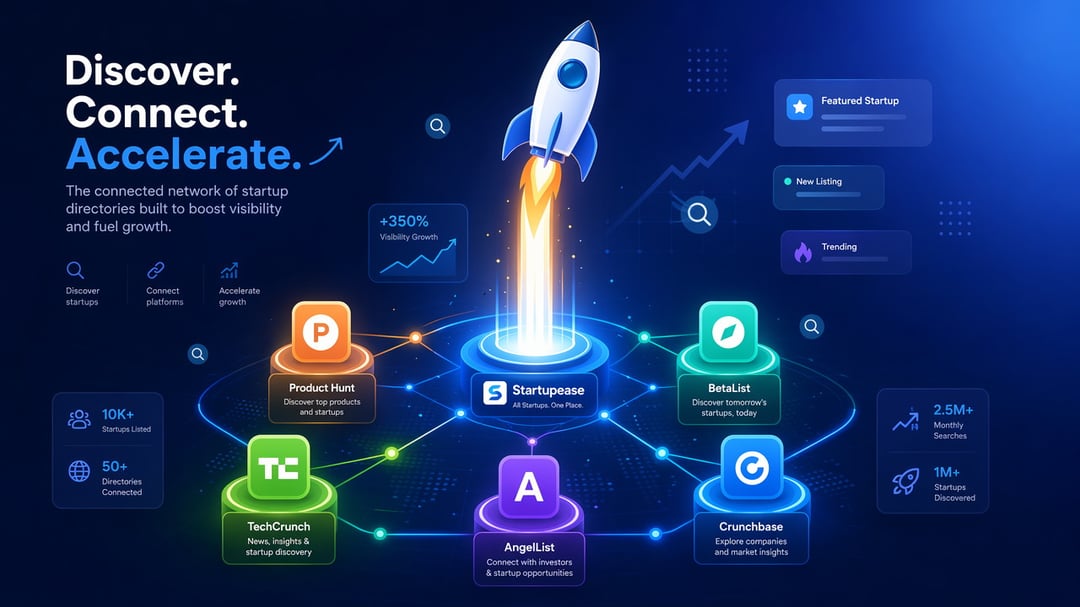
20 Startup Directories to Boost Your Startup Visibility

20 Startup Directories to Boost Your Startup Visibility

Getting people to notice a startup is hard, especially when you’re early and nobody is searching for your brand name yet. You may have a solid product, a clean landing page, and a real problem you’re solving — but without distribution, it can still feel like shouting into an empty room.

That’s where startup directories help.

The right directories can put your product in front of early adopters, founders, investors, journalists, beta testers, and buyers who are already looking for new tools. Some platforms are great for launch-day buzz. Others are better for backlinks, long-term search visibility, credibility, or niche discovery.

Here are 20 startup directories to boost your startup visibility, with a practical look at where each one fits.

1. Product Hunt

Product Hunt is still one of the most recognized launch platforms for startups, apps, SaaS tools, AI products, and creator-led projects.

A strong Product Hunt launch can drive a sharp spike in traffic, comments, signups, and social proof. But it works best when you prepare in advance. You’ll need sharp positioning, clean visuals, a simple tagline, and a launch-day plan for responding to comments.

Use Product Hunt when your product is polished enough for public feedback and you’re ready to turn attention into actual users.

2. Pro Launch

Pro Launch is a startup launch and discovery platform built for founders who want more visibility beyond the usual crowded channels.

It gives startups a place to showcase what they’ve built, earn a discoverable listing, and gain potential backlink value. For early-stage founders, this matters because visibility compounds. One listing may not change everything overnight, but a portfolio of credible listings can improve search presence and referral traffic over time.

Pro Launch is useful if you want a straightforward place to introduce your startup to people actively browsing new products.

3. Steemhunt

Steemhunt is a community-driven product discovery platform with roots in blockchain-based curation.

What makes Steemhunt interesting is its focus on product hunting and community discussion. Instead of simply dropping your link into a static directory, your startup can be discovered, ranked, and discussed by people who enjoy finding new tools.

It’s a good fit for products with a strong “new and useful” angle — especially apps, gadgets, software tools, and experimental projects that benefit from early adopter attention.

4. Webspot

Webspot is a web discovery platform for finding websites, software, tools, guides, and digital resources.

For startups, Webspot is valuable because it organizes products into categories such as AI, business, finance, development, and technology. That category structure helps users find relevant products instead of browsing through an unfocused feed.

If your startup is a web app, SaaS tool, AI product, or useful online platform, Webspot can support both discovery and credibility.

5. Direct2App

Direct2App helps users find and compare SaaS and AI tools.

That makes it especially useful for software startups. People visiting Direct2App are not casually scrolling for entertainment. They’re often looking for tools that solve business, productivity, marketing, analytics, or technical problems.

A listing here can help your startup appear in front of buyers and users who already understand software products. Make your description specific. Don’t just say what your tool is — explain who it helps and what problem it removes.

6. Stellar Launch

Stellar Launch is another useful platform for startup discovery and launch visibility.

Its biggest value is simple: it gives your startup another credible place to be found. For founders working on early traction, that matters. Search engines, users, and potential partners all look for signals that your product exists outside your own website.

Stellar Launch fits well into a broader directory submission strategy where the goal is steady visibility, not just one viral launch.

7. BetaList

BetaList is one of the best-known platforms for startups that are still in beta or preparing to launch.

The audience here expects early products. That’s helpful because beta users tend to be more forgiving, curious, and willing to give feedback. If you’re still testing onboarding, pricing, messaging, or core features, BetaList can help you attract the kind of users who enjoy trying new things early.

It’s especially useful before a bigger launch on Product Hunt.

8. Hacker News

Hacker News is not a traditional startup directory, but it can be one of the most powerful discovery channels for technical products.

A good “Show HN” post can bring serious attention from developers, founders, investors, and technical buyers. But the community is sharp. Generic marketing language won’t work here. You need to explain what you built, why it matters, and what makes it technically or practically interesting.

If your startup serves developers, engineers, AI builders, or technical teams, Hacker News deserves a place in your launch plan.

9. Crunchbase

Crunchbase is one of the most important startup databases for credibility.

Investors, journalists, analysts, and potential partners often check Crunchbase when researching companies. A complete profile helps your startup look real and traceable. Add your description, founding details, website, funding information if available, and key team members.

Crunchbase may not always send massive direct traffic, but it strengthens your startup’s public footprint.

10. Wellfound

Wellfound, formerly AngelList Talent, is built around startups, hiring, and investment.

If you plan to recruit talent or signal that your company is active in the startup ecosystem, Wellfound is useful. A strong profile can attract candidates, operators, and sometimes investor interest.

For startups trying to look credible while still small, Wellfound helps show that you’re building something serious enough for people to join.

11. Indie Hackers

Indie Hackers is a founder community where people share projects, revenue updates, lessons, and growth experiments.

The best way to use Indie Hackers is not to post once and disappear. Share what you’re building, what you’re learning, and what’s actually happening behind the scenes. People respond to honest progress much more than polished self-promotion.

It’s a strong channel for bootstrapped SaaS, creator tools, small internet businesses, and founder-led products.

12. Launching Next

Launching Next is a directory for new and upcoming startups.

It’s simple, direct, and useful as part of your early visibility stack. While it may not create the same spike as Product Hunt, it gives your startup a dedicated listing and another place where people can discover your product.

Use it when you’re building a foundation of backlinks, referral sources, and launch mentions.

13. SaaSHub

SaaSHub is a software directory focused on SaaS products, alternatives, and reviews.

This is helpful because many users search for software through comparison intent. They don’t just search for a category. They search for alternatives to tools they already know.

If your startup competes with an established product, SaaSHub can help you appear in those discovery paths.

14. AlternativeTo

AlternativeTo is one of the most useful platforms for positioning your product against existing solutions.

Users visit AlternativeTo when they’re unhappy with a current tool, looking for cheaper options, or comparing features. That means the traffic can be highly relevant.

When listing your startup, choose competitor categories carefully. The better your alternatives are mapped, the easier it is for the right users to find you.

15. F6S

F6S connects startups with accelerators, funding programs, grants, events, and founder opportunities.

It’s more ecosystem-focused than purely product-focused. That makes it useful if your startup is looking for exposure to accelerators, corporate programs, or startup support organizations.

A complete F6S profile can support both visibility and opportunity discovery.

16. StartupBlink

StartupBlink maps startups, accelerators, coworking spaces, and startup ecosystems around the world.

This is especially useful if location matters to your startup. Maybe you’re building in a specific city, serving a regional market, or trying to show up in a local startup ecosystem.

StartupBlink can help your startup become more discoverable in geographic startup searches.

17. Startup Stash

Startup Stash is a curated directory of tools and resources for founders.

If your product helps startups with marketing, operations, design, productivity, finance, hiring, development, or sales, this platform can be a strong fit. The audience is already looking for tools to help them build and run a company.

Position your listing around the founder problem you solve, not just your feature list.

18. There’s An AI For That

There’s An AI For That is one of the biggest AI tool directories online.

If your startup is AI-related, this directory should be high on your list. Users come here specifically to find AI tools by task, category, and use case. That means you need a clear description of what your product does and who it helps.

Avoid vague claims like “AI-powered productivity.” Be specific: what task does it make faster, easier, or cheaper?

19. Betabound

Betabound connects companies with beta testers.

This is useful when you need feedback before scaling your launch. Instead of chasing vanity traffic, Betabound can help you find people willing to test, report issues, and share opinions.

Use it before your public launch if you still need to improve product stability, onboarding, or user experience.

20. G2

G2 is one of the most trusted review platforms for B2B software.

For SaaS startups, G2 becomes more valuable over time. Early reviews can help buyers trust you, especially when you’re competing against larger companies. It also gives your sales team a place to point prospects who want third-party validation.

The key is to collect honest reviews from real users as soon as you have satisfied customers.

Final Thoughts

The smartest approach is not to submit your startup everywhere in one afternoon. Start with the directories that match your stage.

If you’re pre-launch, begin with BetaList and Betabound. If you’re ready for attention, prepare for Product Hunt and Hacker News. If you’re building long-term credibility, complete profiles on Crunchbase, Wellfound, G2, SaaSHub, and AlternativeTo. Then add newer discovery platforms like Pro Launch, Webspot, Direct2App, and Stellar Launch to widen your reach.

Startup visibility rarely comes from one big move. It comes from showing up in enough relevant places that people can finally find you.


Join the Community

Get the latest tech news, reviews, and exclusive insights delivered straight to your inbox. Join a community of tech enthusiasts who trust Informer Tech.

Weekly digest

No spam

Unsubscribe anytime