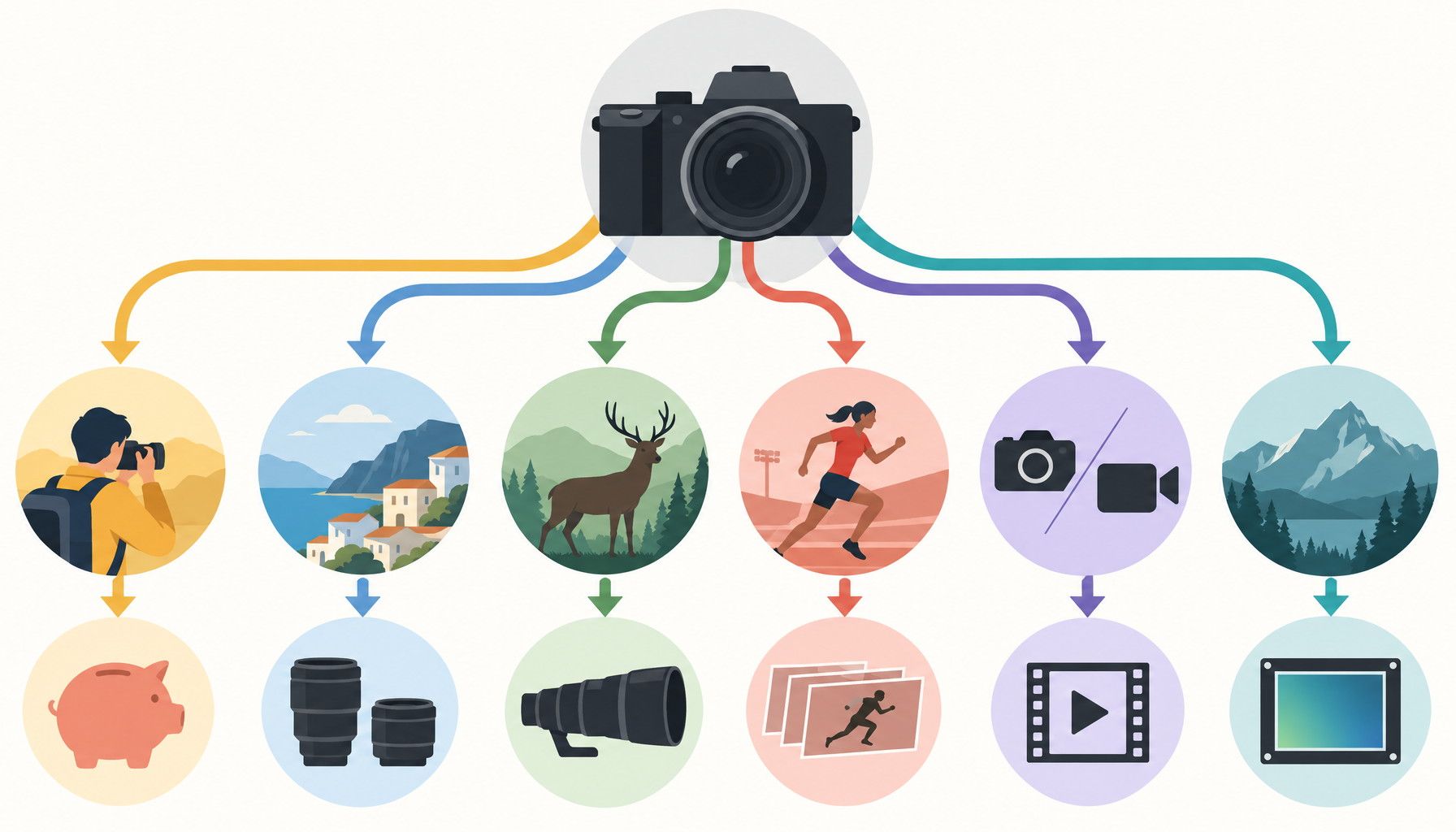
Choosing among the best mirrorless cameras can get complicated quickly. Specs, sensor sizes, autofocus systems, video tools, lens selection, and prices all matter, but the right choice depends on how and where you shoot.
This guide compares the Sony a7 IV, Canon EOS R10, Nikon Z8, Panasonic Lumix S5 IIX, Fujifilm X-T50, and Nikon Z5 II for different priorities, from beginner-friendly controls and travel portability to sports performance and hybrid photo-video work. We also explain how we assessed each camera and how your budget, preferred lenses, and shooting style should shape the decision. By the end, you should be able to narrow the shortlist to a camera that fits both your current needs and the way you plan to shoot next.
How we chose these mirrorless cameras
We compared these cameras by how well they handle the work photographers actually do: still-image quality, autofocus reliability, video features, physical controls, lens availability, and overall value. Image quality includes more than resolution. We considered how a camera handles detail, low light, moving subjects, and demanding files. Autofocus matters differently for a family photographer tracking children, a wildlife shooter following a bird, or a beginner photographing everyday scenes.
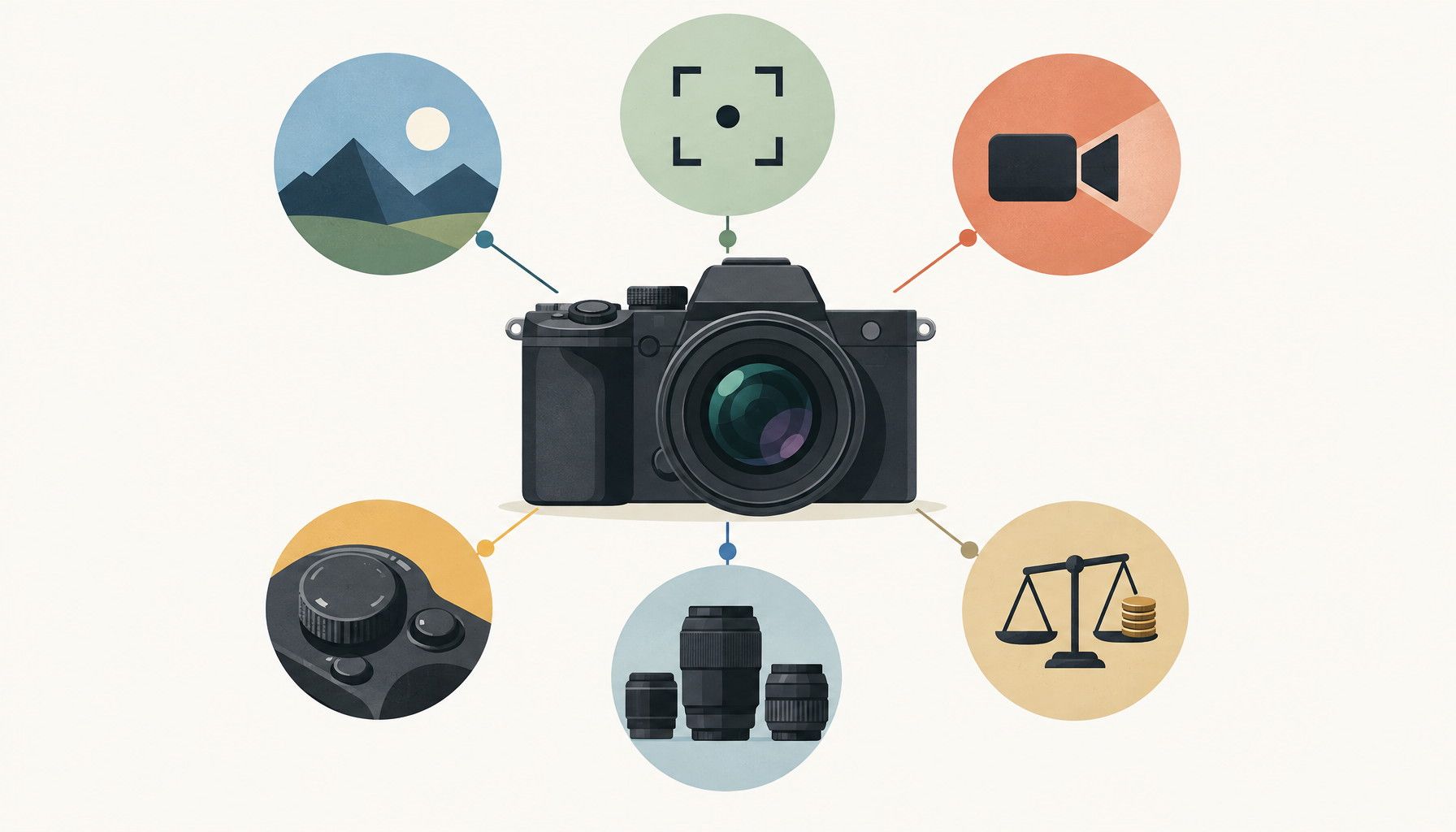
Video requirements also vary. Some buyers need dependable 4K recording and a microphone connection, while others want stronger stabilization, higher frame rates, or controls suited to longer productions. Handling covers the grip, viewfinder, screen, button layout, and ease of changing settings without digging through menus. Lens options matter because the camera body is only part of the system, and a lower-cost body may become less affordable once you add the lenses you need.
No single model suits every photographer. Our recommendations therefore account for different budgets, experience levels, subjects, and priorities rather than naming one camera as the best choice for everyone.