
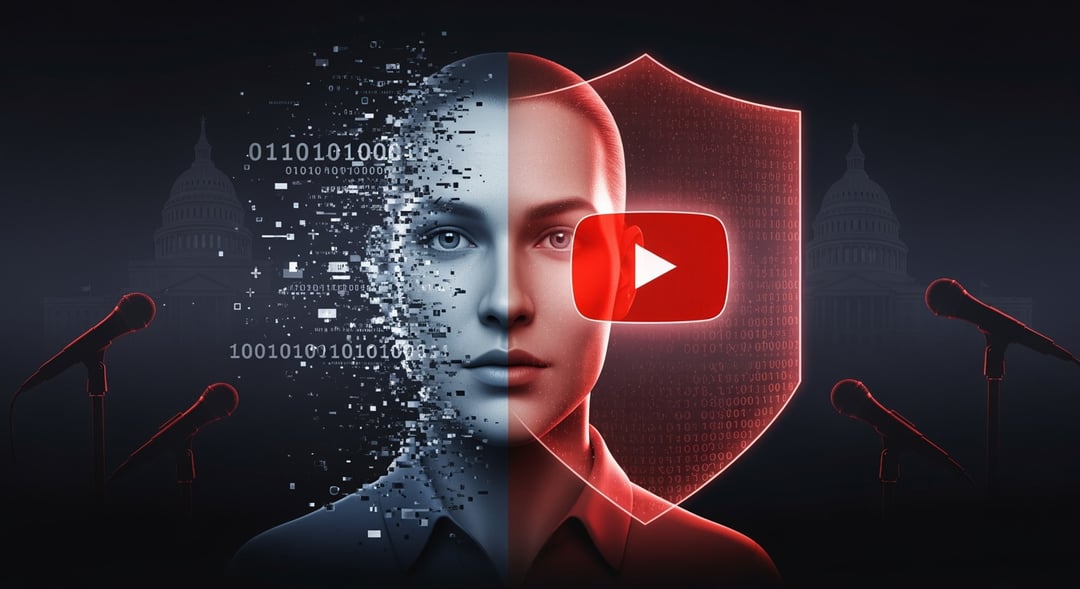
YouTube’s Likeness Detection Tool: How It Works
Deepfakes aren’t some fringe internet trick anymore. They’re fast, cheap, and scarily convincing. And if your face is public—creator, journalist, politician—you’re a target.
YouTube’s likeness detection technology is built to scan uploaded videos for unauthorized use of someone’s face. In plain terms? It looks for your visual identity—your features, your expressions—and flags content that appears to replicate you without permission.
This tool was originally rolled out for select creators and public figures. Now, it’s expanding. And that shift matters.
The system identifies videos that may be using AI-generated versions of a real person’s likeness. Once flagged, the affected individual can review the content and request action. It’s not automatic removal. It’s a review process—because context matters.
Parody? Satire? Political critique? Those aren’t automatically violations. And YouTube has made it clear that detection doesn’t equal deletion.
That balance—between protection and free expression—is where things get complicated.
Expansion to Politicians and Journalists: Why It Matters
With elections approaching and AI tools getting more advanced, the stakes are higher.
YouTube is expanding its deepfake detection pilot to include political leaders, government officials, and journalists. That means public figures who are especially vulnerable to misinformation campaigns now have access to the same protection framework previously reserved for top creators and Hollywood figures.
And let’s be honest—AI video generation tools have lowered the barrier. It’s easier than ever to fabricate a speech, alter a statement, or create a fake endorsement. A few prompts, a few edits… and suddenly a completely fictional moment looks real.
For journalists, that could mean fabricated reporting. For politicians, fake policy statements. For voters? Confusion.
This expansion is designed to create a layer of identity protection before manipulated videos spread widely.
The Rise of AI-Generated Deepfakes
AI video systems have made deepfake creation dramatically more accessible. Tools trained on vast datasets—including public footage of well-known personalities—can replicate faces and voices with striking realism.
And here’s the uncomfortable truth: the more visible you are online, the more data exists to train systems to mimic you.
That creates risk.
A medical influencer could appear to give false advice. A political candidate could seem to say something inflammatory. A journalist could look like they’re reporting misinformation.
The technology isn’t slowing down. So platforms are adapting.
YouTube’s move acknowledges that deepfake misuse isn’t hypothetical anymore. It’s operational.
Balancing Free Expression and Deepfake Takedowns
Here’s where it gets nuanced.
Detection does not mean automatic removal.
YouTube has emphasized that parody, satire, and political commentary remain protected forms of expression. That’s important. Not every manipulated image is malicious. Context, intent, and presentation matter.
The platform’s approach is to give high-profile individuals the ability to flag content using their likeness, triggering a review process.
It’s a “shield,” not a censorship switch.
And that distinction is critical—especially in political environments where free speech concerns are amplified.
The Policy Backdrop: Federal Deepfake Legislation
Beyond platform tools, there’s movement at the legislative level.
YouTube has endorsed federal proposals like the NO FAKES Act, which would require platforms to respond quickly to takedown requests involving AI-generated likeness misuse.
The idea behind such legislation is simple: technology should serve human creativity—not override personal identity.
While broader election-related AI regulations remain uncertain, momentum around deepfake accountability is building.
Platforms are adjusting internally. Lawmakers are watching closely. And public awareness is rising.
What This Means for Online Identity Protection
This expansion signals something bigger than a feature update.
It reflects a recognition that digital identity is now a security issue.
Faces and voices are no longer just personal traits—they’re data points. Replicable. Manipulable. Weaponizable.
By extending likeness detection to politicians and journalists, YouTube is acknowledging that misinformation threats don’t just affect creators—they affect democratic systems and public trust.
Will it eliminate deepfakes? No.
But it introduces friction. And in misinformation ecosystems, friction matters.