
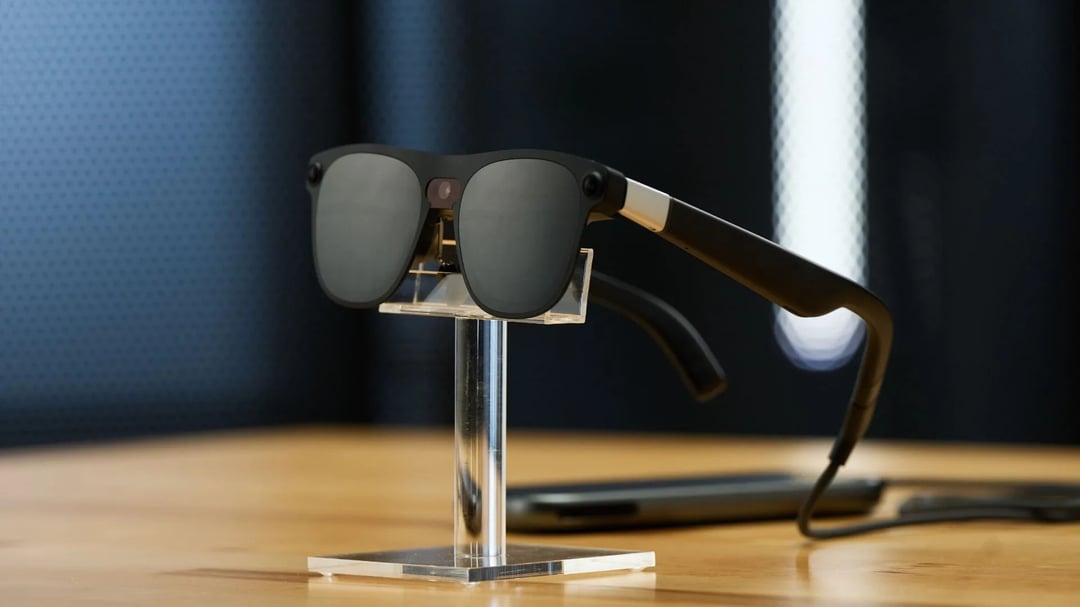
Google’s Smart Glasses Lineup Is Getting Crowded
Google is working on more than one kind of smart glasses, and Project Aura from Xreal may be the most interesting of the group. One pair running on the Android XR platform developed by Samsung is expected to arrive close to July, while Google has also shown a new class of audio glasses built in partnership with Warby Parker and Gentle Monster.
But Project Aura stands apart because it is not just another audio-focused wearable. Xreal’s smart glasses support full hand gesture control and offer a mixed reality view for Android apps available through the Play Store. That means the glasses are being positioned around a broader Android XR experience, not just a lightweight accessory-style setup.
Xreal first showcased the Project Aura smart glasses in December 2025. The company has now confirmed that Project Aura will reach shelves in 2026.
Xreal Project Aura Smart Glasses Feature a Built-In Display
The Xreal Project Aura smart glasses come with built-in display units, which is a big part of what makes them different from Google’s audio glasses. Instead of only handling sound-based interactions, Project Aura can place digital content directly in your field of view while still letting you see the real world around you.
70-Degree Field of View for AR Glasses
Project Aura offers a 70-degree field of view. Xreal claims this is the largest field of view ever offered on a pair of AR glasses.
That wider display area matters because these glasses are designed to show Android apps and multiple windows in a mixed reality format. The built-in display lets digital content sit inside your view without completely blocking the world around you.
Full Android App Experience Through Android XR
The most notable shift with Project Aura is software. Xreal says the glasses can run multiple app windows and deliver the full Android app experience without workarounds.
That is a meaningful change from Xreal’s earlier smart glasses. Until now, customer-facing Xreal glasses have used a custom version of the company’s own software, launched through an app. If you wanted Android access, you had to mirror content through a phone. Another route was connecting the glasses to a PC to run Windows or macOS.
Project Aura changes that setup by moving toward native Android XR. Instead of depending on phone mirroring or PC connections for a more complete operating system experience, these glasses are designed around Android XR itself.
Multiple App Windows and a Large Digital Canvas
Xreal’s previous smart glasses already supported multi-window use, giving users a large digital canvas for running different apps side by side. Those virtual windows could be placed in the air or set to follow head movement.
Project Aura keeps that broader idea but removes some of the software friction. By running a native Android XR experience, the glasses aim to make multi-window app use feel more direct.
Android Apps in Mixed Reality View
Project Aura supports mixed reality viewing for Android apps available through the Play Store. The experience is described as a full-blown Android setup, with multiple app windows and native Android XR support.
The glasses also come with Gemini experiences in tow, tying Google’s AI efforts into the broader Android XR smart glasses push.
Hand Gesture Support Makes Project Aura More Interactive
Project Aura includes full hand gesture support. That gives the glasses a more hands-on mixed reality angle than audio-only smart glasses.
Rather than depending only on voice or external controls, Project Aura is built to support gesture-based interaction. Combined with the built-in display and Android XR app support, this points to a smart glasses experience focused on visible digital content, app windows, and spatial interaction.
A Tethered Setup Appears in Demo Videos
Demo videos released by Xreal have shown Project Aura connecting to a smartphone-shaped puck through a cable. That detail suggests the glasses shown so far are not operating as a completely self-contained device in those demos.
Still, the key direction is clear: Project Aura is meant to move Xreal’s smart glasses beyond custom in-house software and toward native Android XR.
Project Aura vs. Google’s Audio Glasses
Google’s audio glasses and Xreal’s Project Aura glasses are clearly different categories. The audio glasses were shown as a new class of eyewear designed with Warby Parker and Gentle Monster. Project Aura, meanwhile, includes display units, hand gesture support, mixed reality viewing, and Android app access through the Play Store.
That makes Project Aura the more visually ambitious option. It is not just about hearing information or interacting through audio. It is about placing Android apps and digital windows into the user’s view while maintaining awareness of the surrounding world.
Why Project Aura Matters for Android XR Smart Glasses
Project Aura shows how Android XR could move into smart glasses that feel closer to a complete computing experience. Xreal is not simply adding another app layer over its existing software. It is aiming to remove previous limitations by making the glasses run native Android XR.
For users familiar with earlier Xreal models, the difference is straightforward: no more relying only on custom software, phone mirroring, or PC connections to reach a more complete Android-style experience. Project Aura is being built around the full Android XR environment from the start.