
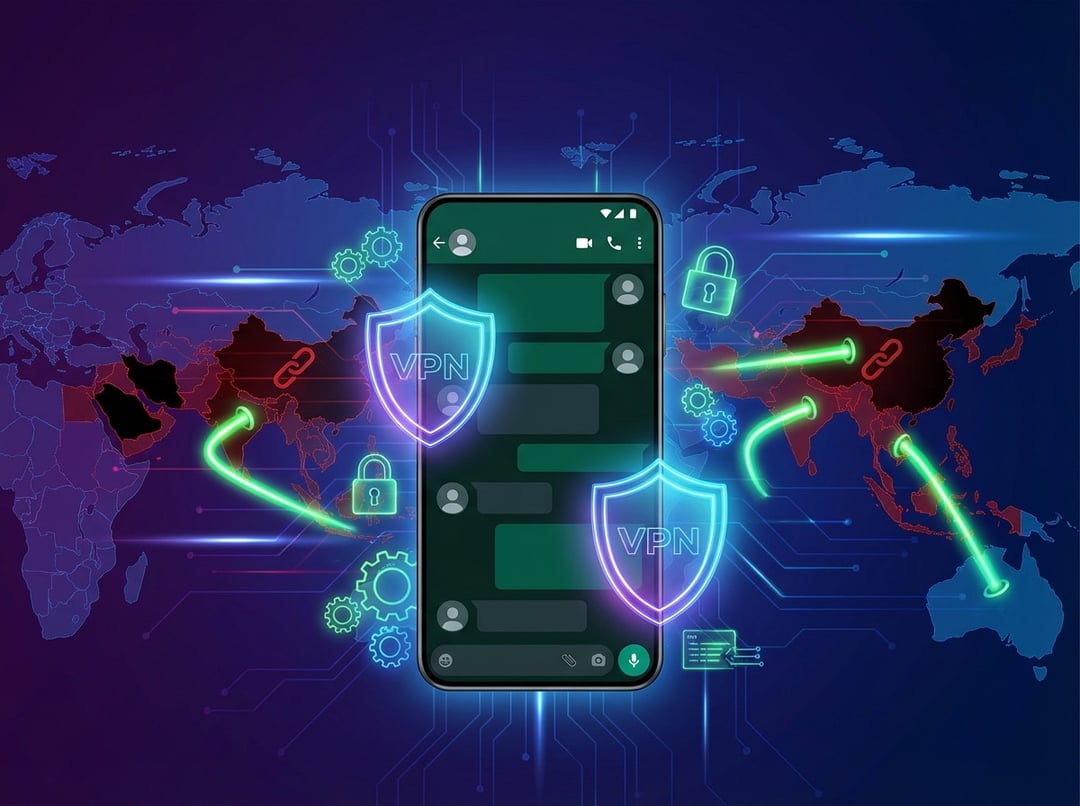
Why WhatsApp Is Pointing Users to Specific VPN Providers
When a messaging app starts naming VPNs, you know something’s shifting.
WhatsApp has begun recommending two specific virtual private network providers—Mullvad and Amnezia—as options for users trying to get around internet blocks. That’s not a small move. Messaging platforms usually stay neutral about third-party tools. But here, WhatsApp is clearly signaling: if access is restricted in your region, a VPN might help.
In its guidance, WhatsApp describes Mullvad (based in Sweden) and Amnezia (based in Cyprus) as “well-regarded providers.” It also links to advice from the Electronic Frontier Foundation (EFF) about choosing the right VPN.
That combination matters. It shows the company isn’t just pointing at random services. It’s aligning itself with privacy-focused tools and respected digital rights organizations.
And honestly, that says a lot about where online access is heading.
Mullvad VPN: A Privacy-First Recommendation
Strong Reputation Among Tech Reviewers
Mullvad has been widely praised by major tech publications. Reviews consistently highlight it as an excellent choice for privacy-conscious users and those on a budget.
What stands out most is its focus on anonymity. Mullvad does not require an email address or personal details to create an account. That’s rare. Most VPNs ask for at least some identifying information. Mullvad doesn’t.
For users worried about surveillance or regional censorship, that detail matters. A lot.
Built for Users Who Value Anonymity
Mullvad was launched in 2009 by Amagicom AB in Gothenburg, Sweden. Over time, it has built a reputation as a “privacy-first VPN.” That’s not marketing fluff—it’s tied to specific design decisions:
- No mandatory personal data during signup
- Transparent pricing
- Strong encryption protocols
- A clear stance on user privacy
If you’re in a region where access to messaging apps is restricted, you probably don’t just want access. You want discretion. Mullvad seems built with that mindset.
Amnezia VPN: A Less-Known but Recognized Option
Cyprus-Based VPN With Growing Recognition
Amnezia is based in Cyprus and has also been described as a well-regarded provider. While it may not have the same long track record as Mullvad, its inclusion in WhatsApp’s recommendations gives it added credibility.
That’s significant. WhatsApp isn’t casually dropping names.
The fact that Amnezia appears alongside Mullvad suggests that WhatsApp sees it as capable of helping users navigate internet filtering and restrictions.
How VPNs Help Circumvent Internet Censorship
Region-Based IP Blocking Explained
Here’s the basic idea.
Some governments or internet providers block services based on IP addresses. If WhatsApp traffic is identified and restricted at the network level, access becomes difficult—or impossible.
A VPN reroutes your internet traffic through servers in different locations. So instead of appearing to connect from your local IP address, you appear to connect from somewhere else.
That can help bypass region-based restrictions.
But—and this is important—it’s not magic.
VPNs Are Not a Cure-All
Security and privacy advocates have pointed out that VPN effectiveness depends on how censorship is implemented.
If blocking relies on simple IP filtering, VPNs can be useful. If deeper inspection techniques are used, bypassing restrictions becomes more complex.
So while VPNs can help in many scenarios, they aren’t guaranteed solutions in every case. The level and method of censorship matter.
And that nuance is worth remembering.
WhatsApp’s Alignment With Digital Rights Guidance
Reference to the Electronic Frontier Foundation
WhatsApp also points users to guidance from the Electronic Frontier Foundation on choosing a VPN.
That detail adds context. The EFF is widely respected in digital privacy and online rights advocacy. By referencing EFF guidance, WhatsApp reinforces that this isn’t just about accessing an app—it’s about navigating online restrictions thoughtfully.
It suggests a broader awareness of digital rights issues rather than a narrow technical workaround.
What This Means for Users in Restricted Regions
If you live somewhere where WhatsApp access is blocked or unreliable, this recommendation gives you a starting point.
Not a guarantee. Not a shortcut. But a direction.
You now have:
- Two named VPN providers with privacy reputations
- Independent reviews supporting at least one of them
- Additional guidance from a digital rights organization
That combination reduces guesswork. Instead of sifting through dozens of VPN ads making bold claims, you can start with services that have earned credibility from multiple sources.
And when internet access feels uncertain, clarity matters.


