
What the New UK Social Media Ban Covers
The U.K. government is moving to bar children under the age of 16 from using social media, in what officials describe as a measure that will reach further than any comparable restriction introduced elsewhere. Prime Minister Keir Starmer set out the plan, framing it as a way to return control to parents and to give younger children the kind of childhood the government believes screens have eroded.
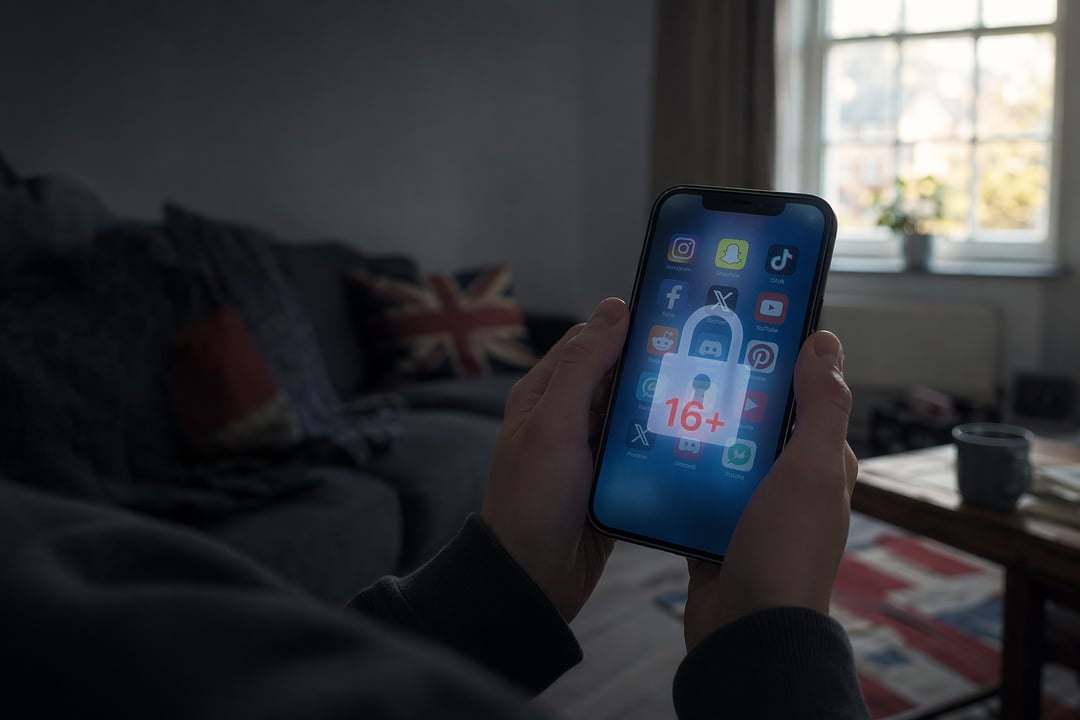
The restriction is not a narrow, single-platform rule. It is designed to apply across the major services where young people spend their time, signaling that the government wants a broad standard rather than a patchwork that apps could easily route around.
Platforms Included in the Ban
The ban is set to cover a wide spread of well-known social media platforms, including:
- Snapchat
- TikTok
- YouTube
- X
By naming the largest and most widely used apps, the policy targets the spaces where concerns about bullying, addictive design, and harmful content have been most pronounced.
How Messaging Apps and AI Tools Are Treated
Not every service falls under the new rules. Messaging platforms such as WhatsApp and Signal are excluded, drawing a line between social media feeds and private communication tools that families rely on to stay in touch.
The plan also extends to artificial intelligence. AI "romantic companion" chatbots will be required to confirm that only people over 18 can use them, placing age limits on a category of AI products that has raised distinct safety questions for younger users.
Why the Government Is Pushing the Ban
The stated aim of the changes is to "put power back in parents' hands and give kids the childhood they deserve." That framing positions the policy less as a tech regulation and more as a response to everyday worries that many families already share about the role screens play in children's lives.
Starmer's Case Against Social Media
Starmer argued that the harms of social media are visible to any parent paying attention. He pointed to its effect on children's happiness, the way it can make it easier for bullies to harass and target young people, and its potential impact on mental health through exposure to dangerous content that platforms surface precisely because it captures attention.
He was direct about the design choices behind these effects, describing social media as deliberately addictive and singling out features such as the infinite scroll as mechanisms built to keep users engaged for hours. He also contended that time spent on these apps comes at the expense of the routines and activities that help children grow into adults, naming examples such as getting to bed on time, reading, and playing outside.
What Parents Said in the Consultation
The announcement follows a period in which the government had committed to gathering views before deciding whether a ban would work. Earlier in the year, officials said they would consult parents, young people, and civil society to test the idea.
The response from parents who took part was strongly supportive of action: more than 83% said the risks of social media outweighed its benefits. That figure gives the government a clear mandate to point to as it presses ahead.
How the UK Ban Compares to Other Countries
Britain is not acting in isolation. It joins a growing group of nations looking to protect children online, though the government maintains that its own version will go further than any other country's.
Australia set the precedent, becoming the first country to introduce a ban of this kind late last year. Since then, several others have begun developing their own approaches, including Canada, France, and Denmark. The U.K.'s move adds one of the largest and most prominent governments to that list, and its claim to a stricter standard could shape how later policies are designed.
Questions Over Enforcement and Effectiveness
Even with public backing, the plan faces scrutiny. Experts have questioned whether a blanket ban can actually be made to work, given how easily young users tend to move around online restrictions.
Starmer has not dismissed those concerns. He acknowledged that enforcement presents real challenges, while maintaining that he believes the ban can be carried out in practice. That tension—broad ambition on one side, practical difficulty on the other—is likely to define much of the debate as the policy takes shape.
When the Social Media Ban Could Take Effect
The timeline is relatively near-term. Starmer indicated that a ban could be in place by next spring, suggesting the government intends to move from announcement to implementation without a lengthy delay. That pace puts pressure on platforms and regulators alike to prepare for a standard that, if enacted as described, would reshape how under-16s access some of the world's most popular apps.