
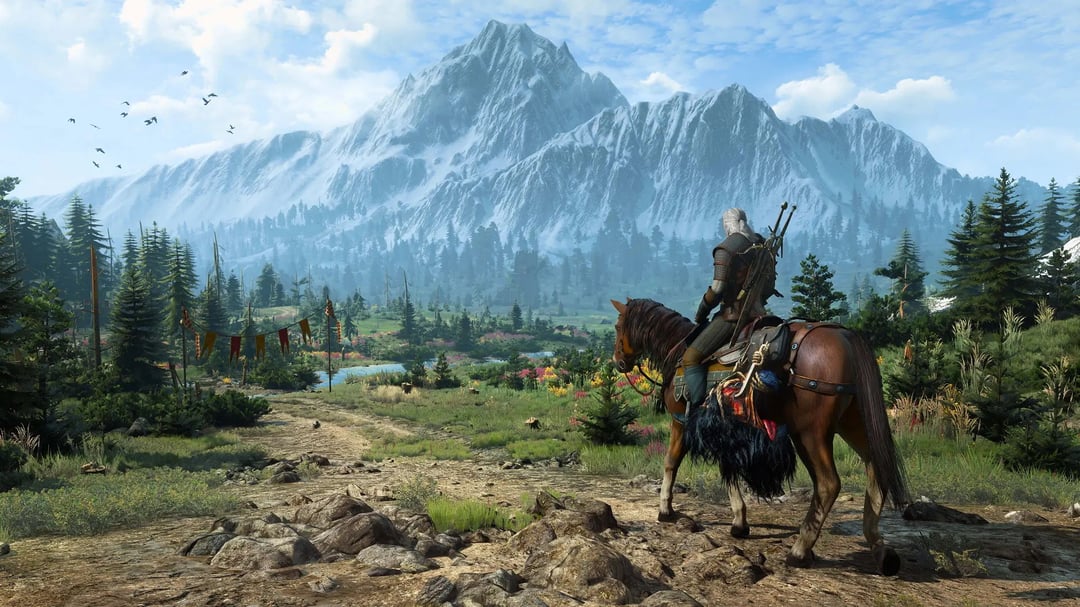
CD Projekt Red is targeting 2028 for The Witcher 4. Joint CEO Michał Nowakowski confirmed the window in a video shared through the official Witcher social accounts ahead of Gamescom. The studio is not ready to announce an exact date, and the game will not appear at Gamescom this year.
More than 500 developers are currently working on the project. Nowakowski called it the studio’s biggest and most ambitious effort so far. The Witcher 4 starts a new saga with Ciri in the lead role. She was revealed as the protagonist at The Game Awards in 2024.
Geralt’s Final Adventure Arrives Sooner
Fans will not have to wait until 2028 for another trip into the Witcher universe. The Witcher 3 is receiving a new expansion called Songs of the Past, scheduled for 2027. CD Projekt Red plans to show more of it at Gamescom Opening Night Live on August 25 and at its booth during the show. The expansion arrives more than a decade after The Witcher 3: Wild Hunt launched in 2015. An exact 2027 release date has not been announced.
Unreal Engine 5 Tech on Display
CD Projekt Red has already shown some of the technology behind The Witcher 4 through an Unreal Engine 5 demonstration. The demo included dense crowds, improved foliage rendering, ray tracing, and a 60 fps target on a base PlayStation 5.
PlayStation Disc Release Looks Unlikely
The 2028 window places The Witcher 4 in the middle of a major shift for console gaming. Sony has confirmed it will stop producing physical game discs for new PlayStation releases starting in January 2028. CD Projekt Red has not said whether The Witcher 4 will receive a physical release or confirmed its final platform lineup. If the game arrives on PlayStation in 2028 as planned, a disc version currently looks like a long shot under Sony’s policy.
DRM-Free Release Confirmed for PC on GOG
There is clearer news for PC players. GOG has confirmed that future CD Projekt Red games will continue to launch on the storefront, which means The Witcher 4 should also get a DRM-free release. GOG lets players download offline installers and does not require its Galaxy launcher to keep games running. The storefront also focuses on game preservation, giving players more control over the titles they buy and how they access them over time.