
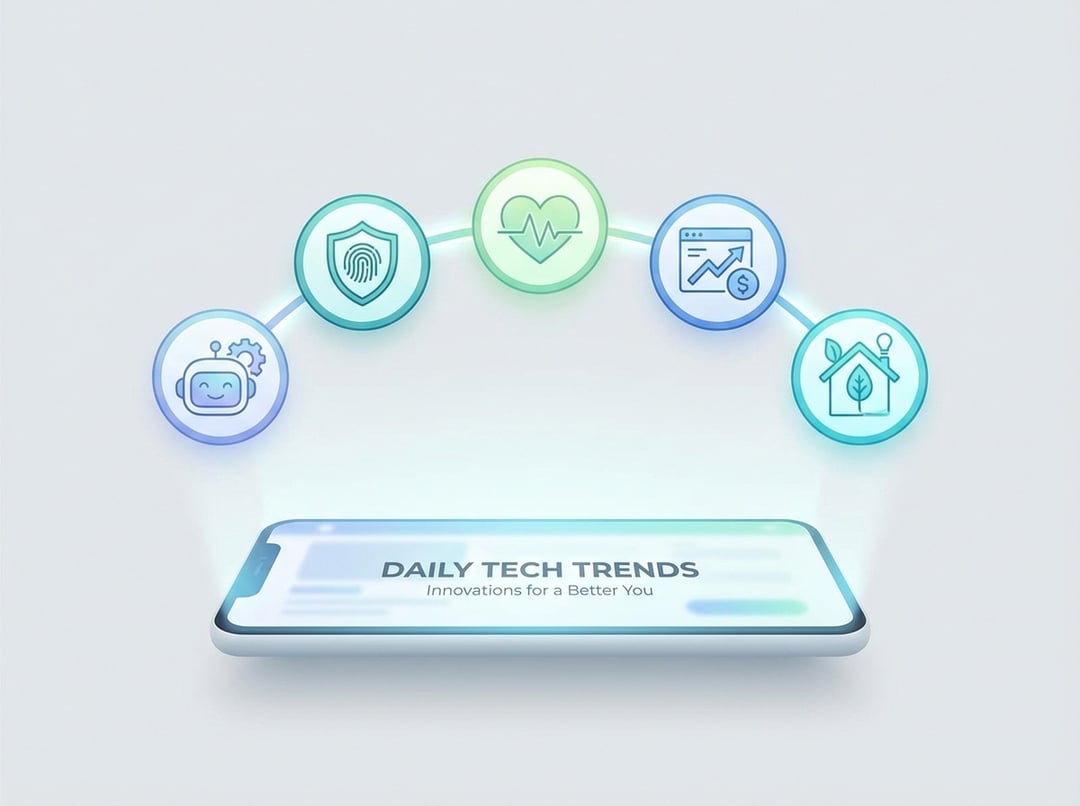
Tech has a funny way of showing up. Not with fireworks. More like a quiet update that changes how you log in, pay bills, or talk to a doctor. And that’s the point of these tech trends 2026 predictions. The ones that matter won’t feel futuristic. They’ll feel… normal. Fast.
Below are five tech trends 2026 that are most likely to touch your daily life. Not because they’re flashy, but because companies are baking them into the stuff you already use.
Before the list: what “tech trends 2026” really means in your day-to-day
A real trend isn’t “look what this prototype can do.” A real trend changes behavior. It saves you time. It cuts friction. Or it introduces new annoyances you can’t ignore.
Here’s a simple filter for tech trends 2026 that actually matter:
- You’ll notice them through your phone, bank, job, doctor, school, or home.
- They affect cost, safety, time, or convenience.
- They arrive as defaults in products, not hidden settings.
And one more thing. In 2026, a lot of technology gets more personal because it gets more context. That’s powerful. It’s also where most of the tradeoffs live.
Tech Trend 1 (2026): AI becomes an everyday coworker inside your apps
In 2026, AI stops feeling like “a separate chatbot you visit.” It becomes a set of features inside the apps you already open every day. Email. Notes. Shopping. Customer support. Photo libraries. Calendars.
The shift is subtle but important. You won’t always ask. The software will suggest. It will draft replies, summarize long messages, pull out tasks from a meeting, and help you compare options while you shop.
Where you’ll feel it most is in the annoying little chores. The ones that steal five minutes each and add up to hours.
- Your inbox will nudge you with ready-to-send replies.
- Your documents will turn bullet points into paragraphs.
- Your shopping apps will summarize reviews into “what people love” and “what people hate.”
The upside is obvious. Less busywork. More momentum.
The downside is quieter. AI can be wrong in a confident voice. And when it runs inside your tools, it’s easy to accept output without checking.
A simple move: treat AI help like a smart intern. Let it draft. Let it organize. But double-check anything involving money, medical care, or travel logistics.
Tech Trend 2 (2026): Passkeys go mainstream and passwords start fading
If you’ve ever reset a password, waited for a code, then still failed to log in, you already understand why this is one of the biggest tech trends 2026.
Passkeys are a newer way to sign in. Instead of memorizing a password, you confirm on a device you already have. Often with Face ID, fingerprint, or a device unlock.
In daily life, that means fewer “forgot password” spirals and fewer accounts stolen through phishing. Passwords get reused. People get tricked. Passkeys cut a lot of that risk.
You’ll notice passkeys showing up in more places that matter:
- Banking and payment services
- Shopping sites and delivery apps
- Government and healthcare portals
But there’s a tradeoff. If your device is your key, losing it can feel scarier. Good services build recovery options. Some still make recovery clunky.
A simple move: turn on passkeys for your most important accounts. Then set up recovery the same day. Don’t “do it later.” Later never comes.
Tech Trend 3 (2026): Health tech gets quieter and more constant
Health tech in 2026 won’t just be about a fancy watch. It’ll be about quiet monitoring that happens outside the doctor’s office.
Phones and wearables already track movement and sleep. In 2026, more people will see features that flag patterns. Not diagnoses. Patterns. Things like shifts in resting heart rate, sleep consistency, or recovery that suggest something changed.
That can be genuinely helpful. Especially for people managing chronic issues or trying to catch problems earlier.
But it can also make people anxious. More measurement can create more worry. And more data raises the real question: who can see it?
Insurance. Employers. App companies. Sometimes the answer is unclear.
A simple move: pick one metric you actually care about for three months. Sleep consistency works for many people. Ignore the rest. And check your sharing permissions like you’re locking your front door.
Tech Trend 4 (2026): Personal finance gets more automated and more “algorithm-shaped”
Money tools are getting better at the basics. Tracking spending. Finding subscriptions. Flagging fraud. Automating savings. That’s good.
It also means more decisions happen in the background. Credit offers. Spending nudges. Payment options at checkout. And a lot of it gets personalized by models that you never see.
In 2026, many people will feel two things at once:
- “Wow, this is convenient.”
- “Wait, why did it decide that?”
You’ll see faster fraud alerts and more real-time protections. You’ll also see smoother borrowing options that slide into checkout flows. Buy-now-pay-later will feel less like a decision and more like a button you tap.
Convenience can be expensive when it removes speed bumps that used to protect you.
A simple move: automate saving. Put guardrails on borrowing. If your banking app offers prompts to borrow, limit them or shut them off.
Tech Trend 5 (2026): Smart homes shift from gadgets to energy management
The smart home story is changing. It’s less about talking to your lights. It’s more about managing energy in the background.
In 2026, more homes will see features that coordinate:
- thermostats
- EV charging
- major appliances
- utility time-of-use pricing
That translates into real daily-life outcomes. Lower bills. Fewer manual tweaks. And more “this ran overnight because power was cheaper.”
The downside is still there. Compatibility can be messy. Security can be sloppy. Too many devices still depend on cloud services that can glitch.
A simple move: start with one change that saves money. A thermostat schedule. EV charging during cheaper hours. Then put smart devices on a separate Wi-Fi network if you can.
How these tech trends 2026 stack together
Here’s the thread tying all five together. More automation plus more data. Life gets smoother when software knows more about you. But you need boundaries.
A practical decision framework helps:
- If it saves you time weekly, it’s worth a look.
- If it touches money, health, or safety, demand transparency and backups.
- If it needs always-on data, be stricter than feels necessary.
Quick “start here” checklist for 2026
- Enable passkeys for your top three accounts.
- Review privacy settings for your most-used apps.
- Track one health metric, not twelve.
- Automate saving, then cap borrowing prompts.
- Make one home energy tweak that reduces bills this month.
FAQ: Tech trends 2026
Which tech trends 2026 matter most for families?
Identity security, AI inside school and work tools, and home energy features tend to show up first.
Are these tech trends 2026 safe?
They can be safer than older approaches. That’s especially true for logins. But safety depends on defaults and your settings.
Do I need new devices in 2026 to keep up?
Usually not. Most changes arrive through software updates and new service policies.
The point isn’t to chase every new thing
The goal isn’t to be “early.” It’s to be steady. Pick the changes that give you time back, reduce scams, lower bills, or make health simpler. Then ignore the rest. That’s how you win 2026.