
The Problem With Giving AI Agents Your Payment Info
You know that moment when you set up an AI agent to handle something for you — book a reservation, grab tickets, reorder something — and then you realize it needs access to your actual payment credentials? Yeah. That pause is real. Because handing a bot your card number feels like leaving your wallet on a park bench and hoping for the best.
Stripe gets it. And at its annual conference this week, the company unveiled something that tries to fix exactly that.
What Link Actually Is
Link is Stripe's new digital wallet, and it's built for the world we're actually living in now — one where autonomous AI agents are handling more and more of our daily tasks. It's available on the web, iOS, and Android, and on the surface it does a lot of what you'd expect from a modern wallet: connect your cards, bank accounts, crypto wallets, buy now/pay later services, store your billing and shipping info for faster checkout. That kind of thing.
But there are some genuinely useful extras. You can track your spending, see all your recurring subscriptions in one place, and even update the payment method those subscriptions have on file — without hunting through each service individually. There's also 90 days of purchase protection on eligible purchases from select merchants, which is a nice touch.
Still, none of that is the headline. The headline is what Link does with AI.
How AI Agents Actually Use the Wallet
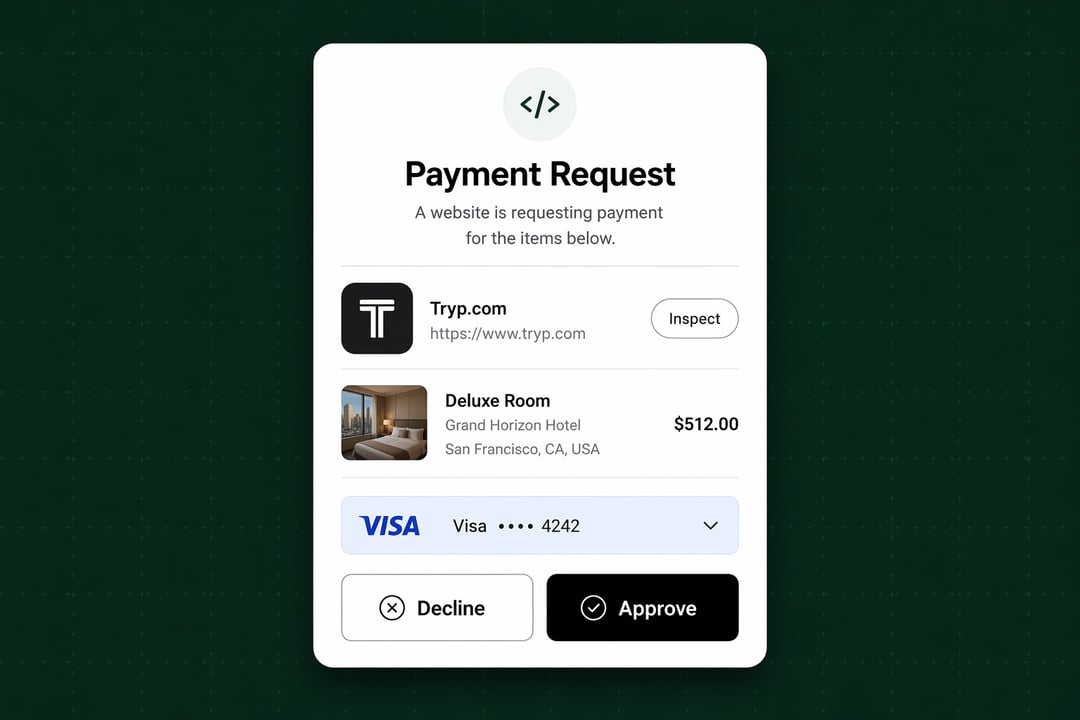
Here's how it works. You connect your AI agent to Link through a standard OAuth flow — same kind of authentication you'd use to connect any app to another. Once that's done, when your agent wants to make a purchase on your behalf, it creates a spend request, gives you the context of what it's trying to buy, and then waits. You get a notification on mobile or web, review the transaction, and approve it. Only then does the payment credential get shared with the agent.
And here's the key part: the agent never sees your actual card number. Instead, it gets either a one-time-use virtual card through Link's programmatic access, or a Shared Payment Token (SPT) — which is backed by your cards and bank accounts but isn't the real thing. It's a layer of abstraction that keeps your actual credentials out of reach.
Stripe says it's also expanding controls down the road — things like setting spending limits per agent, or letting agents act without approval under certain conditions you define. So the autonomy can scale as your comfort level does.
The Infrastructure Behind It
Under the hood, Link is built on Stripe's new Issuing for Agents product. This lets users issue virtual cards specifically for agent use, with real-time authorization, spending controls, and full transaction visibility. It's the kind of thing that makes sense once you think about it — instead of one shared card for everything, each agent gets its own leash.
Right now, Link works with traditional payment methods. Support for agentic tokens, stablecoins, and other payment types is coming "soon," according to Stripe.
For developers and businesses building AI personal assistants or agent products, there's an obvious appeal here too: they can plug into Link's wallet infrastructure instead of building their own from scratch. That's a meaningful shortcut.
Why This Matters Right Now
The timing isn't arbitrary. Autonomous AI has exploded in popularity — to the point where, as a data point, Apple's base model Mac Mini (a popular platform for running always-on AI agents) recently sold out. People are genuinely running these things, and they're running into the same friction point: the agents need to spend money, but the infrastructure for letting them do that safely hasn't really existed.
Link is Stripe's answer to that gap. And given that it also supports agents from services like OpenClaw and others, the intent is clearly to become a standard layer in how agentic commerce works — not just a one-off feature.