
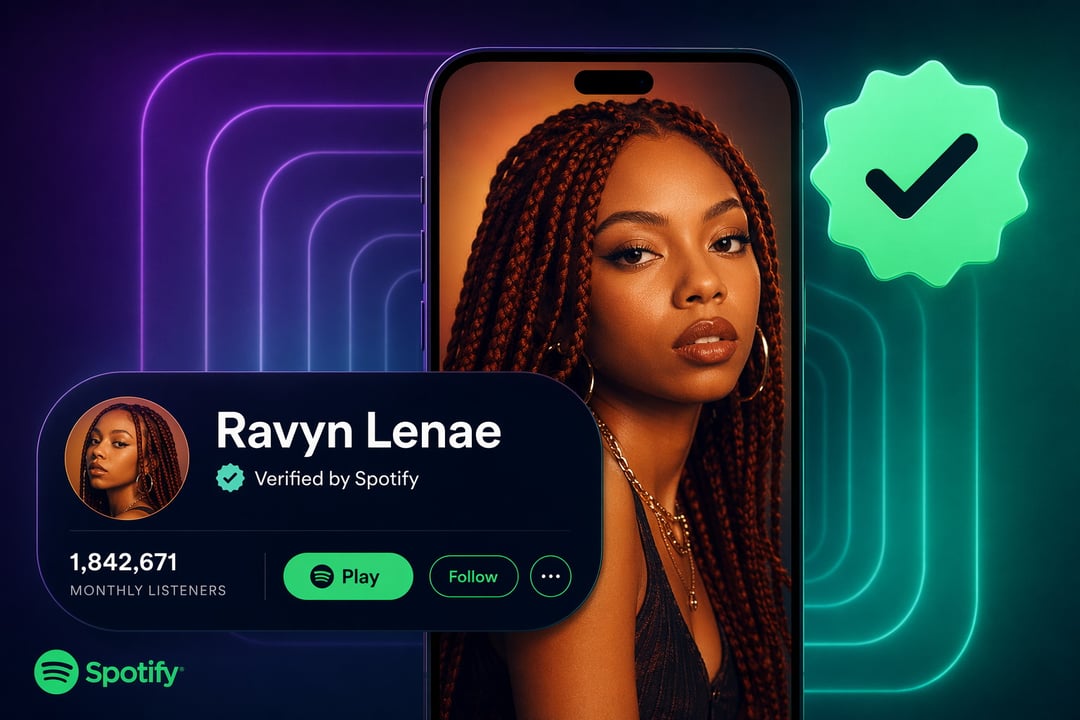
You know that feeling when you discover a new artist and you're genuinely moved by the music — only to wonder later if a human even made it? That's not paranoia anymore. It's a legitimate question in 2026, and Spotify is finally doing something about it.
The platform is rolling out a Verified by Spotify badge, and honestly, it's one of those features that feels overdue.
What the Verified by Spotify Badge Actually Is
It's a light green checkmark with "Verified by Spotify" text sitting right on an artist's profile and next to their name in search results. Simple, visible, and to the point.
But here's what makes it meaningful — it's not just a vanity tick. To earn it, an artist has to clear a few real hurdles: consistent listener activity over time, compliance with Spotify's platform policies, and a genuine, identifiable presence in the world. We're talking concert dates, merch, linked social accounts. The kind of stuff that, you know, humans have.
At launch, AI-generated artists and the AI personas that have been quietly flooding the service aren't eligible. Full stop.
Why This Matters Right Now
AI-generated music has been creeping into streaming platforms for a while. There have even been reports of music farms — basically algorithmic content mills — gaming streams and playlists. Spotify itself has acknowledged that AI slop is flooding music feeds.
So when you're searching for an artist or stumbling onto something new, there's a real chance you've been listening to something generated by a model rather than a person sitting in a room with a guitar or a DAW at 2am. The verified badge changes that dynamic. It gives you a quick, honest signal.
And the scale at launch is actually impressive — Spotify says more than 99% of artists that listeners are actively searching for will be verified from day one.
It's More Than Just a Badge
Alongside the verification checkmark, Spotify is adding a new section to all artist profiles — verified or not. It'll surface career milestones, release activity, and touring history. Think of it as a little biography that gives you actual context about who the person is beyond their discography.
That's a nice touch. Because even for artists you already love, knowing they've been touring for a decade or just dropped their first record adds texture to the listening experience.
How Does This Compare to What Apple Music Is Doing?
Apple Music recently launched something called "Transparency Tags" — a feature designed to flag AI-generated music. It's a different approach: instead of verifying humans, it labels the AI content.
And honestly? The Spotify approach feels cleaner. It's easier to confirm that someone is a real, active human artist than to accurately detect and tag every piece of AI-generated content. The verification model puts the signal on what you want to find, not on what you're trying to avoid.
This Isn't Perfect Yet — And Spotify Knows It
Spotify is upfront that the system will need refining. It's a first step, not a finished product. But that kind of honesty is actually reassuring — it means they're treating this as an ongoing commitment rather than a checkbox moment.
The bigger picture here is that streaming platforms are starting to take seriously something listeners have been feeling for a while: the creeping uncertainty about what's real. Verification won't solve everything, but it's a meaningful move toward helping you connect with the human artistry behind the music you love.