
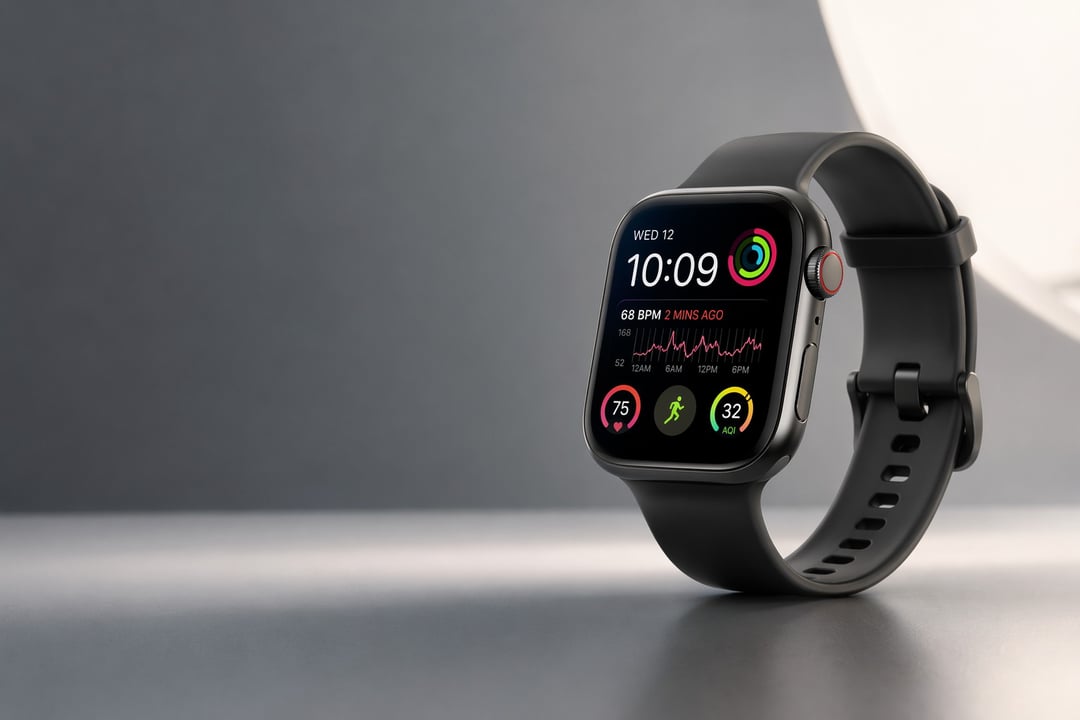
The smartwatch market has never been more crowded. Prices swing from under fifty dollars to well past a thousand. Every brand promises that its model will transform your health, your productivity, and your wrist. The truth is quieter. The best smartwatch isn't the one with the longest spec sheet. It's the one that fits your phone, your habits, and your budget. Knowing what to look for when buying a smartwatch turns an overwhelming decision into a simple sequence of trade-offs. Here are the five that matter most.
Phone Compatibility Comes First
Before you compare screens or sensors, answer one question: what phone do you own? Compatibility is the gatekeeper of this entire decision. An Apple Watch pairs only with an iPhone, full stop. Wear OS watches and many fitness brands lean toward Android, though some offer trimmed-down iPhone support that leaves features on the table.
This matters because a smartwatch lives inside an ecosystem. Contactless payments, message replies, and app syncing all work best when the watch and phone share a brand or platform. A watch packed with brilliant features becomes a frustration when it only half-connects to the phone in your pocket. Settle compatibility first and every later choice gets easier.
Battery Life and Charging Realities
Battery life is the spec marketers love to gloss over and buyers most often regret. Full-featured smartwatches typically last one to two days between charges. Fitness-focused models and hybrid watches can stretch to a week or more, because they do less and display less.
What drains the battery matters as much as the headline number. Always-on displays, built-in GPS, and continuous heart-rate tracking all carry a real cost. If you want to track sleep, you need a watch that survives the night with charge to spare. Be honest about your routine before you trust a manufacturer's best-case estimate.
Health and Fitness Tracking That Actually Matters
Health tracking sells smartwatches, yet not every sensor earns its place. Heart-rate monitoring, step counting, and sleep tracking are now standard across almost every model. These cover what most people genuinely use.
Advanced sensors are where budgets balloon. GPS helps runners and cyclists map routes without carrying a phone. Blood-oxygen, ECG, and skin-temperature readings appeal to a smaller group with specific interests. Ask yourself whether you'll actually open these features or simply pay for the privilege of owning them.
One honest caveat deserves attention. Consumer wearables estimate rather than diagnose. Their readings vary in accuracy from one model to the next. Independent reviewers regularly test these claims. Sites like Wirecutter are a reliable place to check before you buy. Treat the numbers as helpful guidance, not medical truth.
Display, Build, and Everyday Durability
A smartwatch sits on your wrist all day, so it has to survive your day. Screen quality shapes that experience more than any other visible feature. AMOLED displays look vivid and stay readable in bright sunlight, especially when paired with an always-on mode.
Durability deserves equal weight. Check the water-resistance rating if you swim or shower with the watch. Consider impact resistance if you train hard or work with your hands. Comfort is the quiet dealbreaker. A watch that feels heavy or awkward gets left in a drawer. A flexible band ecosystem lets you swap straps and adapt the watch as your style or activity changes.
Matching Price to Your Real Needs
Here's the reframe that saves money: the most expensive smartwatch is rarely the smartest purchase. The best-matched one is. Budget fitness bands handle the essentials for very little. Mid-range all-rounders balance features and price for most buyers. Premium flagships pile on sensors and apps that many owners abandon within a month.
Feature regret is the real enemy. Define your two or three must-haves before you shop. Then find the cheapest watch that nails them. That discipline beats chasing a spec sheet every time.
Making the Final Call
Choosing a smartwatch becomes simple once you follow the sequence: compatibility first, then battery life, health tracking, build quality, and price. Each step narrows the field and sharpens your decision. The smartest buy isn't the flashiest model or the one your favorite reviewer raved about. It's the watch matched to the life you actually live. Buy for your real habits, not the workouts you imagine. The watch on your wrist will still feel right a year from now.