
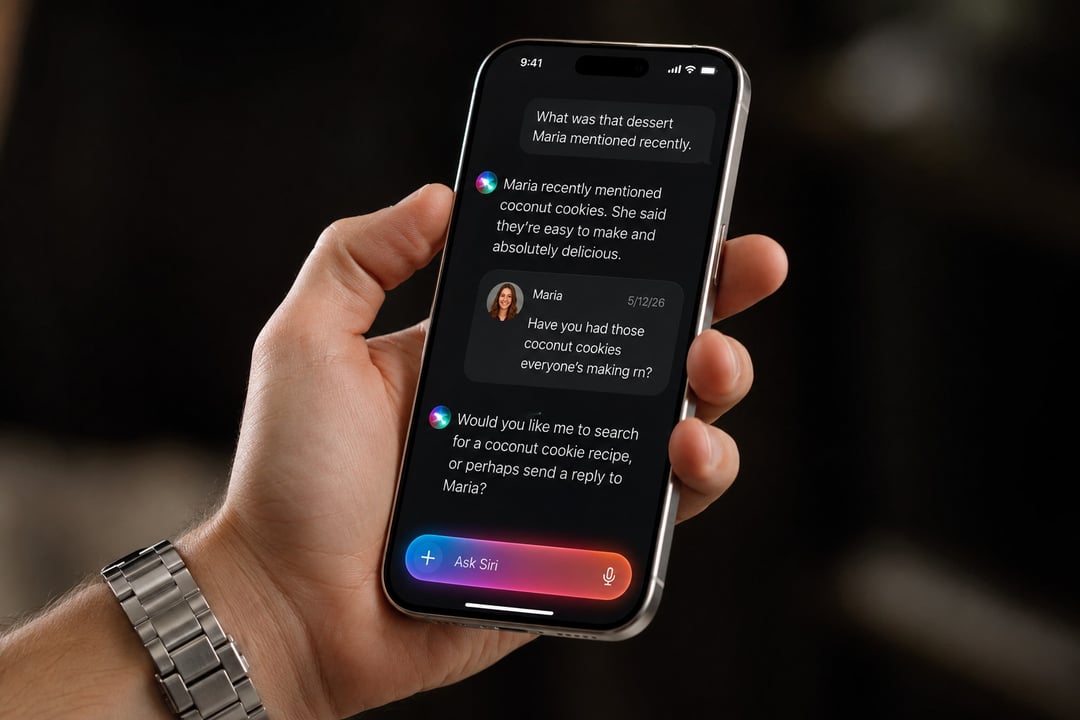
Apple is considering putting usage limits on its rebuilt Siri assistant, with paid upgrades sold through iCloud+ for anyone who wants more. Tim Cook floated the idea during his final earnings call as chief executive, framing it as one likely path rather than a locked-in decision. The mechanism he described is straightforward: iCloud+, which today sells extra cloud storage, would gain higher tiers that buy additional compute for Siri AI. Cook said Apple expects a subset of customers to lean on the assistant heavily, and that those customers should be able to move up the stack and pay for the headroom. How many actually do is, by his own admission, an open question — Apple plans to watch the uptake before drawing conclusions.
How the iCloud+ Upgrade Path Would Work
The proposal folds Siri AI into a subscription customers already understand. Rather than launching a separate assistant plan, Apple would layer AI compute onto the same iCloud+ ladder that currently handles storage, letting people step up when they hit a ceiling. Nothing about the pricing, the size of the free allowance, or the specific tiers has been settled. Cook was careful to say the plans could still change, and he paired the caution with unambiguous enthusiasm about the state of the assistant itself.
The approach is not novel. Most AI companies, Anthropic and OpenAI among them, already run on the same structure: a free version with capped usage, plus a paid tier for people who want to push past it. Apple adopting that model would put Siri AI in familiar company rather than staking out new ground.
When Siri AI Arrives
The overhauled assistant is already in the hands of developers and testers through the iOS 27 beta. The wider public release is scheduled for this fall. That timing matters for the paywall question — any usage tiers would need to be settled, or at least provisionally set, before Siri AI reaches a general audience at iPhone scale.
A CEO Handoff at an Awkward Moment
John Ternus, Apple's longtime senior vice president of hardware engineering, is stepping into the chief executive role. He inherits a company that has lost ground in the race to build an advanced AI assistant, and the Siri situation is the clearest evidence of it.
The Google Licensing Deal
Apple's response to falling behind was to license a custom Gemini model from Google to strengthen Siri. That is a notable concession: Google is a direct competitor, and Apple chose to build on a rival's model rather than wait for its own to catch up. It solved a capability gap, but it also made Apple's assistant partly dependent on the company it competes with.
The $250 Million Settlement
The delays carried a direct financial cost. Apple paid $250 million to settle a class action over how it marketed the iPhone 16's AI capabilities — features tied to a Siri overhaul that slipped far past what buyers were led to expect. For a company whose marketing discipline is usually an asset, that settlement stands out as an unusual admission of overreach.
The Hardware Squeeze Behind the Software Story
Siri AI's economics do not exist in isolation. Apple is bracing for meaningful supply constraints and has been stockpiling inventory to absorb them. The pressure traces back to an AI-driven RAM shortage running across the entire industry, which has pushed up the cost of building hardware for everyone.
Notably, Apple has not touched the price of its existing iPhone models. Every other lever has moved, but the iPhone line has stayed where it is — a meaningful holdout given that the phone is where Siri AI will live for most people.
That combination is the real tension worth watching. Memory costs are rising because of AI demand, and serving an AI assistant to a billion-device install base consumes real compute. Charging heavy Siri users through iCloud+ is one way to recover some of that cost without touching the sticker price of the hardware itself. Whether customers accept the trade — free assistant up to a point, subscription beyond it — is exactly what Apple says it intends to find out.