
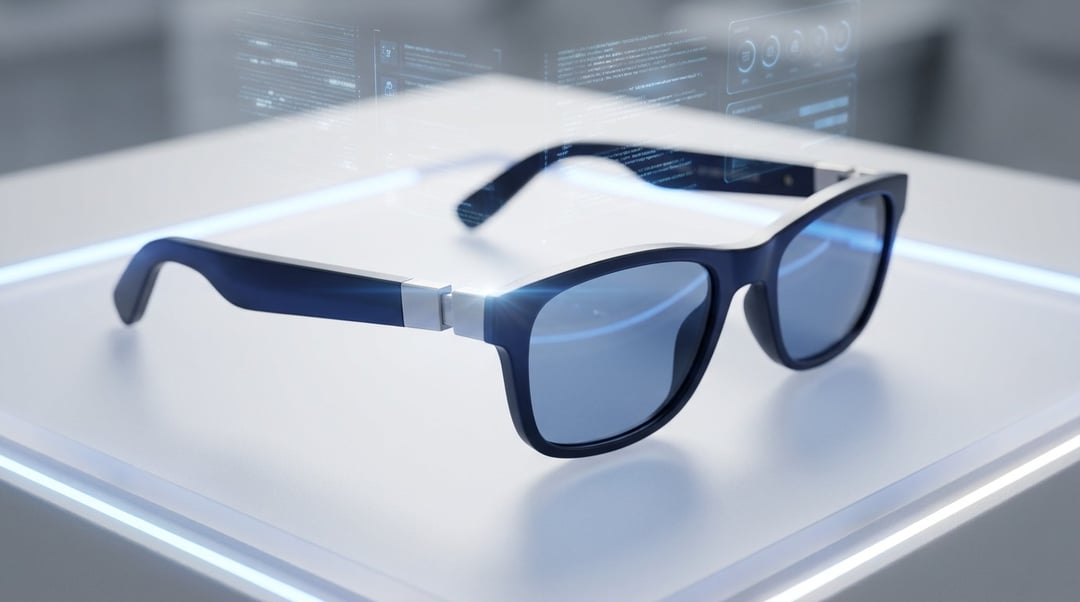
A New Wearable Is About to Join the Galaxy Family
Samsung is gearing up for a big summer. According to reports from Seoul Economic Daily, the company plans to unveil what's being called Galaxy Glasses at its next Galaxy Unpacked event in London on July 22. And honestly, that's kind of a big deal — because this isn't just another phone refresh or smartwatch update. This would be Samsung's first real push into AI smart glasses, sitting right alongside the Galaxy Z Fold8, Galaxy Z Flip8, and Galaxy Watch9 series.
The name "Galaxy Glasses" hasn't been officially confirmed yet. Pricing, launch regions, and final specs? Also still up in the air. But the direction is becoming clearer, and it's worth paying attention to.
What Galaxy Glasses Would Actually Do
Voice-First, Not Display-First
Here's the thing — Galaxy Glasses isn't shaping up to be some sci-fi AR headset projecting holograms in front of your eyes. Instead, it's expected to rely on a camera, microphones, and speakers. That makes it a voice-first device at its core.
The idea is that Gemini, Google's AI, would analyze what the wearer sees through the camera and feed answers back through audio. You look at something, ask a question out loud, and get an answer in your ear. Simple as that. No squinting at a tiny display, no complex hand gestures — just a conversation.
That setup means the glasses could be lighter, less intrusive, and a lot easier to actually wear out in the world. You wouldn't look like you're piloting a spacecraft. That matters more than people give it credit for.
The Gentle Monster Connection
Design is reportedly getting some serious attention too. Samsung is said to be leaning on Gentle Monster, a well-known eyewear brand, for the look of Galaxy Glasses. Google has already named Gentle Monster as a partner for its own Android XR glasses, so that collaboration seems to carry some weight in this space.
Why This Makes Sense for Samsung Specifically
Galaxy AI Gets a New Home
Right now, Galaxy AI lives on your phone — you tap, you unlock, you prompt. Galaxy Glasses would move that experience somewhere more ambient. It becomes something you wear, not something you use. And that shift, even if it sounds subtle, changes everything about how you interact with AI throughout your day.
Think about it this way: instead of pulling out your phone to identify a plant, check a menu, or translate a sign, you just... look at it and ask. The friction disappears.
Samsung's Real Advantage Is Its Ecosystem
Samsung's strongest card here isn't the glasses themselves — it's everything they'd connect to. Galaxy Glasses is expected to plug into Samsung AI phones, SmartThings, home appliances, and even future car-to-home features being built with Hyundai and Kia.
So the practical picture looks something like this: you glance at something in your kitchen, ask a question, and the answer routes directly into an action on your phone, your appliances, or your car. That kind of seamless loop between what you see and what your devices do — that's what makes this genuinely interesting, not just cool in a demo.
But, and this is a real "but" — it only works if those connections feel fast and reliable in actual everyday life. Smart glasses have had a rough track record when it comes to bridging the gap between impressive demos and real-world usefulness.
What Samsung Still Needs to Answer
The Questions Buyers Will Actually Ask
The July reveal should clear up a lot. There are some pretty fundamental questions still hanging in the air:
- Price — where does this land relative to competing devices?
- Battery life — can it last a full day, or is it a constant charging chore?
- Privacy indicators — how will bystanders know if they're being recorded?
- Recording controls — what options do wearers have?
- Launch regions — where will it be available first?
- Prescription support — a huge factor for a huge chunk of potential buyers
These aren't just nice-to-haves. They're the difference between Galaxy Glasses feeling like a real product and feeling like a concept that slipped through to a press event.
Samsung Has the Pieces — Now Comes the Hard Part
Samsung's software lane through Android XR and Gemini is solid. Its Galaxy user base is enormous. And its ecosystem reach — phones, watches, home appliances, vehicles — gives it a genuine foundation that most competitors don't have.
But having the pieces and assembling them into something people actually want to wear every day are two very different things. The glasses need to be comfortable enough that you forget you're wearing them, trustworthy enough that people around you don't feel uncomfortable, and practical enough that they hold up outside a carefully lit product launch.
That's the bar. July is when we find out if Samsung can clear it.