
Your laptop works through problems one step at a time. It's fast — impressively fast — but it's still linear. A quantum computer doesn't think that way. It explores millions of possible solutions simultaneously, like a chess grandmaster who can mentally play out every game at once rather than one move at a time. That's not science fiction anymore. In 2026, it's engineering.
We're at an inflection point. Quantum computing has quietly crossed from "fascinating lab experiment" to "real-world tool with real-world consequences." Most people haven't noticed yet. But the organizations paying attention are already pulling ahead.
First, Let's Get the Basics Out of the Way
What Makes a Quantum Computer "Quantum"?
Classical computers use bits — tiny switches that are either off (0) or on (1). Quantum computers use qubits, and qubits play by completely different rules.
Think of a regular bit as a coin lying flat: heads or tails, one or the other. A qubit is that same coin spinning in the air. While it's spinning, it's both heads and tails at once. That's superposition — the ability to exist in multiple states simultaneously until you actually measure it.
Then there's entanglement. Link two qubits together and they become permanently connected. Change the state of one and the other responds instantly, regardless of the distance between them. Einstein famously called this "spooky action at a distance." In 2026, it's a computational resource.
What Quantum Computers Are NOT Good At
Here's what the headlines usually skip: quantum computers aren't replacing your phone or laptop. They're specialists, not generalists. They shine on specific problem types — optimization, simulation, cryptography — and struggle with the everyday tasks classical computers handle effortlessly. Understanding this distinction matters because it separates realistic expectations from the hype cycle.
The State of Quantum Computing in 2026
The Qubit Milestone Race
The quantum field has moved fast. IBM, Google, and a wave of well-funded startups like IonQ and Quantinuum have been locked in a qubit arms race for years. But raw qubit count was always a misleading metric. What 2026 has brought into focus is error correction — the real frontier.
Early quantum machines were "noisy." Errors crept in constantly because qubits are extraordinarily fragile. Physical qubits require multiple redundant backups just to protect the integrity of one reliable logical qubit. That overhead has historically been brutal. But in 2026, error-corrected logical qubits are no longer theoretical — they're operational. That's not a small step. That's the step the entire field has been waiting for.
Who's Actually Using Quantum Computing Right Now?
Real deployments are happening. Pharmaceutical companies are using quantum simulations to model how drug molecules interact at the atomic level — a problem that would take classical supercomputers years. Financial institutions run quantum algorithms to stress-test portfolio risk across millions of correlated variables simultaneously. Logistics giants are solving route optimization problems at a scale that genuinely breaks classical approaches.
These aren't pilot programs running in a corner lab. Some are production systems influencing actual decisions. That shift — from experiment to deployment — is the quiet story of 2026.
The Cloud Quantum Era
You don't need to build a quantum computer to use one. IBM Quantum, Google Quantum AI, and Amazon Braket all offer quantum-as-a-service through the cloud. Any company with an internet connection can now run quantum workloads on hardware that would have been unimaginable a decade ago. This democratization is the part most people haven't fully absorbed yet. The barrier to entry just dropped dramatically.
The Honest Challenges Still Standing in the Way
Noise, Error Rates, and the Fragility Problem
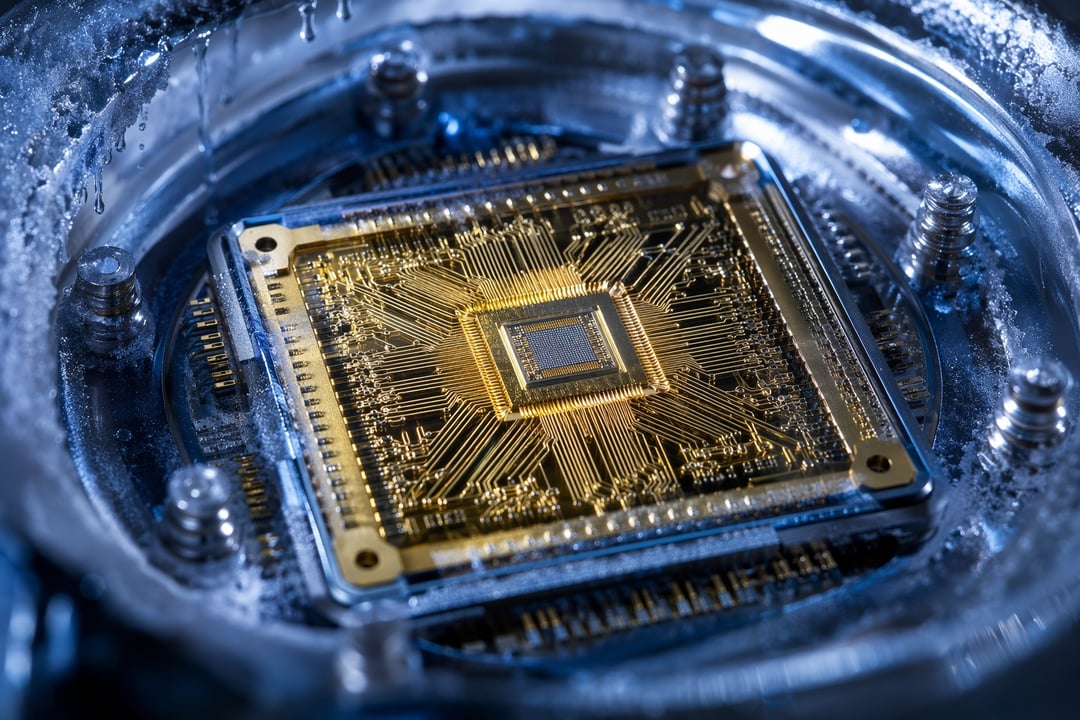
Qubits are sensitive to basically everything. Heat. Vibration. Electromagnetic interference. Even a stray photon can corrupt a calculation — a phenomenon called decoherence. Keeping quantum processors operational requires cooling them to temperatures colder than deep space. That's not a metaphor. It's a literal engineering requirement. Progress on error correction is real but the fragility problem isn't solved — it's managed.
The Talent and Infrastructure Gap
Quantum engineers are rare. Quantum-literate software developers are rarer still. The pipeline of trained talent hasn't caught up to the industry's ambitions. And the infrastructure cost — building, housing, and maintaining these machines — remains significant. The gap between research breakthroughs and scalable commercial deployment is narrowing but it's still wide enough to matter.
What's Next — The Quantum Horizon Beyond 2026
The Encryption Reckoning
Most of today's internet security rests on mathematical problems that classical computers can't solve in any reasonable timeframe. Quantum computers will eventually crack them. NIST finalized its post-quantum cryptography standards in 2024 and governments are already migrating critical systems. This isn't a crisis — it's a managed transition. But organizations that ignore it are accumulating risk quietly.
Quantum + AI: The Combination No One Talks About Enough
Machine learning depends heavily on optimization — finding the best solution across enormous solution spaces. That's exactly where quantum computing excels. The convergence of quantum hardware with AI workloads is still early but it's directionally inevitable. The companies exploring this intersection now aren't being speculative. They're being strategic.
The 5–10 Year Outlook
Fault-tolerant quantum computing — the genuine holy grail where machines run complex calculations with negligible error rates — is realistically a 2030–2035 milestone. Until then, hybrid classical-quantum systems will dominate practical applications. Think of it as quantum doing the hard, specialized lifting while classical computers handle everything else. This hybrid model isn't a compromise. It's the pragmatic path forward.
So, Should You Care About Quantum Computing Right Now?
If you work in pharma, finance, logistics, cybersecurity, or AI — yes, genuinely and urgently. The decisions your organization makes in the next two or three years about quantum readiness will have compounding consequences.
If you're a curious general reader, here's the honest truth: quantum computing in 2026 feels a lot like the internet in 1995. Most people don't quite grasp what it is or what it'll become. But the people paying close attention right now are already building the future with it.
You don't need to understand every qubit to understand the stakes. You just need to know that something fundamental is shifting — and it's shifting faster than most people realize.