
The Atlas Browser Is Going Away — Here's What's Replacing It
OpenAI is closing the book on Atlas, the AI-powered browser it built with ChatGPT sitting at the center of the whole experience. But don't read that as OpenAI backing away from the idea that AI should help you browse the web. It's not walking away — it's relocating. The agentic browsing features that were baked into Atlas are getting pulled out and spread across two places people already spend their time: the ChatGPT desktop app and a new Chrome extension.
Why OpenAI Pulled Back From Its Standalone Browser Bet
Here's the context that matters: this shutdown comes a few months after OpenAI's CEO of applications, Fidji Simo, told the team to stop chasing "side quests." That directive already had one casualty — it's what led OpenAI to shut down Sora, its AI video generation tool. Atlas is the second project to fall under that same tightening.
The AI Browser Wars That Pushed OpenAI to Rethink Its Strategy
For most of the past year, the AI industry has been locked in a fight to knock Chrome off its perch as the place people default to online. Perplexity threw its hat in with Comet. The Browser Company launched Dia. Google and Microsoft didn't sit still either, layering new AI features into Chrome and Edge respectively. After a few months of running its own experiment in that arena, OpenAI seems to have landed on a different conclusion: the browser isn't the prize. It's just a feature. So instead of trying to pull people into a brand-new app, OpenAI is folding those browser-like agent powers into the tools people are already using — Chrome included.
ChatGPT's New Chrome Extension: Your Browsing Sidekick
The first piece of that shift is a ChatGPT extension for Chrome. It gives ChatGPT access to whatever page you're currently looking at, so you can ask it questions about that page, get it to summarize what you're reading, or hand it a longer task without ever leaving your browser tab. It's built to go head-to-head with Google's own Gemini Side Panel, which already covers a lot of the same ground.
A Beefed-Up ChatGPT Desktop App Does the Heavy Lifting
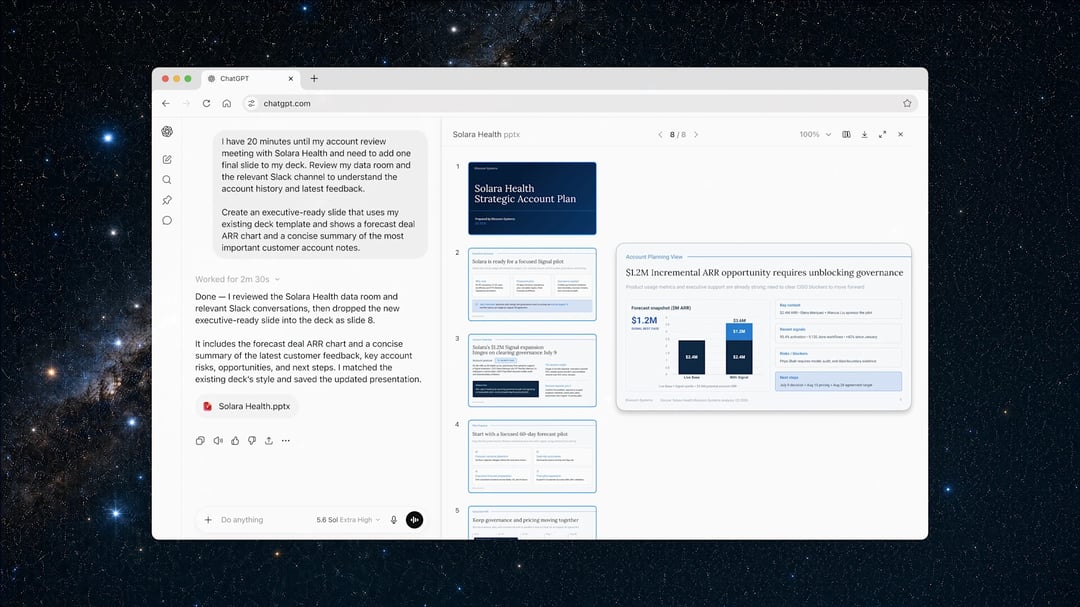
The second piece lives inside the ChatGPT desktop app itself, which is getting a much more capable browser built in. That means browsing websites, logging into accounts, downloading files, and interacting with pages — all without stepping outside ChatGPT. On top of that, there's a separate cloud browser running remotely on OpenAI's own servers, built specifically so ChatGPT's agents can go off and complete tasks for you in the background.
What This Means for How You'll Use ChatGPT Going Forward
Put those two updates together and you get a clearer picture of where OpenAI is headed: ChatGPT as a workspace that follows you across Chrome, the desktop app, and an AI agent working on your behalf — rather than one browser trying to be the whole destination.