
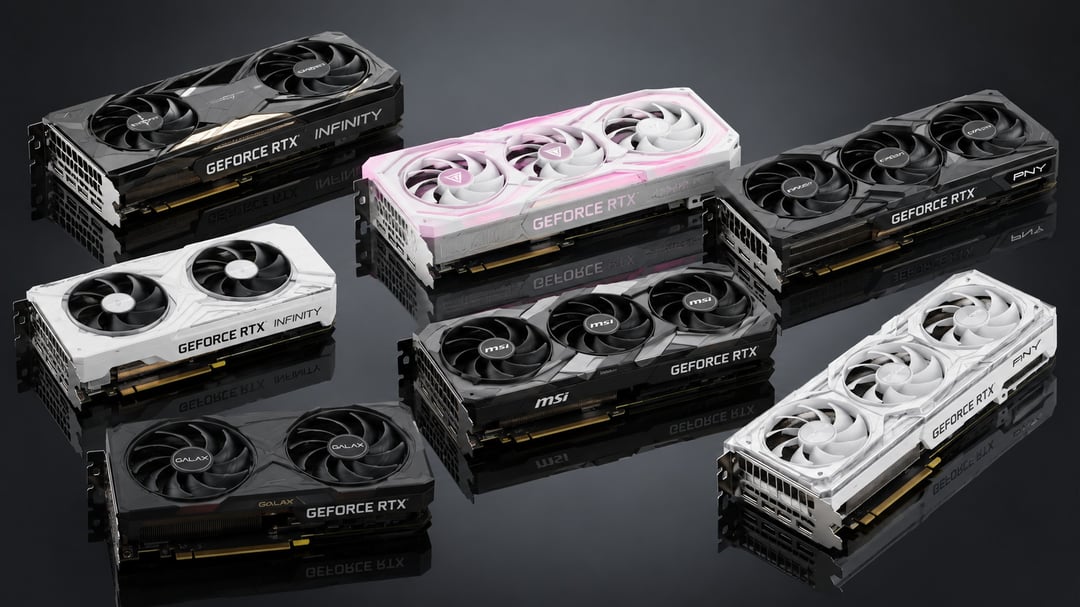
Nvidia is reportedly preparing another price increase for GeForce RTX graphics cards, with prices expected to rise by 20% to 30% across the lineup. It would be the company’s third consumer GPU price hike since January.
The increase is broader than the adjustment reported in May, which was limited to the RTX 5090. This time, the higher pricing is expected to affect all GeForce RTX models, putting more pressure on buyers already dealing with rising graphics card costs.
GeForce RTX Price Hike Expands Beyond the RTX 5090
Nvidia’s latest reported increase would apply across its consumer graphics card range rather than focusing on a single high-end model. That matters because the earlier May increase affected only the RTX 5090, while this change could reach gamers and PC builders shopping at more than one performance level.
Retail pricing has already started moving upward in some markets. In China, the 16GB GDDR7 version of the RTX 5070 Ti was reported at around 10,700 yuan, or $1,581. That compares with 9,299 yuan, or $1,374, the week before.
The same card launched in November 2025 at 7,200 yuan, or $1,064. The progression shows how quickly graphics card pricing can change when component costs move sharply.
Rising DRAM and GDDR7 Costs Are Driving GPU Prices Higher
The reported GPU price hikes are tied to a wider DRAM supply crisis. Demand for memory from AI data centers has increased pressure on available supply, raising the cost of the memory used in consumer graphics cards.
Board partners are reportedly paying nearly one-third more for GPU packages than they did earlier in the year. These packages include the graphics processor itself and the accompanying GDDR memory, so a rise in memory costs reaches directly into the cost of building a graphics card.
GDDR7 pricing illustrates the scale of the problem:
- Standard 2GB GDDR7 chips are selling for $20.
- 3GB GDDR7 modules are priced between $60 and $70.
- The higher-capacity module costs more than three times as much despite offering only 50% more capacity.
That gap makes memory capacity a much more expensive part of the final product than it was earlier in the year.
RTX 5070 Ti Retail Pricing Shows the Market Impact
The RTX 5070 Ti’s price movement provides a clear example of how rising component costs can show up at retail. Its reported price in China climbed from 7,200 yuan at launch to 9,299 yuan, then to roughly 10,700 yuan.
That latest figure is approximately 20% above the prior week’s price and far above the launch price. For buyers, this means waiting does not necessarily lead to lower prices when memory supply remains tight and costs are changing quickly.
Manufacturers also reportedly cannot predict how graphics card pricing will develop in the months ahead. The pace of changes in memory supply and cost makes it difficult to know where GPU prices will settle.
Nvidia’s Vera Rubin Platform Also Faces Higher Memory Costs
The memory cost problem is not limited to consumer GeForce RTX products. Nvidia’s upcoming Vera Rubin AI platform is also facing substantially higher memory expenses.
Memory costs for Vera Rubin are estimated at more than $2 million per rack. That represents a 435% increase compared with the Grace Blackwell generation.
To manage those costs, Nvidia may reduce SOCAMM memory capacity on Vera Rubin CPUs. Reports indicate capacity could be cut from 192GB to 96GB per module. That would reduce total system memory from about 55TB per rack to 28TB per rack.
The potential shift shows how higher memory prices can affect not only what customers pay, but also the configuration of future systems.
The DRAM Supply Crisis May Continue Until 2028
There is no immediate sign that the pressure on memory pricing will ease. The DRAM shortage is expected to last at least until 2028, when expanded production capacity may improve availability.
The effect is already reaching beyond Nvidia. AMD and Intel have also increased GPU and memory prices this year. Gaming hardware has seen related price increases as well, including the PlayStation 5, Steam Deck, and Nintendo Switch 2.
For consumers, the situation leaves little certainty around the cost of a future graphics card purchase. With memory supply changing rapidly, pricing may continue to shift before additional production capacity becomes available.