
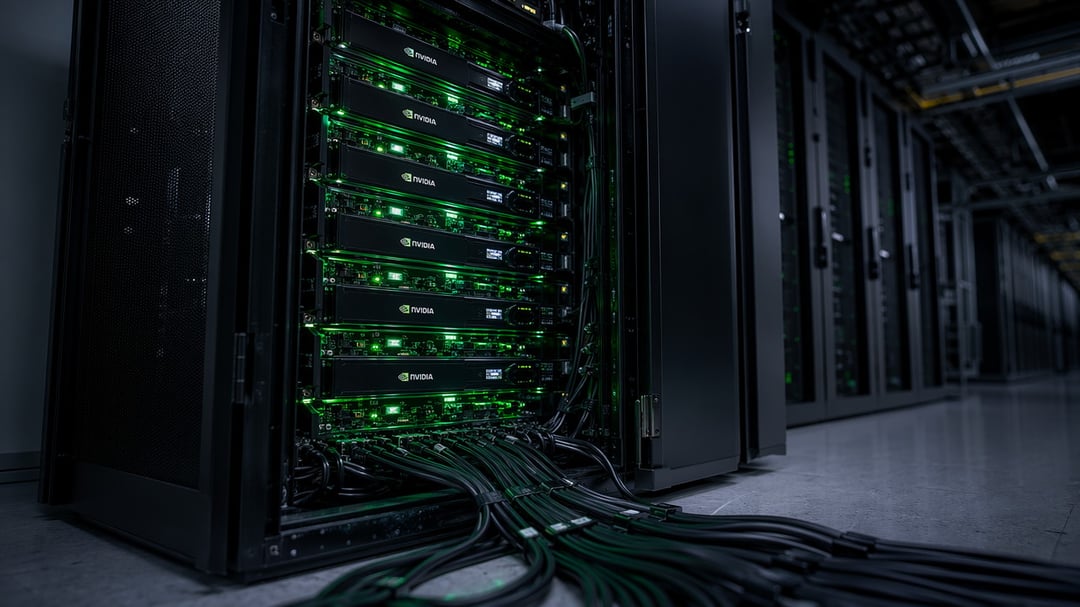
Nvidia Technology Now Drives More Than 400 of the World's Top 500 Systems
The 67th edition of the TOP500 list, revealed at the ISC High Performance 2026 conference in Hamburg, Germany, confirms Nvidia's continued grip on the global supercomputing landscape. Nvidia's technology now underpins more than 400 of the world's 500 fastest supercomputers, putting the company's share at roughly 81% of the entire list. That's a step up from the November 2025 list, when Nvidia powered 388 systems, or about 78% of the total.
The momentum extends to new entrants as well. More than 90% of newly ranked systems on this edition chose Nvidia technology. Adoption of Nvidia's Arm-based Grace CPU also accelerated, climbing to 26 systems — a 44% jump from the previous list.
China's LineShine Takes the Top Spot, Ending the U.S. Reign
The biggest surprise in the new rankings wasn't about market share — it was about rank. LineShine, a system installed in China that hadn't appeared on previous lists, debuted at No. 1 on the High Performance Linpack benchmark. The system displaced the U.S. Department of Energy's El Capitan, which had held the title of world's most powerful supercomputer.
Nvidia Announces Record European Supercomputing Expansion
Separately at ISC 2026, Nvidia revealed that 35 AI supercomputers are currently under development across 23 European countries. Once complete, these systems will give more than 3 million researchers access to next-generation AI infrastructure. Combined, the new systems will deliver approximately 800 AI exaflops of computing capacity, marking Europe's largest one-year supercomputing expansion to date.
Nvidia founder and CEO Jensen Huang framed the buildout in terms of scientific access, noting that AI has become a core scientific tool and that Europe is constructing the infrastructure needed to put that tool into the hands of a large research population.
Key European Installations
Several flagship projects anchor the expansion:
- MareNostrum5 AI upgrade at the Barcelona Supercomputing Center, expected to deliver roughly 20 exaflops of AI training performance
- IT4LIA, featuring more than 8,000 GPUs
- Blue Swan, BavariaAI's system in Germany
- Mimer EuroHPC AI Factory, operated by NAISS in Sweden
These systems are built primarily on Nvidia's Blackwell and Hopper platforms, with the upcoming Vera Rubin architecture also beginning deployment at multiple sites.
A Multi-Year Pattern of Expanding Market Share
Nvidia's presence on the TOP500 list has grown steadily over several editions. At ISC 2025, the company powered 77% of the list, with 381 systems using its accelerators or networking technology. A year before that, at ISC 2024, 89% of newly accelerated machines added to the list ran on Nvidia GPUs. The November 2024 list recorded 384 Nvidia-powered systems, with 87% of new entrants selecting the company's Hopper GPUs.
The rise of the Grace CPU illustrates this trend well. Adoption grew from just seven systems in mid-2024 to 26 systems on the current list, reflecting Nvidia's expansion beyond standalone accelerators into full-system design. The company also maintains a strong position on the Green500 energy-efficiency rankings, where systems powered by Grace Hopper have consistently occupied top spots.
Vera Rubin Platform Debuts Alongside the New Rankings
With the ISC 2026 conference running through June 26, Nvidia used the event to introduce its Vera Rubin platform. The new system packs more than seven exaflops of AI performance and five petaflops of native FP64 computing into a single rack, effectively concentrating TOP500-level supercomputing power into a single-rack footprint.
Competitive Context: AMD's Position in High-Performance Computing
While Nvidia's overall share of the TOP500 list continues to grow, AMD retains a notable presence in the highest-performance tiers, particularly among U.S. government exascale machines. This dynamic adds a layer of competitive nuance to the list: Nvidia's broad numerical dominance across the 500 systems coexists with AMD's continued relevance at the very top end of government-backed supercomputing.