
Neural compression shifts AI deeper into the rendering pipeline
Nvidia is pushing neural rendering beyond keynote demos and end-of-pipeline image reconstruction. Its latest technical discussion highlights a different direction: moving texture and material data into compact neural representations inside real engines. The focus is less about applying a final upscale pass and more about reducing memory use, improving performance, and handling asset data more efficiently throughout the rendering process.
This makes the broader neural rendering roadmap feel more practical. Instead of leaning on one large AI stage at the end of a frame, the idea is to place smaller neural networks deeper in the engine, each assigned to a specific job. That includes decoding textures, evaluating materials, and reducing memory traffic.
Neural Texture Compression cuts VRAM usage from 6.5GB to 970MB
How Neural Texture Compression works in practice
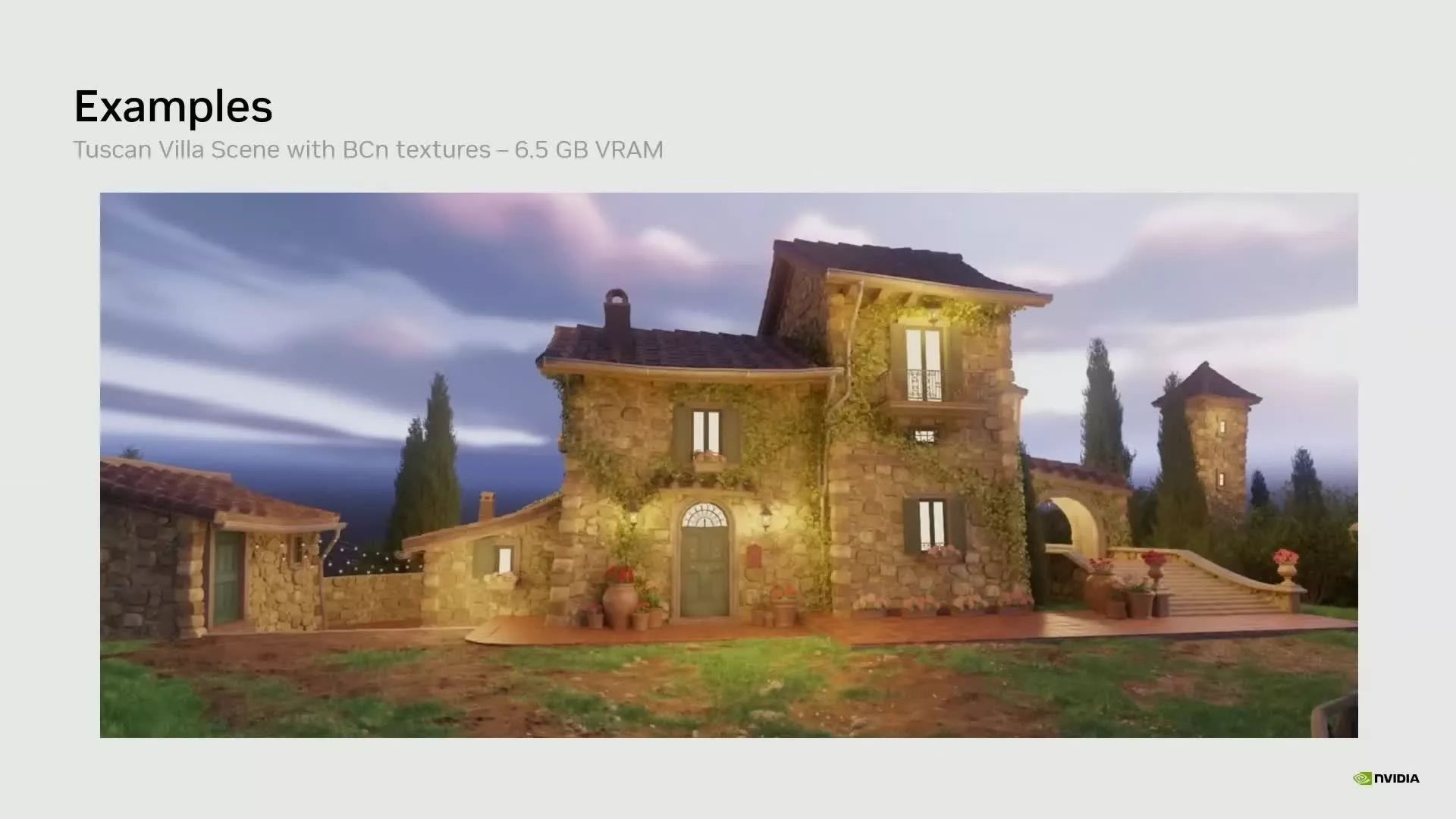
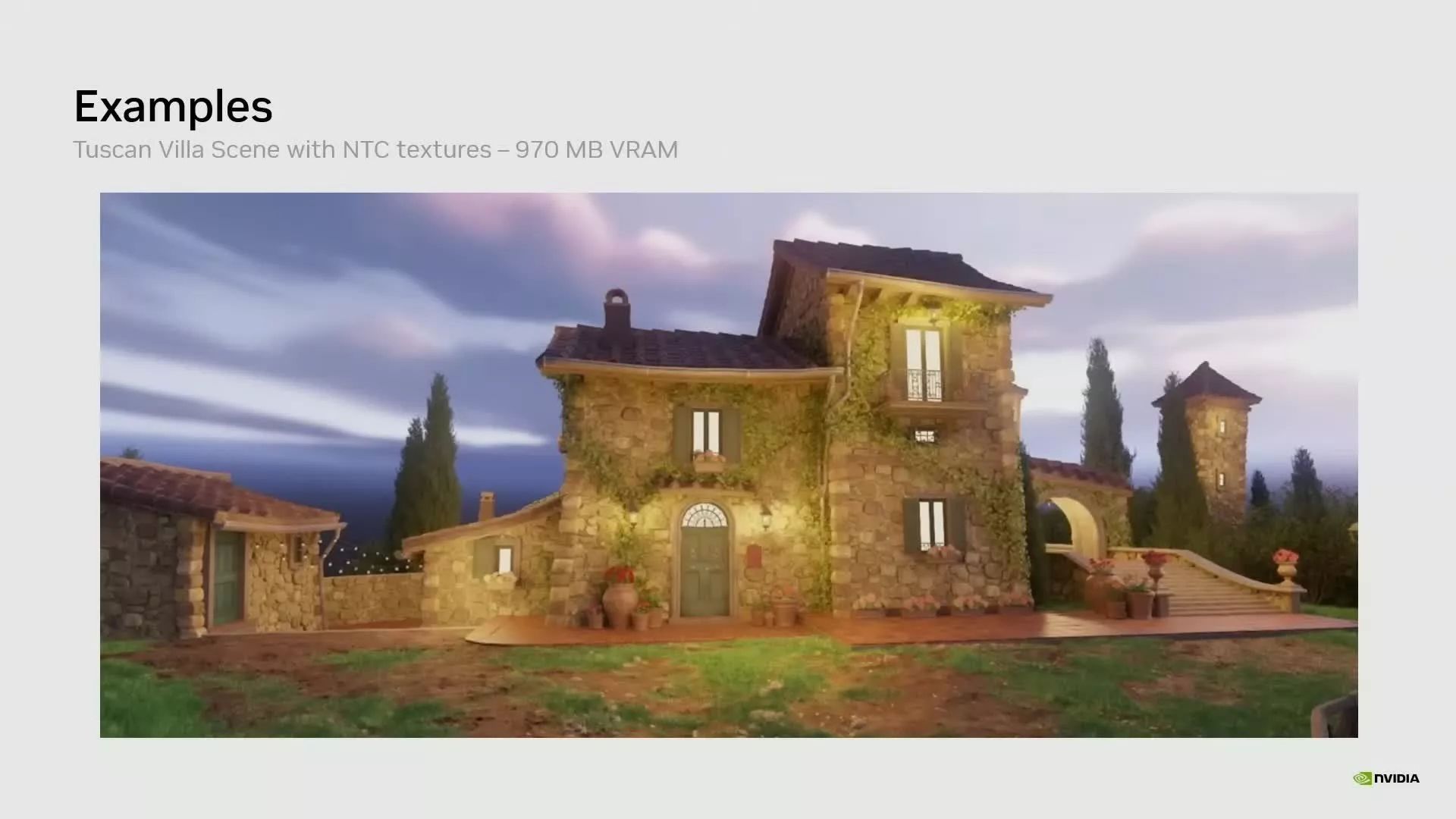
Nvidia's Neural Texture Compression, or NTC, is presented as a way to store texture data in a much more compact form. In the company's "Tuscan Wheels" demo, VRAM usage dropped from around 6.5GB with traditional BCN-compressed textures to 970MB with NTC, while image quality stayed close to the original.
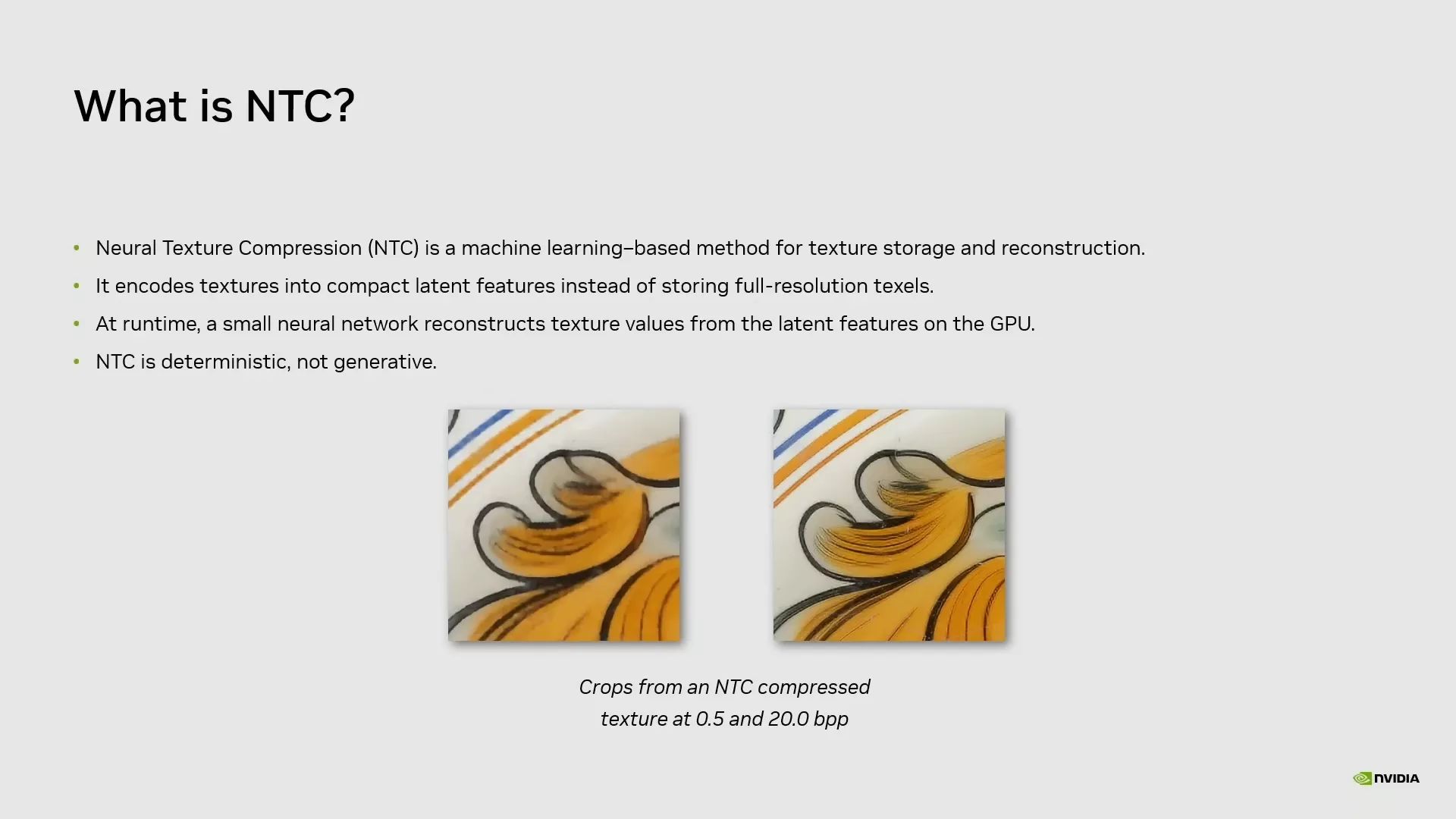
At that same 970MB memory budget, NTC also kept more detail than standard block compression. That's the part that really stands out. The reduction is not framed as a tradeoff where memory savings come at the expense of visible quality. Instead, the technique is shown as a way to lower memory demands while preserving detail more effectively than conventional compression at the same budget.
Why Using Less Texture Memory Is Important
That kind of compression has several practical effects. Smaller assets can lead to smaller game installs, lighter patches, and reduced download bandwidth. It also opens up more room for higher-quality assets on the same GPU.
For studios dealing with texture bloat, this matters in a direct, usable way. Freeing up VRAM is not just a technical win on paper. It creates more space for asset quality and resource planning without depending on another layer of image reconstruction.
Neural Materials reduces shading complexity
Encoding material behavior into compact neural data
Neural Materials, or NM, applies a similar idea to the shading pipeline. Rather than storing a large number of texture channels and running heavier BRDF math, Nvidia encodes material behavior into a compact latent representation. A small neural network then decodes that representation at render time.
The goal here is efficiency, not a new visual style. Nvidia positions Neural Materials as a way to store and evaluate existing material data more efficiently, which can allow for greater scene complexity within the same hardware budget.
Reported render time gains in one example
In one example, a material setup with 19 channels was reduced to eight. Nvidia reported 1.4x to 7.7x faster 1080p render times in that scene.
That gives Neural Materials a clear role in the pipeline: reduce the cost of material evaluation while keeping the underlying material behavior intact. It's less about changing how a game looks and more about making existing material systems lighter and faster to process.
Nvidia's neural rendering roadmap goes beyond DLSS 5
DLSS 5 operates at the end of the rendering pipeline, where machine learning is applied to the final image. Nvidia's more recent explanation points somewhere else. The company is focusing on embedding smaller neural systems earlier and deeper in the engine.
That broader strategy matters because it changes what AI is doing in games. Instead of acting mainly as a final-image filter, these neural systems are being used to shrink assets, streamline shading work, and cut memory traffic. The emphasis is on task-specific models rather than a single monolithic pass at the end of the frame.
AI optimization without changing a game's visual identity
A growing divide around AI-driven reconstruction
Since DLSS 5 was introduced, a divide has become more visible. Some developers and players remain cautious about AI-driven reconstruction because it can be seen as overriding artistic intent. There's interest in using AI for optimization, image quality, and performance, but without reshaping a game's visual identity.
Why NTC and NM may appeal to developers
That helps explain the appeal of NTC and NM. Nvidia is presenting these systems as advances that happen in the less visible parts of the pipeline. They shrink assets, speed up shading, and free up GPU resources while leaving the look of a game in the hands of its creators.
It's a different pitch for AI in graphics. Not AI as a layer that changes the final look, but AI as infrastructure that makes rendering more efficient underneath it.
Practical advantages of neural texture and material systems
Nvidia's NTC and NM point to a more compact and efficient way of handling game data. Together, they suggest a pipeline where textures use far less VRAM, material systems require fewer channels, and rendering work becomes lighter in targeted parts of the engine.
The practical benefits described include:
- Lower VRAM usage
- Smaller game installs
- Lighter patches
- Reduced download bandwidth
- Faster shading performance in some scenes
- More room for higher-quality assets
- Greater scene complexity within the same hardware budget