
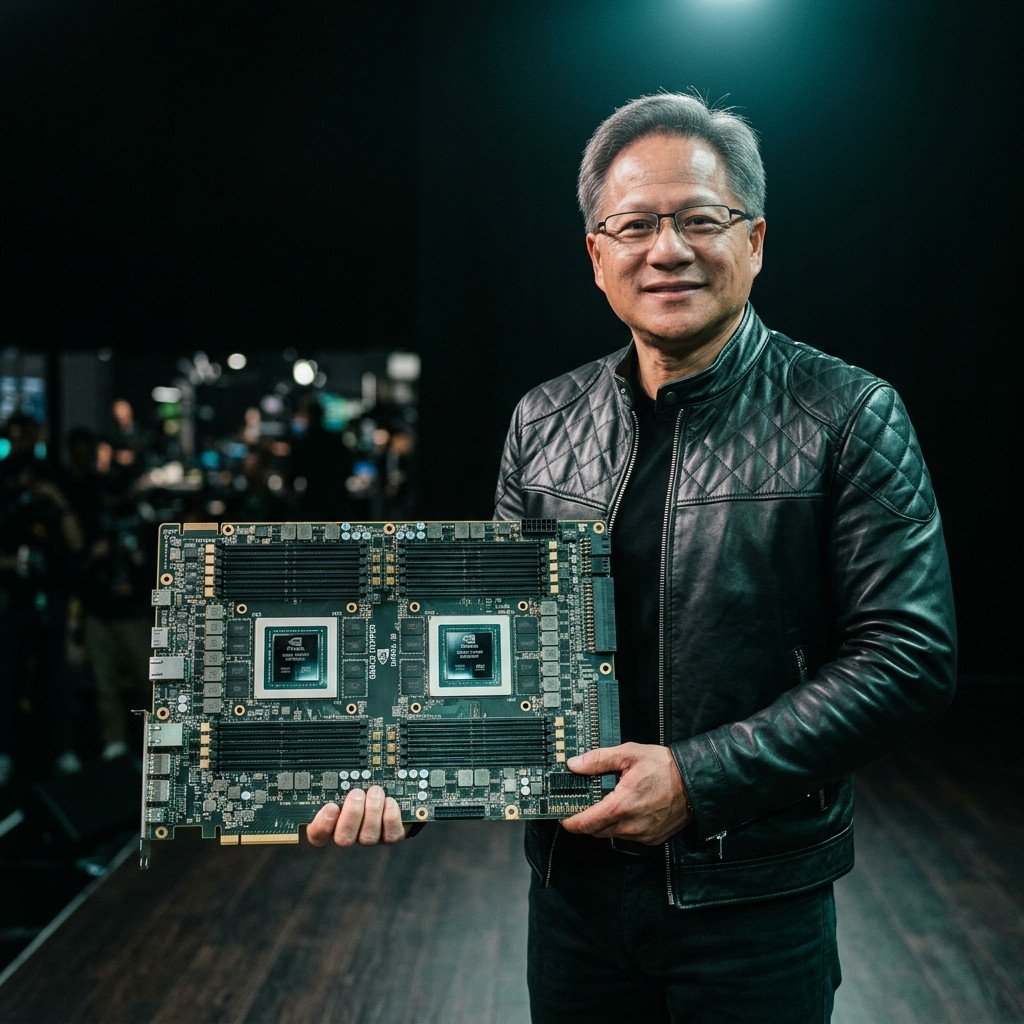
Nvidia networking revenue is becoming a major growth engine
Nvidia’s networking division is turning into a business of enormous scale, and that matters because it shows the company is no longer just riding on GPU demand alone. The TechCrunch report makes the core point pretty clearly: Nvidia’s networking operation is growing into a multibillion-dollar powerhouse that could begin to rival the importance of its chip business in the broader AI infrastructure stack.
That shift is important because AI data centers don’t run on chips in isolation. They need high-speed networking to move massive amounts of data between servers, accelerators, and storage systems. And that’s really the story here. Nvidia isn’t just selling the engines of AI. It’s selling the roads those engines need to move on.
Why AI infrastructure demand is boosting Nvidia networking business
The rise of generative AI and large-scale AI training has created an intense need for faster and more efficient data movement inside data centers. According to the provided context, Nvidia’s networking division is benefiting directly from this wave, building a business worth billions as companies scale up their AI computing environments.
High-speed data movement is essential for AI workloads
AI systems depend on constant communication between processors. Training large models means spreading work across many chips at once, and that only works well when networking can keep latency low and throughput high. Nvidia’s networking products are becoming critical because they help connect those compute resources into unified, high-performance systems.
AI data centers need more than GPUs
One of the clearest takeaways from the context is that the AI boom is expanding the value of adjacent infrastructure. GPUs may grab the headlines, but networking has become a core layer of the same spending cycle. Nvidia appears to be capturing more of that stack, which gives it a stronger position with customers building advanced AI clusters.
Nvidia’s strategy is to own more of the AI stack
The article’s central idea is not just that Nvidia networking is growing, but that it is becoming strategically powerful. The company is building a broader AI infrastructure empire by combining chips with networking technology, making its offerings more integrated and more difficult for rivals to displace.
Integrated systems strengthen Nvidia’s competitive position
When one company provides both the processors and the networking fabric that connects them, it gains a real advantage. Customers looking to deploy AI infrastructure at scale often want performance, compatibility, and simplified deployment. Nvidia’s expanding networking business supports that by fitting naturally into its larger data center strategy.
Networking expands Nvidia beyond its core chip identity
The context frames the networking division as something much bigger than a side business. It is evolving into a serious commercial force in its own right. That changes how Nvidia should be viewed in the market. It is no longer just a semiconductor company benefiting from AI demand. It is increasingly an infrastructure company with multiple billion-dollar pillars.
How Nvidia networking could rival its chips business in strategic importance
The TechCrunch piece emphasizes that Nvidia’s networking division is being built into a behemoth. That word matters. It suggests scale, momentum, and long-term ambition. Even if the chips business remains the company’s flagship operation, the networking arm is becoming important enough to rival it in influence over customer decisions and platform adoption.
Networking creates deeper customer dependence
A company that buys Nvidia chips can, in theory, mix and match surrounding infrastructure. But a company that relies on Nvidia for both compute and networking becomes more deeply embedded in Nvidia’s ecosystem. That creates stronger retention, more cross-selling opportunities, and a wider competitive moat.
Multibillion-dollar scale changes investor and market perceptions
Once a division reaches multibillion-dollar status, it stops looking experimental or secondary. It becomes a major business line. In this case, the context suggests Nvidia networking has crossed into that category, which means its role inside the company is likely to command more attention from investors, enterprise buyers, and rivals.
Nvidia networking business highlights the economics of AI data centers
The article also points to a broader truth about the economics of AI infrastructure: enormous value is being created not just in compute, but in the systems required to make compute usable at scale. Networking is one of the clearest examples of that shift.
AI spending is spreading across the full infrastructure layer
As enterprises and cloud providers invest more heavily in AI, spending naturally expands beyond chips. High-bandwidth, low-latency interconnects become necessary pieces of the same buildout. Nvidia is positioned to capture this demand because its networking offerings align with the exact needs of large AI deployments.
Data center buyers increasingly value full-stack performance
Customers building AI systems care about results, not just individual parts. They want the whole environment to work efficiently under extreme workloads. Nvidia’s ability to combine its networking technology with its compute leadership gives it a compelling story in these high-stakes purchasing decisions.
Nvidia’s networking expansion shows where AI competition is heading
The report suggests that competition in AI infrastructure is no longer limited to who makes the best chips. The battleground is getting wider. Companies now need to compete across entire systems, including the networking layer that supports distributed computing at scale.
The next phase of AI leadership depends on system-level control
Winning in AI increasingly means controlling the interactions between hardware components, not just leading in one category. Nvidia’s networking growth reflects that shift. By strengthening its role in the connective tissue of AI data centers, the company is reinforcing its influence over how modern AI systems are designed and deployed.
Rivaling the chips business does not mean replacing it
The networking division’s rise does not suggest Nvidia’s chips are becoming less important. It means the company has found another powerful avenue of growth tied directly to the same AI trend. That’s what makes the development so significant. Nvidia is extending its dominance sideways, not moving away from its core.
Nvidia networking division is becoming central to the company’s AI future
Based on the provided context, Nvidia’s networking division is no longer a supporting act. It is becoming central to the company’s future as AI infrastructure spending accelerates. The business is scaling into a multibillion-dollar operation, deepening Nvidia’s control over critical parts of the data center, and strengthening its position as a dominant force in the AI economy.