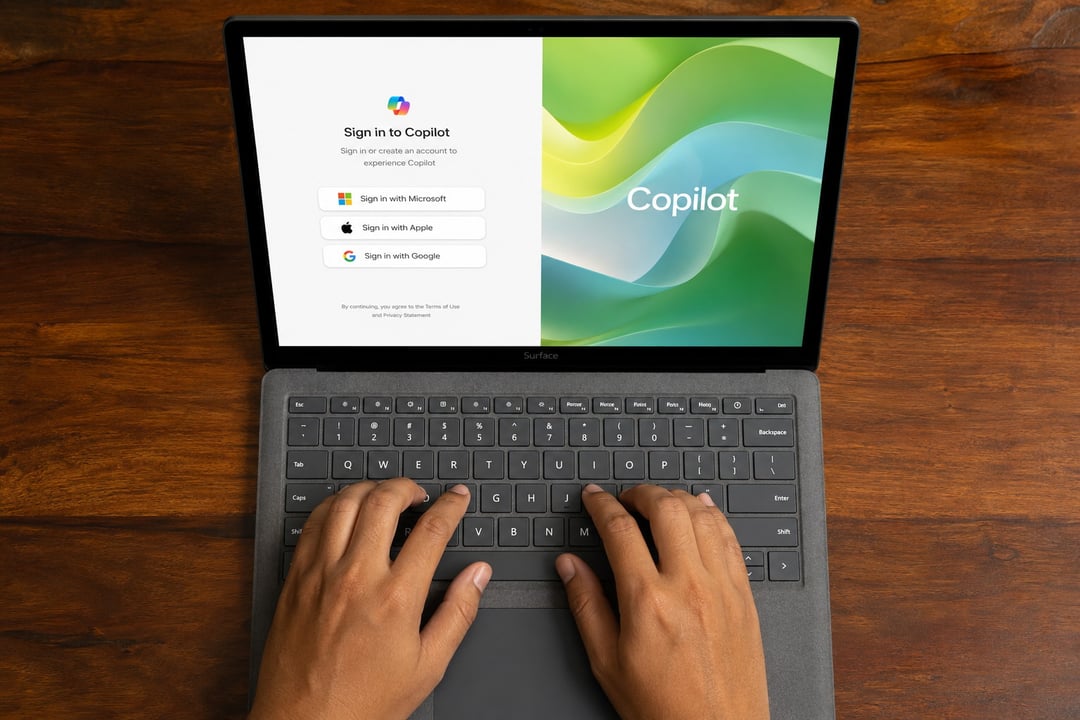
Satya Nadella used Wednesday's earnings call to confirm what a lot of people suspected: Microsoft is folding every Copilot experience into a single application. Not a redesign. Not another entry point. One app that carries chat, Cowork, coding help, and autonomous agents together, built to serve everyday consumers and enterprise customers from the same shell.
He called it a super app. He also called the move a major step forward, and he said it's coming this year — which is about as much of a launch window as anyone got.
What Nadella Actually Committed To
The framing on the call was less about a new feature and more about consolidation. Copilot, in Nadella's telling, has covered a lot of ground in a short stretch: it started as a straightforward chat tool, grew into Cowork, and has since expanded into Autopilots — the name Microsoft uses for autonomous agents that take long-running tasks and work them on their own.
Pulling those into one place is the plan. Nadella returned to the idea later in the same call, describing the result as the flagship app that different roles inside a company would open every day. That's a meaningful positioning choice. It suggests Microsoft isn't building a consumer toy with an enterprise mode bolted on, or the reverse. It wants one surface that a marketer, a developer, and an operations lead all treat as their default.
This also wasn't the first hint. Fortune reported in May that Microsoft had a super app in the works quietly. Nadella's comments essentially move that from reporting to confirmation.
Why Consolidation Is the Whole Point
Here's the problem the super app is aimed at. If your workday already runs through Copilot for writing, GitHub Copilot for code, and something separate for the agent work grinding away in the background, you're not using one AI assistant. You're using three, and you're the connective tissue between them.
Every switch costs something:
- Context loss. What you told one tool doesn't travel to the next one.
- Inconsistent behavior. Three interfaces, three sets of habits, three ways the same request gets interpreted.
- Friction that adds up. Not dramatic on any single task, but constant.
One app collapses that. Less switching, and — this is the part Microsoft is betting on — a more consistent experience across everything its AI can actually do for you. Whether that lands depends entirely on execution, but the diagnosis is correct. Fragmentation is the current pain.
30 Million Paid Seats Changes the Stakes
Microsoft says it already has more than 30 million paid Copilot seats. That number is worth sitting with, because it reframes this from a product announcement into a migration event.
A consolidation of this scope doesn't touch a niche audience. It reaches tens of millions of people who have built workflows, shortcuts, and muscle memory around whichever Copilot they happen to use most. Some of them will get a cleaner day out of this. Others will spend a few weeks relearning where things live. Either way, a lot of paying customers will feel the change directly rather than reading about it.
It also means Microsoft has a real installed base to bring along, which is a different competitive position than launching into an empty room.
The Race to Be the App People Open First
Microsoft isn't moving into open territory. The push toward a single unified AI application is happening across the field at roughly the same moment.
Anthropic
Anthropic's Claude already ships an app that brings its tools together in one place. Microsoft is following a pattern here, not setting it.
OpenAI
OpenAI recently revealed ChatGPT Work, which merges ChatGPT with its Codex coding assistant — the same collapse of general assistant and developer tooling that Microsoft is describing.
Strip away the branding and every one of these companies is chasing the same outcome: be the AI app someone opens first, whether the task in front of them is writing an email or shipping code. First-open position is the prize, because the app you reach for by reflex is the app that ends up holding your context, your habits, and your subscription.
The Questions Microsoft Didn't Answer
For all the confidence in the announcement, the practical details are still missing.
Pricing is unaddressed. With 30 million paid seats spread across different Copilot products, how a unified app is packaged and billed is not a small footnote.
Rollout is vague. "This year" leaves an enormous range — a January launch and a December launch are very different planning problems for anyone building on top of these tools.
The fate of the standalone apps is the biggest open item. If Copilot, Cowork, and the coding tools all live inside the super app, it's unclear whether the individual products continue, get folded in entirely, or quietly wind down.
Those three gaps are exactly what teams need in order to plan. Nadella's enthusiasm on the call suggests more information is coming, but for now the commitment is directional rather than concrete.