
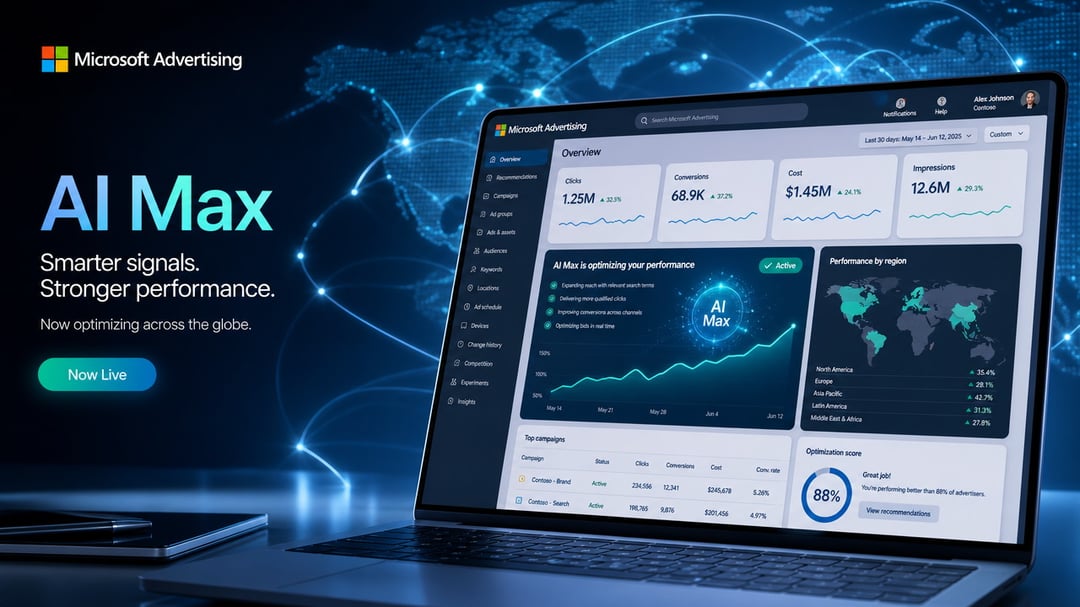
Microsoft Advertising has made AI Max available to every advertiser account worldwide. The AI-powered suite for Search campaigns is now generally available after months of testing. It brings expanded search matching, automated creative generation, and dynamic landing page routing.
What AI Max Includes
AI Max works as a single campaign-level toggle that packages three features.
Search term matching widens reach past an advertiser’s current keyword list. It draws on keywords, ads, landing pages, and intent signals to surface additional queries the campaign might otherwise miss. That includes conversational queries that appear in AI experiences on Bing and Copilot.
Text customization creates and tests fresh ad messaging variations. It pulls from the advertiser’s existing assets and website content.
Final URL expansion sends people to the landing page that best fits their intent instead of locking them to one fixed destination.
Brand controls sit in place from the start. Advertisers can set term exclusions for text asset generation, review reporting, and keep full choice over the settings. The features stay opt-in for both new and existing campaigns. Campaigns already running autogenerated text assets or Predictive Matching will see the matching AI Max options switched on automatically.
The release follows Microsoft’s earlier announcement of AI Max and an open pilot that started in May.
Max CPC Bidding Changes for New Campaigns
Microsoft Advertising also told advertisers that Max CPC bidding will stop being an option when they create new non-portfolio campaigns beginning October 1, 2026.
Three paths to a bid ceiling remain available: target impression share, enhanced CPC, and portfolio bid strategies.
Campaigns can still over-achieve on TCPA or TROAS targets even when they are budget-limited. That approach differs from a recent Google adjustment that pulls over-performing campaigns back toward their stated targets under budget limits.
How Advertisers Are Responding
Some practitioners who relied on the native Max CPC cap inside smart bidding called the change disappointing. They valued the built-in ceiling that did not force a switch to portfolio structures.
Portfolio strategies are still offered, yet they require grouping several campaigns under one shared goal. That setup adds structural and reporting complexity that a single bid field avoided. Advertisers have roughly six weeks before the change takes effect at the start of Microsoft’s fiscal second quarter.