
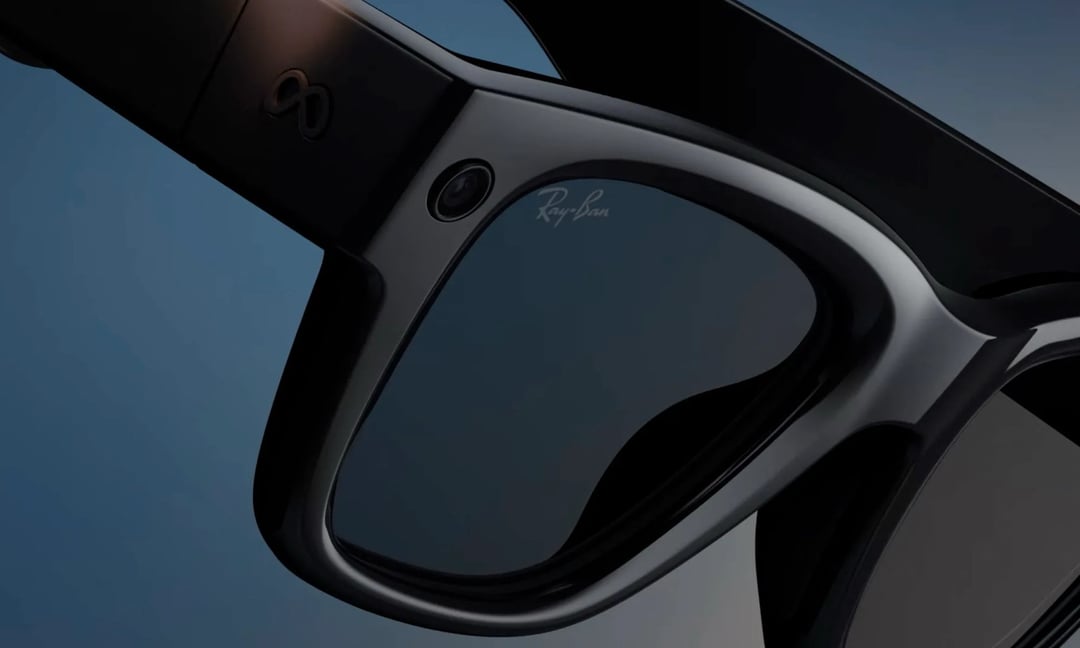
Meta appears to have been quietly building face recognition capabilities into the app that powers its Ray-Ban and Oakley smart glasses. A new WIRED investigation reports that the company licensed the underlying technology from Rank One Computing, a Denver-based firm that pulls roughly 80% of its revenue from government clients — including the US military and police departments across the country. It's the first known evidence of a business relationship between the two companies, and it pushes a familiar question into uncomfortable territory: where does consumer technology stop and surveillance infrastructure begin?
Who Is Rank One Computing?
Rank One is not a typical consumer tech vendor. Its face recognition software is used by the US Marshals Service, the Naval Criminal Investigative Service, and the US Special Operations Command — the last of which funded research said to identify a face from as far as one kilometer away.
The company's leadership reads less like a startup roster and more like a government directory. Its CEO previously ran the FBI's biometric database division, and its board includes former CIA, FBI, and Pentagon officials. In February 2026, Rank One went public on the Nasdaq.
That background matters here. The same face recognition pipeline trusted by federal law enforcement and special operations units is the technology Meta chose to license for a pair of consumer glasses you can wear to brunch.
What Meta Built Into the App
The license Meta acquired covered more than basic face matching. It included Rank One's face recognition software alongside liveness detection — a check that confirms a camera is pointed at a real person rather than a photograph. The system was built to support up to 10 million facial templates.
WIRED found the footprint of that technology hiding in plain sight. Remnants of Rank One's code were sitting dormant inside a version of Meta's AI app that shipped to more than 50 million phones this month. Meta also built its own internal face recognition system, called NameTag, into the very same app.
Crucially, none of it was ever switched on for users. The capability existed in the code, but it never went live.
Two Face Recognition Systems, One App
It's worth separating the two pieces, because the app carried both at once:
- Rank One's licensed technology — third-party face recognition plus liveness detection, scaled to support up to 10 million facial templates.
- NameTag — Meta's own internal face recognition system, developed in-house and embedded in the same app.
Two parallel approaches to the same outcome — identifying faces — living side by side in software distributed to tens of millions of devices.
Meta Deleted the Evidence and Denied It
The cleanup came fast. One day after the news broke, Meta deleted both systems and denied that it was using facial scanning. The company declined to explain why it had licensed the software in the first place, and it wouldn't say whether the arrangement with Rank One is still ongoing.
That silence is doing a lot of work. A denial paired with a same-day deletion and a refusal to discuss the underlying contract leaves the most important questions — intent, scope, and status — unanswered.
A Legal Gray Zone With Almost No Rules
Part of what makes this story so murky is the near-total absence of guardrails. There are currently almost no national rules in the US governing face recognition, which means the legal landscape around what Meta was testing is genuinely unsettled.
In practice, that vacuum cuts in the company's favor. With no clear federal framework defining what's permitted, building and quietly deleting face recognition features sits in a space the law hasn't fully addressed — leaving consumers to weigh the risk without much to lean on.