
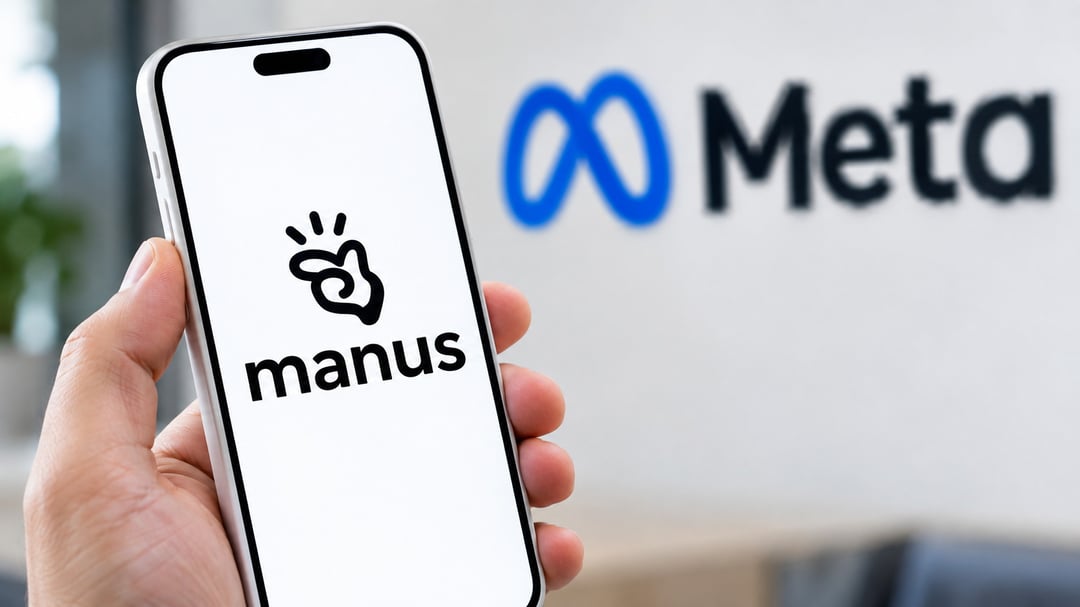
Manus, the AI agent startup founded in China and based in Singapore, released Manus 2.0 on Monday. The company describes it as a full rebuild of its agentic AI platform rather than a simple version update. The new system features a different architecture, new products, and expanded capabilities. The launch places Manus in direct competition with Meta, the company that nearly acquired it for $2 billion before Chinese regulators stepped in.
“Manus 2.0 is not a version update. It’s a new architecture, new products, and new capabilities,” the company stated in a blog post announcing the release.
From Near-Acquisition to Independent Operations
Meta announced plans to buy Manus last December. In April, China’s National Development and Reform Commission blocked the deal and ordered both sides to withdraw from the transaction. Bloomberg reported in June that Meta had finished an operational split and put a data firewall in place between the two companies. Manus formally resumed independent operations on August 31.
Barely a month later, the former partners are now rivals. Meta launched its own personal AI agent, Muse, on September 8. Muse runs on a dedicated virtual machine, connects to email, calendar, payments, and other apps, and can take actions on a user’s behalf. It is available through a dedicated app, WhatsApp, and the web. Pricing includes a free tier plus paid plans at $20 and $100 per month.
Cascade Architecture and New Tools in Manus 2.0
Manus 2.0 centers on Cascade, a new in-house agent architecture. In one tested setup, Cascade used 23.2% fewer tokens, finished tasks 28.2% faster, and cost 32% less to run than the previous version.
The release also adds Cloud Computer, a persistent execution environment. Automations let the system trigger tasks based on events in services such as Slack, email, or Notion. Manus Studio arrives as an upgraded desktop workspace that includes video editing and game development tools.
Cue: Standalone App for Personal AI Agents
Alongside the platform update, Manus released Cue, a standalone app built for personal AI agents. Each Cue agent receives its own email address, phone number, wallet, and computer. Multiple agents can run at the same time and pass work to one another. Cue is free during early access.
The Wider Race for Task-Executing AI Agents
The arrival of both Manus 2.0 and Meta’s Muse highlights the push to build AI agents that move past answering questions and start carrying out tasks. Agents that can shop, book reservations, and fill out forms on a user’s behalf have drawn major investment while also raising questions about trust and data access.
Reuters reported that Meta’s internal tests of Muse turned up cases where the product stalled and exposed sensitive data without authorization. For Manus, the competitive picture carries a clear irony: its main rival is the company that, until recently, owned it.