
Apple confirmed its September event date. The company sent official invites on August 26 for a September 9, 2026, event. Pre-orders could open September 12, with general availability starting September 18. Devices themselves stay under wraps for now.
This year’s launch looks different. Apple is expected to split the iPhone 18 series across two events. Premium models—the iPhone 18 Pro, iPhone 18 Pro Max, and the company’s first foldable—could arrive in September 2026. The more affordable models may wait until spring 2027.
Latest News on the iPhone 18 Series
Rumors keep arriving year-round. Recent reports cover colors, pricing, supply, thickness, and cameras.
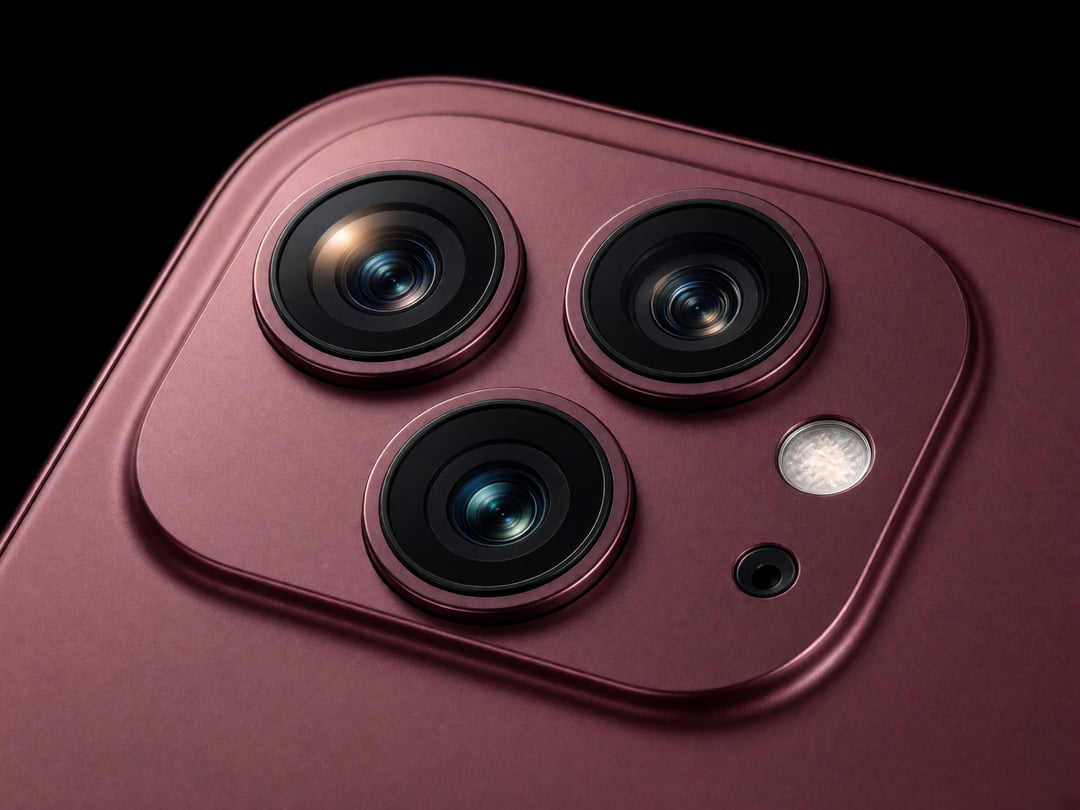
The iPhone 18 Pro models could keep a traditional black or dark gray finish plus classic silver. Hero colors may include Dark Cherry (burgundy) and Light Blue. Other tips point to a more vibrant palette overall, with deep maroon, coffee brown, and possibly bright purple.
A new report puts the iPhone 18 Pro starting price at $1,199—$100 higher than the iPhone 17 Pro. Production snags could leave the Pro models in short supply at launch. Apple may have ways to offset that. The foldable, sometimes called the iPhone Duo or iPhone Fold, could also ship in limited numbers. U.S. buyers might still get early units.
The Pro models could end up thicker than the iPhone 17 Pro. The extra thickness would mainly support better camera hardware and larger batteries. One tipster says the increase is aimed more at the Pro Max than the smaller Pro.
Several sources claim the Dynamic Island could shrink on the Pro models—by roughly 25% to 35%. Reports differ on whether the standard iPhone 18 gets the same change. Apple may move the Face ID flood illuminator under the display while keeping the remaining sensors in a smaller pill-shaped cutout.
Apple’s camera-app plans hit a legal snag in late March 2026. The company had reportedly looked at Halide-inspired pro-style controls. A 24MP front camera is tipped for the Pro models. The regular iPhone 18 may stick with its 18MP Center Stage camera for this cycle.
Battery capacity looks like a clear upgrade. The Chinese-market iPhone 18 Pro Max could carry a 5,000 mAh cell. Versions sold elsewhere may reach 5,100–5,200 mAh, with some later filings pointing as high as 5,391–5,567 mAh. The smaller Pro is expected between roughly 4,056 mAh and 4,288 mAh depending on the market. Combined with a more efficient chip, battery life should improve.
The standard iPhone 18 is expected to keep the same basic design as the iPhone 17. It could arrive next spring alongside the iPhone Air 2 and the iPhone 18e.
Expected Release Dates and Pricing
Apple is widely expected to split its usual September launch. The premium models—iPhone 18 Pro, iPhone 18 Pro Max, and the foldable—should debut in early September 2026, with retail availability about two weeks later. Some reports suggest the foldable could slip to October or even December.
The standard iPhone 18, iPhone 18e, and iPhone Air 2 are heavily rumored for March 2027. That would leave the Pro models as Apple’s main traditional smartphones for the 2026 holiday season. The September event will also mark the first major iPhone launch under new CEO John Ternus, who took over from Tim Cook on September 1, 2026.
Component costs and memory shortages have pushed prices up across the industry. After earlier talk of $200–$300 increases, Bloomberg’s Mark Gurman settled on a $100 rise for both Pro models. That puts the iPhone 18 Pro at roughly $1,199 and the Pro Max at $1,299. The foldable is expected somewhere between $2,000 and $3,000. The standard iPhone 18 could start near $799, the 18e near $599, and the Air 2 near $999. All of these figures remain unconfirmed.
To ease the cost, Apple launched the Apple Upgrade program, a Klarna-backed leasing plan with monthly payments starting as low as $17.99. The company also raised trade-in values on most iPhones, iPads, Macs, and Apple Watches, and added selected Android phones from Samsung, Google, and OnePlus for the first time.
Design and Display Expectations
The base iPhone 18 is expected to look and feel much like the iPhone 17. That means a glass-and-aluminum design with flat edges, rounded corners, a pill-shaped camera module, and similar overall size and weight. The display should stay a 6.27-inch or 6.3-inch LTPO OLED panel with 120Hz refresh, around 460 ppi, and peak brightness near 3,000 nits. Minor gains in brightness and always-on efficiency are possible. Bezels are already slim and are not expected to shrink further.
The Pro models should keep the aluminum unibody with camera plateau and glass rear. The two-tone look of the current models may give way to a more seamless finish, possibly with a frostier Ceramic Shield on the back. Colors under discussion include Light Blue, Dark Cherry, traditional dark gray, and silver.
A smaller Dynamic Island is the more likely change for the Pro models. Earlier talk of ditching the island for a full under-display Face ID or punch-hole design has cooled. Thickness may rise slightly—especially on the Pro Max—to fit larger batteries and improved camera hardware. That runs against the industry trend toward thinner phones and could draw criticism.
Both Pro sizes should keep ProMotion 120Hz OLED panels (6.3-inch on the Pro, 6.9-inch on the Pro Max). An LTPO+ panel is rumored, which could improve efficiency, brightness, and color accuracy.
Performance, Chips, and Software
The base iPhone 18 is expected to use the A20 chip. The Pro models should get the A20 Pro. Both would be Apple’s first chips built on TSMC’s 2nm process. They are also expected to use a new WMCM (wafer-level multi-chip module) packaging approach that places CPU, GPU, and DRAM closer together for better performance and lower cost.
Double-digit gains in CPU and GPU performance are anticipated, along with stronger sustained performance. RAM rumors have settled around 12GB for the lineup after earlier talk of only 9GB. Faster memory bandwidth on the Pro models is also expected. Storage options should stay the same as the current generation.
The Pro models are tipped to include Apple’s second-generation C2 5G modem and a new N2 wireless chip for faster AirDrop and Personal Hotspot connections. Improved satellite connectivity, possibly including 5G-via-satellite, is also under discussion.
All new iPhones will ship with iOS 27. The update focuses on refinements and new Apple Intelligence features. Siri AI becomes a more conversational assistant that lives in its own app, understands on-screen content, and can work across apps. Other additions include AI-powered photo tools such as Spatial Reframing and Clean Up, a revamped Image Playground, faster app launches, quicker photo loading, and improved AirDrop speeds. First-party apps including Safari, Messages, Mail, Passwords, and Shortcuts also receive updates.
Cameras and Battery Details
A 24MP front camera is expected on the Pro models and may improve selfie sharpness. The base model could keep the existing 18MP Center Stage unit.
The main 48MP camera on the Pro models is rumored to gain a variable aperture. That would give more control over depth of field and light gathering. Larger fixed apertures on the ultrawide and telephoto lenses are also mentioned. Some reports say the variable-aperture hardware has already entered production, though cost is high and one tipster claims it may be limited to the Pro Max. Plans to bring more pro-style camera controls into the stock Camera app ran into legal complications.
A simplified Camera Control button—mechanical and pressure-sensitive, without the capacitive touch layer—is expected across the entire iPhone 18 lineup. A 200MP periscope sensor has been tested but is not expected until 2028 at the earliest.
Battery capacity is one of the clearer upgrades. International iPhone 18 Pro Max units could reach 5,100–5,567 mAh. The smaller Pro is expected in the 4,000 mAh range depending on market. iOS 27 efficiency work should help battery life further. No major wired or MagSafe charging upgrades have been reported.