
What Shipped on September 14
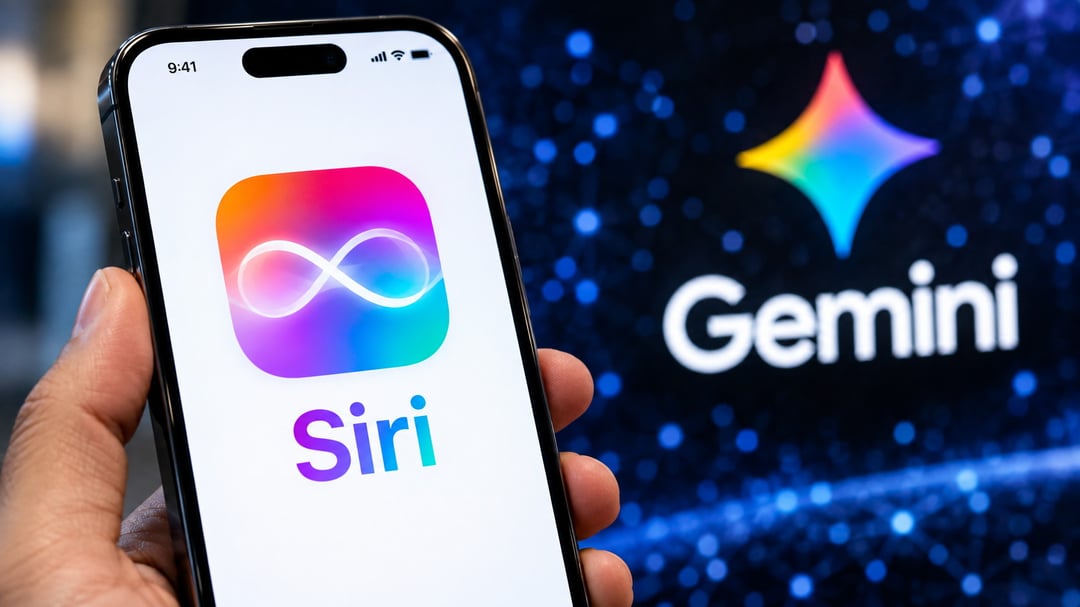
Apple started rolling out iOS 27 on Monday, September 14, with the update landing on iPhone 15 Pro and newer models beginning at 10 a.m. Pacific Time. The centerpiece is a rebuilt version of Siri — Apple is calling it "Siri AI" — and its underlying intelligence comes from Google's Gemini models rather than something Apple built entirely in-house. The feature shipped in beta: people have to opt in through the Settings app, and some are being placed on a waitlist before they get access.
How the New Siri Works
Siri AI can hold conversations that stretch past 20 consecutive exchanges, read what's currently on a user's screen, and chain actions together across Apple's own apps — Messages, Mail, Notes, and Calendar among them. A standalone Siri app keeps a log of earlier queries and keeps that history synced across a person's devices, so a conversation started on one device can pick up on another.
The Gemini Partnership Behind It
Apple confirmed the deal with Google back in January 2026. It's a multiyear agreement that gives Apple a customized version of Gemini running through Apple's own Private Cloud Compute infrastructure, and the recurring cost has been widely reported at roughly $1 billion a year. Not every request gets routed to Google, though. Dictation and quick, personal-context lookups still run on Apple's own foundation models directly on the device, and it's only the heavier reasoning requests that get sent out to Gemini in the cloud.
Privacy, Limits, and Rollout Details
Apple's position is that data processed through Private Cloud Compute isn't stored and can't be read by Google. That's meant to hold the line on Apple's privacy reputation, but the deal still deepens a commercial relationship with Google at a moment when Google's default-search payments to Apple in Safari are already drawing antitrust scrutiny.
Some of the cloud-dependent Siri AI and Apple Intelligence features come with daily usage limits, and Apple has said expanded access will be offered for a fee at some point in the future. At launch, Siri AI works in English only. French, Japanese, Korean, Portuguese, and Spanish support is expected to follow next month. The feature isn't available in the EU or China at launch, which Apple has attributed to regulatory reasons.
What It Means for Google
For Google, this is one of the largest AI distribution deals to date. Its models now sit behind the default assistant on Apple's flagship device lineup — one of the most profitable product lines in tech — putting Gemini in front of hundreds of millions of iPhone owners who tend to skew toward the higher-spending customers Google values most. Whether Apple keeps building its own models to reduce that dependence, and how quickly it moves on that front, is likely to be one of the more closely watched storylines in AI over the next year.