
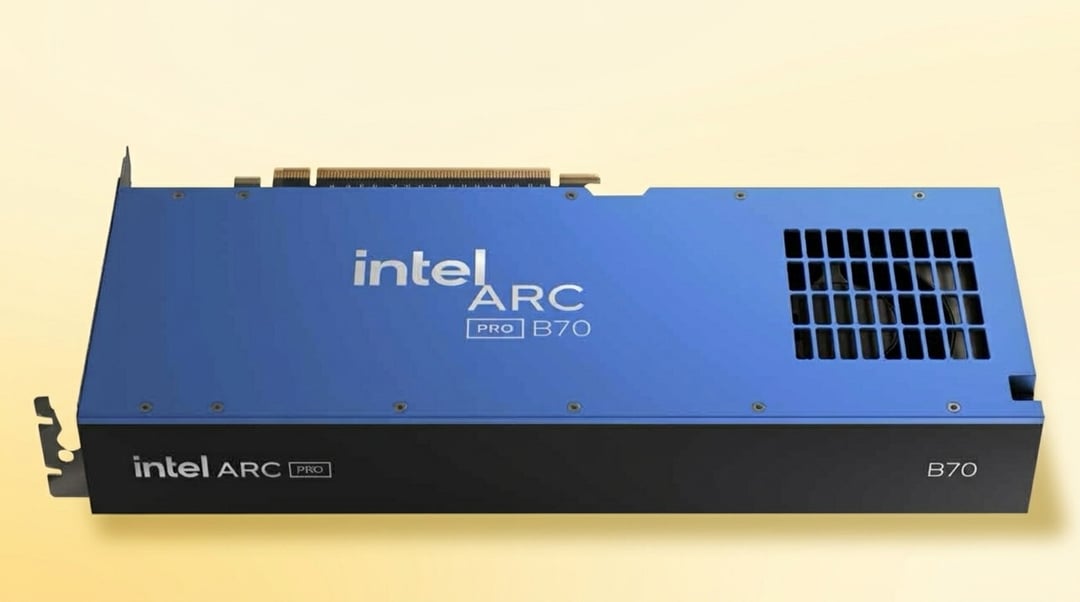
Intel Enters the Professional AI GPU Space with Two New Cards
Intel has officially launched two new graphics cards targeting professionals: the Arc Pro B70 and the Arc Pro B65. These aren't gaming cards — not even close. They're purpose-built for local AI inferencing, software development, and multi-GPU rack-scale AI deployments. If you've been watching Intel's GPU journey with any interest, this is a meaningful step forward.
Arc Pro B70: Intel's Most Powerful Workstation GPU Yet
Raw Specs That Mean Business
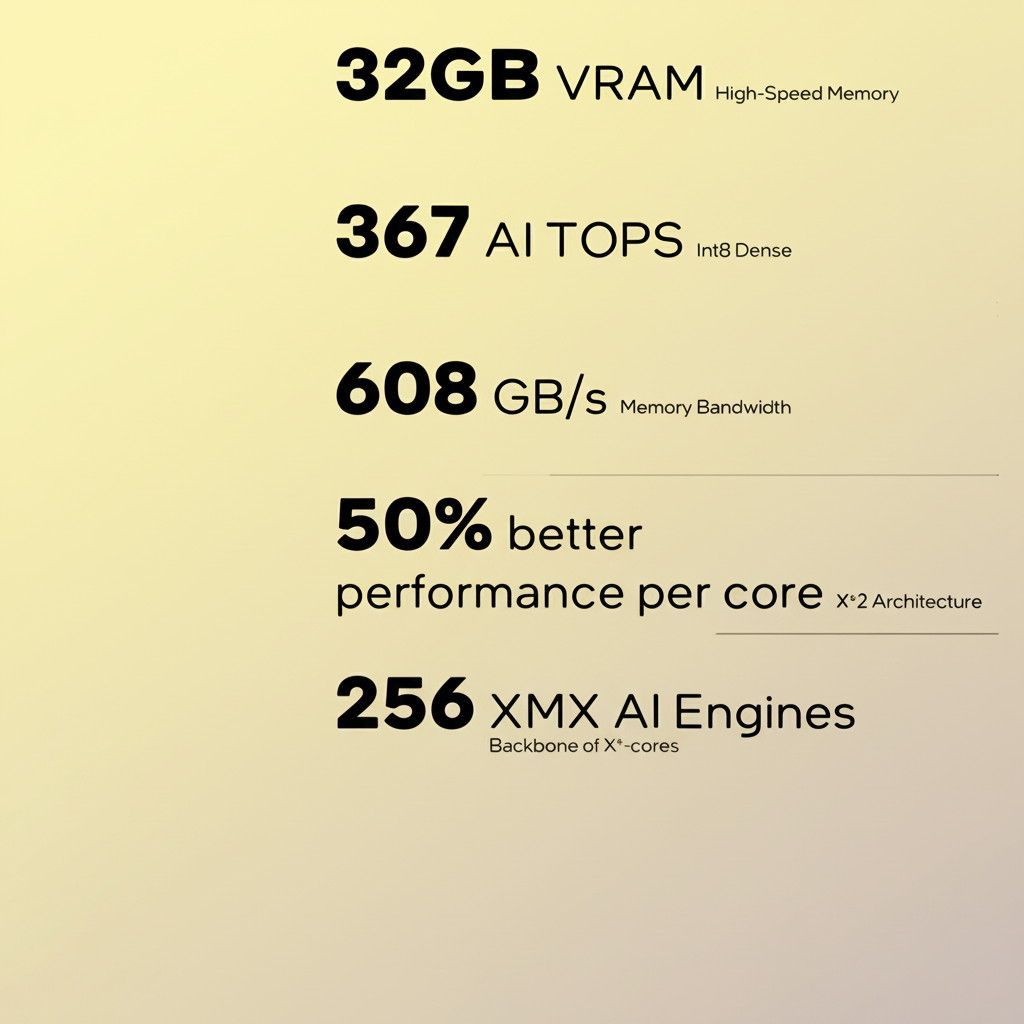
For anyone who's been waiting for Intel to deliver a genuinely serious workstation GPU, the Arc Pro B70 is the answer. It ships with 32 Xe cores, a 256-bit memory interface, and 32 GB of GDDR6 memory running at a healthy 608 GB/s of bandwidth. It also packs 32 ray tracing units.
On the AI side, the B70 delivers up to 367 TOPS — a solid figure for local AI inferencing tasks that would otherwise require cloud compute or more expensive dedicated hardware.
Connectivity and Power
The card connects via PCI Express 5.0 x16 and supports all the major compute APIs you'd expect in a professional environment: Intel's own oneAPI, OpenCL 3.0, and OpenVINO. Power draw ranges between 160 W and 290 W depending on the partner card, with Intel's own reference model rated at 230 W.
Arc Pro B65: The More Accessible Professional Option
Specs That Still Punch Above Their Weight
The Arc Pro B65 is the more affordable of the two, but it doesn't cut corners where it matters. It comes with 24 Xe cores, 32 GB of GDDR6 RAM — same as the B70 — and the same 608 GB/s memory bandwidth. It includes 20 ray tracing units and uses the full PCIe 5.0 x16 interface. Typical board power is rated at 200 W.
That 32 GB of GDDR6 across both cards is worth noting. For local AI model work, memory capacity is often the real bottleneck, and Intel isn't skimping here.
Shared Features Across Both Cards
Display Output and OS Support
Both the B70 and B65 share the same display configuration: four HDMI 2.1 ports with support for up to 8K output at 120Hz. That's a strong setup for professionals who need high-resolution multi-display workflows alongside their AI or visualization tasks.
On the software side, both cards support Windows 10, Windows 11, and Linux, all with certified drivers. That Linux support is particularly relevant for developers and AI engineers who tend to live in that environment.