
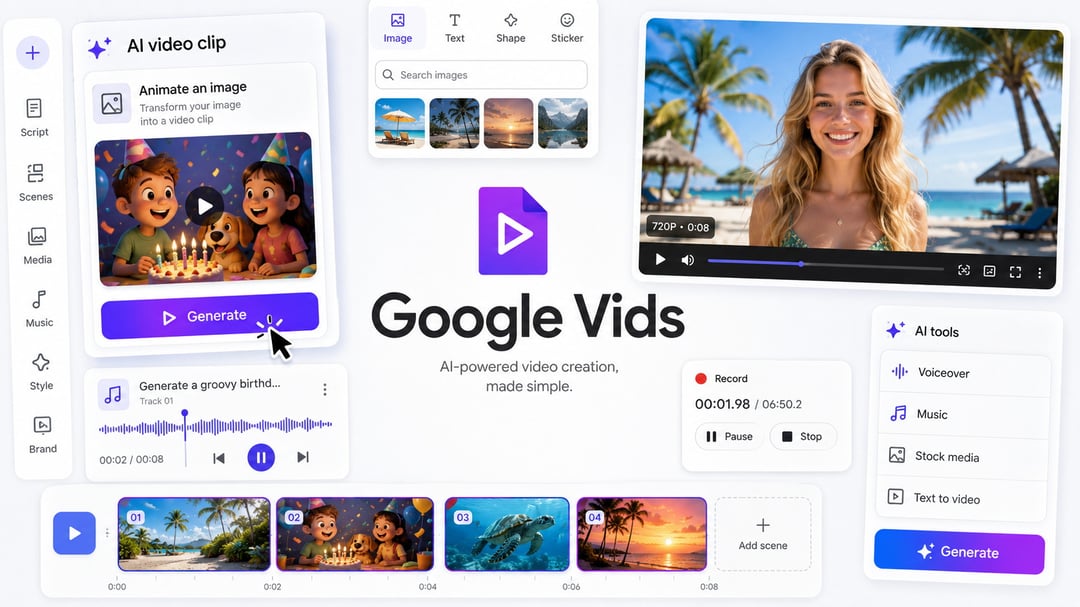
Personalized AI Avatars Arrive in Google Vids
Google has rolled out a significant update to Google Vids, giving users the ability to generate a digital avatar modeled after their own appearance and voice. The feature works by having someone upload a selfie along with a voice recording, which the tool then uses to build an avatar that looks and sounds like them. This puts Vids in a similar lane to other avatar-driven video tools already on the market, but with Google's own spin on likeness and safety controls baked in.
The timing is notable. OpenAI's Sora, a tool that let people generate videos of themselves and others, shut down earlier this year. Despite that, Google appears confident there's still demand for AI tools centered on personal video avatars, and it's moving to fill that space within its own Workspace ecosystem.
Gemini Omni Joins the Vids Toolkit
Alongside the avatar rollout, Google is integrating its multi-modal AI model, Gemini Omni, directly into Vids. Omni allows users to generate videos by combining a written prompt with uploaded reference images, blending those inputs together into a finished AI-generated video. Beyond generating new footage from scratch, Omni can also be applied to existing clips — for example, swapping out a background, correcting poor lighting in a video shot on a phone, or layering in additional effects.
A key usability improvement comes in the form of step-by-step editing. Rather than forcing users to restart a video from the beginning whenever they want to make a change, Omni now supports incremental edits, letting people adjust a video as they go.
From Presentation Tool to Full Video Platform
These additions mark a shift in what Google Vids is meant to be. It launched as an AI-assisted tool for building workplace presentations, but personalized avatars combined with conversational, iterative editing push it toward something closer to an all-in-one video creation platform.
Google is keeping Vids anchored inside Google Workspace, which signals its primary intended use case: internal business content like company updates and employee training videos. At the same time, the addition of personal avatars and flexible editing tools means Vids is now positioned to compete more directly with dedicated AI video platforms such as HeyGen, Synthesia, Captions, and D-ID — companies that have built their entire product around avatar-based and AI-generated video content.
Built-In Safeguards on Avatar Use
Google has attached specific guardrails to how the new avatars can be used. Each AI avatar is tied to the likeness of the account holder who created it and is linked directly to that person's Google account. Every avatar video is also invisibly watermarked using SynthID, Google's system for marking AI-generated content in a way that isn't visible to the naked eye but can still be detected.
In practice, this means the tool isn't built for generating avatars of other people, including public figures — a notable contrast to the way Sora, during its availability, allowed users to create videos featuring OpenAI CEO Sam Altman. Under Google's model, someone wouldn't be able to use the feature to generate videos of, say, Google CEO Sundar Pichai using another person's account.
Who Can Access the New Avatar Feature
Access isn't universal at launch. Google has confirmed that personal AI avatars are currently limited to users in select regions, and only those who are 18 years of age or older can use the feature. This age and regional gating aligns with the likeness-and-account-tied structure Google has put in place, reinforcing that the tool is designed around verified individual identity rather than open-ended avatar creation.


