
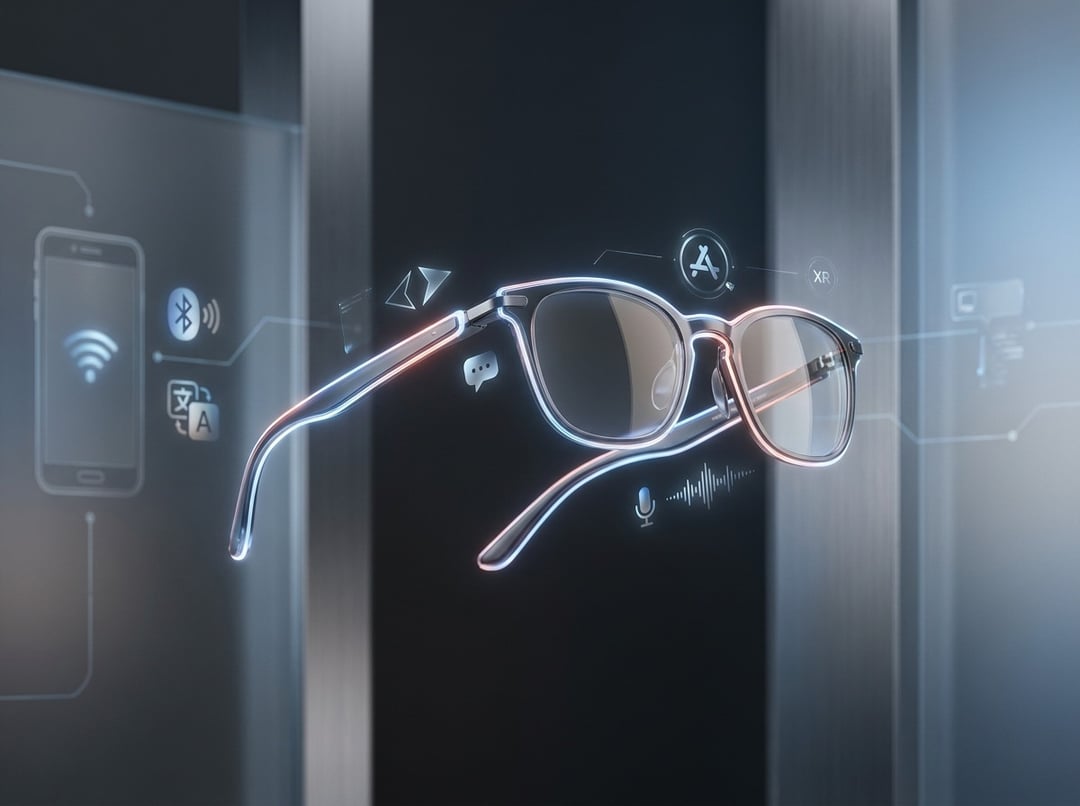
Google and Samsung Reveal Their AI-Powered Smart Glasses
Google and Samsung have shown the designs of their jointly developed AI-powered smart glasses, giving the companies their clearest move yet into intelligent eyewear. The reveal took place at Google I/O 2026, where the two companies presented smart glasses built around Android XR and Google’s Gemini AI.
The first version is audio-first. That matters because these glasses are not being positioned as full in-lens augmented reality eyewear at launch. Instead, they’re designed to work as lightweight companion devices that keep information, communication, and AI assistance close without forcing the user to keep pulling out a phone.
The eyewear is being co-created with Warby Parker and Gentle Monster, bringing fashion eyewear partners into the product from the start. The first frames are scheduled to launch this fall in select markets. Pricing, exact availability, and broader rollout details have not yet been announced.
Android XR Gives the Glasses Their Software Foundation
The upcoming smart glasses run on Android XR, placing them inside Google and Samsung’s wider push into extended reality and wearable computing. Rather than treating the glasses as a standalone computer, the first product line works as a connected companion to a smartphone.
The glasses connect to a phone through Bluetooth and Wi-Fi. Once paired, they give users hands-free access to Gemini AI through voice commands or a tap on the frame. That setup keeps the interaction simple: speak, tap, listen, and keep moving.
This audio-first design makes the first launch more about fast access to useful information than visual overlays. The glasses can relay information privately through onboard speakers and microphones, allowing Gemini to respond without requiring an in-lens display.
What Google and Samsung Smart Glasses Can Do
The glasses are built around practical, everyday AI functions. Their main job is to let users interact with Gemini, phone apps, calls, messages, translation tools, and navigation without taking the phone out of a pocket.
Key features include:
- Turn-by-turn navigation
- Real-time speech and text translation
- Photo and video capture
- Call management
- Message summaries
- Hands-free interaction with phone apps
- Gemini AI access through voice commands
- Frame-tap controls
The idea is simple but powerful: the glasses act like a bridge between the user, the smartphone, and Gemini. You can manage information while staying hands-free, whether that means checking a message summary, navigating somewhere, translating speech, or capturing a photo or video.
Gemini AI Access Through Voice and Touch
Gemini is central to the experience. Users can access the AI assistant by speaking or tapping the frame, creating a more natural interaction model than reaching for a screen.
That kind of design fits the role of smart glasses well. You’re not meant to stop what you’re doing. You ask, listen, respond, and move on. The glasses are built to make AI feel less like an app and more like something quietly available in the background.
Smartphone App Interaction Without Pulling Out a Phone
The glasses also allow users to interact with phone apps while the phone stays in a pocket. This does not make the eyewear independent from the phone. Instead, it makes the phone less physically demanding in everyday use.
That distinction is important. The fall launch focuses on companion glasses, not a full replacement for the smartphone. The device depends on a phone connection, while the glasses provide the hands-free interface.
Privacy and Camera Use in the AI Glasses
Because the glasses include photo and video capture, Google and Samsung are adding a visible recording indicator. The indicator light activates whenever the camera is being used, alerting people nearby that recording is taking place.
That feature directly addresses one of the most sensitive parts of camera-equipped smart glasses: bystander awareness. The glasses are designed to make camera activity visible instead of hidden.
The product will also support both Android and iOS devices. That wider compatibility gives the eyewear a larger potential user base at launch, even though the glasses are built on Android XR.
Audio-First Smart Glasses Arrive Before Display Models
Google outlined two parallel tracks for intelligent eyewear: audio-only smart glasses first, display-equipped glasses later.
The fall launch is focused on audio-only glasses. These do not include an in-lens display. Instead, they use microphones and onboard speakers to send and receive information through Gemini. The experience is built around listening, speaking, tapping, and staying hands-free.
Why the First Launch Skips an In-Lens Display
The first model’s lack of a display makes the glasses simpler in function. They do not try to project visual information into the wearer’s field of view. Instead, they focus on practical AI assistance through sound.
That makes the product closer to intelligent audio eyewear than full augmented reality glasses. Navigation, translations, call handling, app interactions, and message summaries all happen through voice and audio rather than visual overlays.
Project Aura Brings Display-Equipped Glasses Later
Google also demonstrated a separate display-equipped model called Project Aura. This version is being developed with Xreal, an AR hardware maker.
Project Aura uses optical see-through lenses and connects to an external compute puck. Unlike the fall-launch glasses, Project Aura is built around a visual display experience. It is expected later, with a broader trusted tester program expanding this year and consumer availability targeted for 2027.
Project Aura and the Next Phase of Android XR Eyewear
Project Aura shows where Google’s Android XR eyewear strategy may go after the first audio-only models reach the market. While the fall product focuses on accessible, audio-first AI assistance, Project Aura points toward a more advanced display-based category.
The external compute puck is a key part of that design. Instead of placing all computing power inside the frames, Project Aura connects the glasses to separate hardware. The optical see-through lenses then support a display experience while still allowing the user to see the world around them.
This creates a clear product split:
|
Product Track
|
Main Design
|
Display
|
Timing
|
|
Fall smart glasses
|
Audio-first intelligent eyewear
|
No in-lens display
|
Fall launch in select markets
|
|
Project Aura
|
Display-equipped XR eyewear
|
Optical see-through lenses
|
Consumer availability targeted for 2027
|
The two-track approach lets Google and Samsung enter the smart glasses market sooner while continuing to develop more advanced display-equipped hardware.
Google and Samsung Challenge Meta’s Smart Glasses Lead
The announcement places Google and Samsung directly against Meta’s Ray-Ban smart glasses, which have already built an early lead in AI-powered eyewear.
The first Warby Parker and Gentle Monster frames serve as Google and Samsung’s opening move. They enter the market with a companion-device approach, smartphone connectivity, Gemini access, camera features, and audio-based AI assistance.
At the same time, models with built-in displays are in development for a 2027 release. That longer roadmap suggests the companies are not only targeting today’s AI glasses category, but also preparing for more advanced wearable displays.
Fashion Partners Help Shape the First Frames
Warby Parker and Gentle Monster are part of the first product push, giving the glasses a stronger fashion eyewear angle. This is important because smart glasses have to work as both technology and something people are willing to wear on their face.
Google also committed up to $150 million in product development funding and equity investment in Warby Parker as part of the partnership, which was first announced in May 2025.
The combination of Android XR, Gemini, Samsung hardware collaboration, and fashion eyewear partners gives the project a broader foundation than software alone.
Launch Timing, Availability, and Pricing
The first Google and Samsung AI smart glasses are scheduled to launch this fall in select markets. The companies have not yet announced pricing or exact availability.
That leaves several major details still open, including:
- Which select markets will receive the glasses first
- How much the glasses will cost
- Whether different frame styles will launch at the same time
- How Android and iOS support will work in daily use
- When broader availability may follow
For now, the confirmed picture is focused: audio-first AI smart glasses, powered by Android XR, connected to smartphones, built with Gemini access, and launching first through frames developed with Warby Parker and Gentle Monster.