
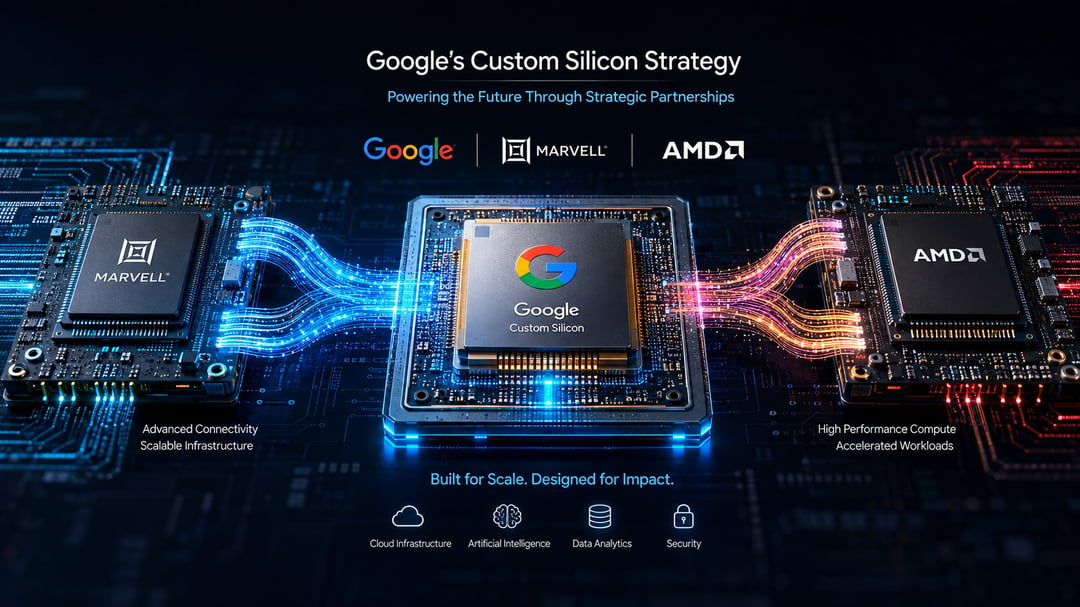
Alphabet is working with Advanced Micro Devices on a 10th-generation Tensor Processing Unit. That’s according to a client note from semiconductor research firm SemiAnalysis, first reported by Tom’s Hardware on August 15. The note cited market chatter rather than confirmed details. Neither Google nor AMD has publicly commented on the report.
The rumored collaboration would mark AMD’s first major involvement in a custom AI accelerator project. It arrives amid a broader reshuffling of Google’s chip supply chain. This week a separate deal granted Google warrants to purchase up to $12.2 billion in Marvell Technology stock. Those warrants come in exchange for custom chip orders running through fiscal 2033.
Why a Different Kind of TPU
SemiAnalysis linked the design rationale for the 10th-gen TPU to reinforcement learning and agentic AI workloads. Those workloads demand substantially more general-purpose CPU processing power than standard model training.
Google has already moved in this direction with its current TPU 8i systems. Those pair one Google Axion CPU with every two TPUs. That’s double the ratio used in seventh-generation hardware. Some configurations may require a 1:1 CPU-to-accelerator ratio, the firm noted.
Analysts point to AMD’s appeal in its x86 CPU intellectual property, advanced packaging expertise, and its MI300A chip. The MI300A already integrates x86 cores and AI accelerator chiplets in a single package with unified memory. Wedbush analyst Matt Bryson called the potential collaboration significant. He noted it could give AMD another avenue to capitalize on hyperscaler AI spending.
Pressure on Broadcom and MediaTek
Google has developed eight generations of TPUs with Broadcom as its primary silicon design partner. It maintains a supply agreement running through at least 2031. MediaTek is widely believed to have secured the TPU v8 program and possibly the v9 project.
AMD’s potential entry into the v10 program adds yet another competitor to a supplier landscape that was, until recently, far more consolidated.
The Marvell deal announced this week underscored the trend. Morningstar analyst William Kerwin said Google appears to be moving toward a multisource TPU strategy faster than expected. He viewed the Marvell arrangement as a sign of a growing market rather than a direct threat to Broadcom. ARK Invest purchased over 55,000 Broadcom shares on Wednesday’s dip. That suggests at least some institutional investors view the selloff as overdone.
Still, the AMD report remains unconfirmed. SemiAnalysis attributed its information to market chatter. Chip development timelines often stretch years beyond initial reports. A 10th-generation TPU is likely several years from production.