
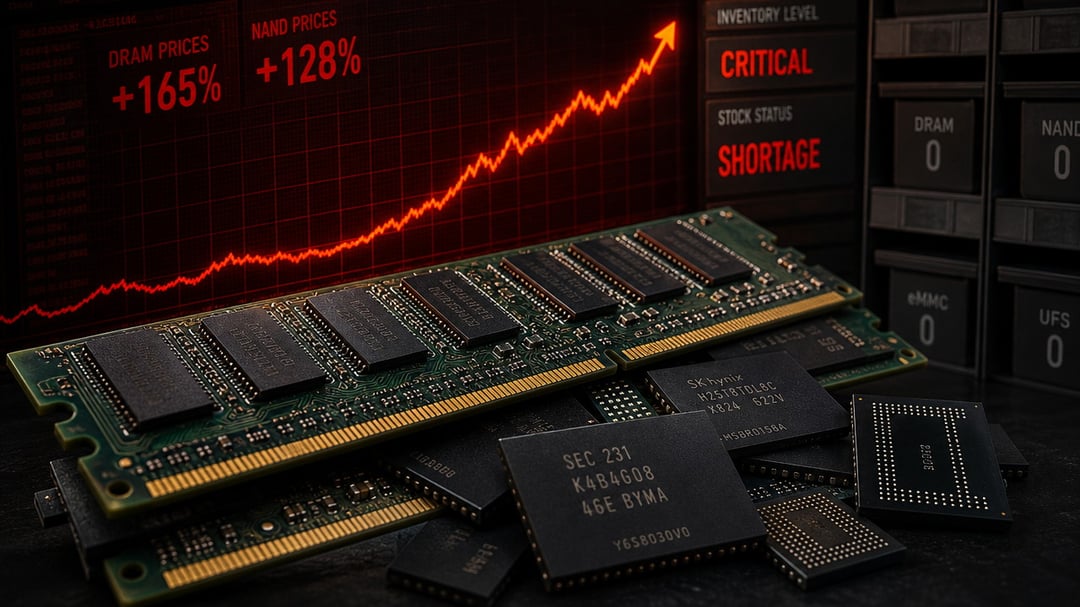
Samsung Electronics expects memory chip supply constraints to continue through 2028, with conditions projected to become more severe in 2027 than in 2026. The outlook points to sustained pressure on prices for memory-dependent products, including phones, laptops, and gaming PCs, as AI-related demand exceeds the industry’s ability to add production capacity.
Samsung’s memory business has indicated that demand not met this year could extend into the following year, adding further strain to available supply. The company also said visibility beyond 2029 is limited, leaving the timing of any broader market relief uncertain.
Samsung Sees Tighter Memory Chip Supply Through 2028
The shortage is not expected to ease quickly. Samsung forecasts that constrained supply will remain a defining condition through 2028, with the imbalance between demand and production expected to intensify before it improves.
AI-driven demand is central to that outlook. Demand for memory is rising while suppliers are directing capacity toward advanced products used in AI applications. At the same time, manufacturers face limits on how rapidly they can expand output, creating tighter conditions across the memory market.
Samsung’s financial results reflect the impact of stronger chip prices. The company reported record quarterly operating profit after a 19-fold increase, driven by rising memory chip prices.
To secure future revenue, Samsung has entered five-year supply agreements with the world’s five largest data center operators. These agreements cover 60% to 70% of Samsung’s memory capacity and include upfront payments and floor pricing.
PC DRAM Contract Prices Hit Their Highest Level on Record
Benchmark PC DRAM contract prices climbed sharply in July. Data from DRAMeXchange showed that average monthly contract prices rose 14.3% to $24, the highest level recorded by the tracker since it began compiling data in June 2016.
That increase illustrates how quickly the market has tightened. PC DRAM is a core component in laptops, desktop computers, and many gaming systems, so sustained contract-price increases can place additional cost pressure on device makers.
The higher prices arrive as memory supply is increasingly contested by multiple segments of the technology market. Demand from AI applications is competing with demand from more conventional consumer and computing products, while available capacity remains limited.
NAND Flash Prices Also Move Above $30
NAND flash pricing has also reached new highs. Prices moved above $30, while single-level cell NAND products increased by 35% to 51%.
Suppliers have redirected capacity toward advanced 3D NAND products for AI applications. That shift has contributed to tightening supply for conventional NAND products, helping push their prices higher.
NAND flash is used for storage, making its price movement relevant to devices and systems that depend on memory and storage components. As with DRAM, the market is facing pressure from a supply environment shaped by expanding AI demand and constrained capacity.
Higher Memory Costs Are Reaching Consumer Electronics
The increase in DRAM and NAND prices is already affecting consumer-device businesses.
Samsung’s mobile division reported a quarterly loss of 700 billion won as component costs increased. The Galaxy Z Flip 8 launched with a $100 increase over its predecessor, reflecting the broader pressure from rising parts costs.
Apple has also raised prices for MacBook and iPad products, citing memory and storage costs that it could no longer absorb.
These developments show that the memory chip shortage is not confined to semiconductor suppliers or data center operators. Higher DRAM and NAND prices can flow into the pricing decisions of companies that build consumer electronics, particularly when memory and storage expenses rise faster than they can be absorbed internally.
Graphics DRAM Adds Pressure to the Gaming PC Market
The demand surge is now extending beyond server memory and conventional DRAM into graphics memory.
Nvidia is reportedly considering graphics card price increases of 20% to 30% to account for higher costs related to GPUs and GDDR7 memory. This could add another layer of price pressure for graphics cards and gaming PCs.
Samsung, SK Hynix, and Micron Technology are the three main suppliers of GDDR7 memory. Samsung has identified graphics DRAM as a next-generation growth product and plans to expand GDDR7 shipments.
The move toward more graphics-memory production may support suppliers serving this segment. But it also highlights how demand for AI-related hardware is reshaping the broader memory market, including components closely tied to gaming hardware.
What the Memory Chip Shortage Means for DRAM, NAND, and Device Pricing
Samsung’s forecast suggests that the industry could face a prolonged period of constrained memory supply rather than a short-lived disruption. With shortages expected to last through 2028 and become more severe in 2027, upward pressure on DRAM, NAND, and graphics memory prices may continue.
For technology companies, the challenge is securing enough memory capacity while managing higher component costs. Samsung’s long-term agreements with major data center operators demonstrate how large buyers are seeking to lock in supply amid limited availability.
For the consumer market, recent price increases involving smartphones, laptops, tablets, and potentially graphics cards show how memory costs can affect finished-product pricing. The full duration of those effects remains unclear, especially because Samsung has said it has limited visibility beyond 2029.