
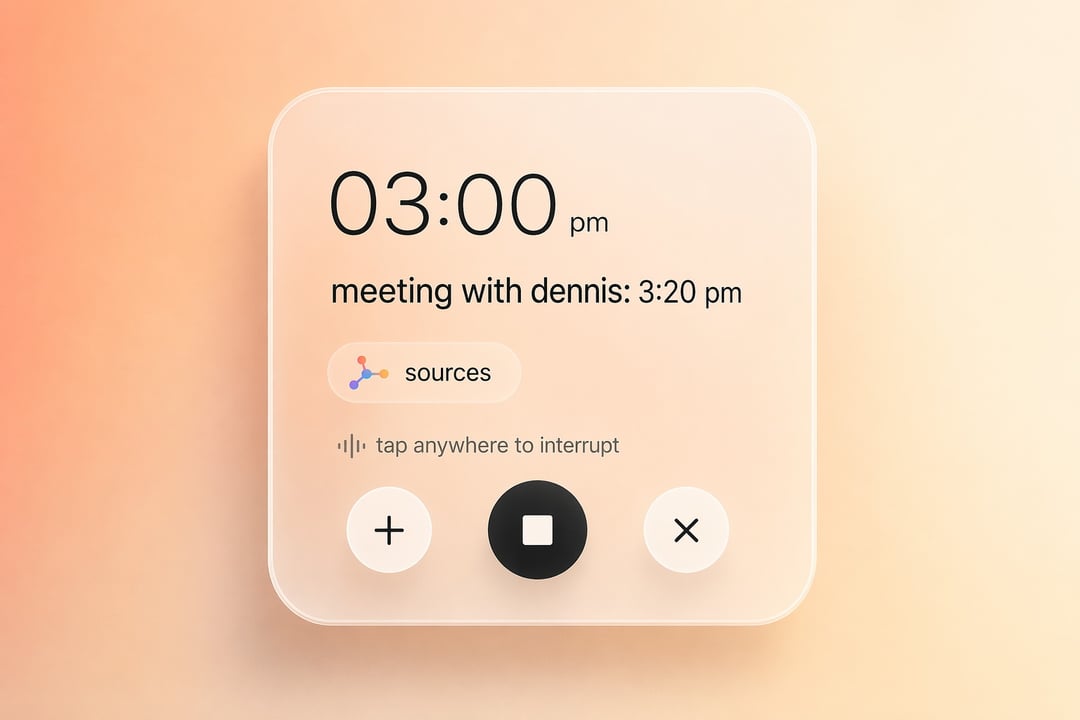
What Is Changing Inside Claude's Voice Mode
Anthropic is preparing a significant upgrade to Claude's voice mode, one that finally lets people reach the company's heavier Opus and Sonnet models while speaking rather than typing. Until now, the feature has leaned on the older Haiku model that has quietly powered every spoken session since voice mode arrived.
The shift matters because voice has been the one surface where model choice did not really exist. Users could talk to Claude, but they were always talking to the same lightweight model underneath, no matter what the interface suggested.
From a Cosmetic Selector to Real Model Routing
A model selector had been sitting in the voice mode interface for roughly three weeks, and for most of that stretch it did nothing meaningful. Whatever a user picked, the session still ran on Claude Haiku 4.5 behind the scenes. The dropdown existed, but the choice was decorative.
That behavior changed this week. Selecting Opus or Sonnet now routes the voice conversation through the chosen model instead of silently reverting to Haiku. The selector has, in other words, started doing the job its presence implied.
Feature Flag Status and Available Controls
The upgrade remains hidden behind a feature flag and is not yet available to the public. In its current form it exposes three options — Opus, Sonnet, and Haiku — alongside a separate control for adjusting the thinking level applied to a conversation.
Claude Fable, the company's Mythos-class model, does not appear in the voice mode selector.
Speech Output Still Relies on Text-to-Speech
One thing the update does not change is how Claude actually talks. The system continues to depend on text-to-speech rather than a speech-native model, with ElevenLabs reportedly handling spoken output. The intelligence layer is being upgraded; the voice layer works the way it always has.
How Claude's Voice Capabilities Have Expanded
This model upgrade sits on top of a longer run of improvements to Claude's conversational features throughout 2026.
Voice mode first appeared on iOS and Android in May 2025 before making its way to the web. By June 2026, Anthropic had moved multilingual voice input out of beta, with support for 18 languages, a push-to-talk mode, and the ability to move between text and voice without breaking the flow of a conversation.
Connectors and Third-Party Integrations
Alongside the voice work, Claude connects to a range of outside services through connectors, including Gmail, Google Calendar, Slack, Canva, and Notion. These integrations are available to Pro and Team plan users. Free users gained access to connectors in February 2026, though with more limited functionality than paid tiers receive.
Why Opus and Sonnet in Voice Mode Matters
Routing Opus or Sonnet into spoken conversations opens the door to work that was simply impractical on Haiku alone. Extended reasoning chains and tool-heavy requests become viable through speech, turning voice from a convenience feature into something closer to a full working interface.
There is a practical trade-off attached. Each voice interaction that uses Opus or Sonnet counts against a user's standard message quota, so the added capability draws from the same allowance as text conversations.
Expected Rollout Timing
A public rollout appears imminent. Current analysis points to a release within days rather than weeks, which would put full model selection in the hands of general users shortly after the routing change took effect.
|
Aspect
|
Current State
|
|
Models exposed
|
Opus, Sonnet, Haiku
|
|
Default model before change
|
Claude Haiku 4.5
|
|
Additional control
|
Thinking level adjustment
|
|
Not included
|
Claude Fable (Mythos-class)
|
|
Speech output
|
Text-to-speech, reportedly ElevenLabs
|
|
Availability
|
Behind a feature flag
|


