
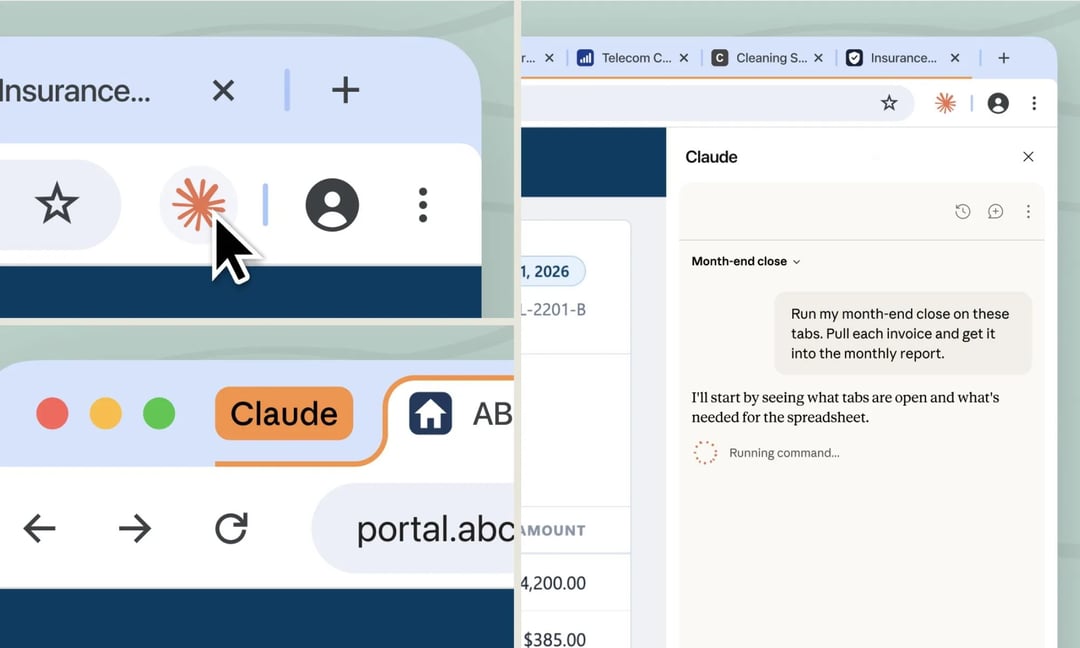
Anthropic updated the Claude in Chrome side panel so it now operates as a full Claude Cowork session. Conversations, skills, and connectors move with your account between the browser extension and Claude’s desktop, web, and mobile apps. Earlier versions kept browser sessions isolated. Switching devices forced you to start over.
How the Updated Claude in Chrome Works
Claude in Chrome can view the page you’re on and perform actions directly in it. It clicks links, types text, fills forms, and navigates between pages while using your existing logins. This helps with tools that don’t connect to Claude on their own—internal dashboards, legacy systems, or vendor portals.
Take a practical case. You need a budget spreadsheet built from invoices spread across several vendor sites. Claude opens each tab, extracts the amounts and dates, and begins assembling the spreadsheet. Because the session belongs to your account rather than one device, you can resume the same work later in the desktop app, drop in local files, or check the figures against last month’s numbers.
Anthropic has also broadened Claude’s web interaction in other ways. A separate in-app browser for Claude Code lets it read documentation without leaving the coding environment.
Safety Measures for Browser Automation
Giving an AI agent control inside a browser carries real risks. Prompt injection stands out: hidden instructions placed in a webpage or document can steer the agent without the user’s knowledge. Security research has repeatedly shown serious flaws in various AI browsing tools.
Anthropic added a new check that reviews consequential actions—submitting a form or sending a message—against the original request before they occur. Claude still asks for permission before steps such as making a purchase or sharing personal information.
Availability
The update is available now for Max and Team plans. Pro access is rolling out over the coming weeks. Enterprise admins can turn the feature on selectively by domain.