
Google Adds a Transparency Label for AI-Generated Ads
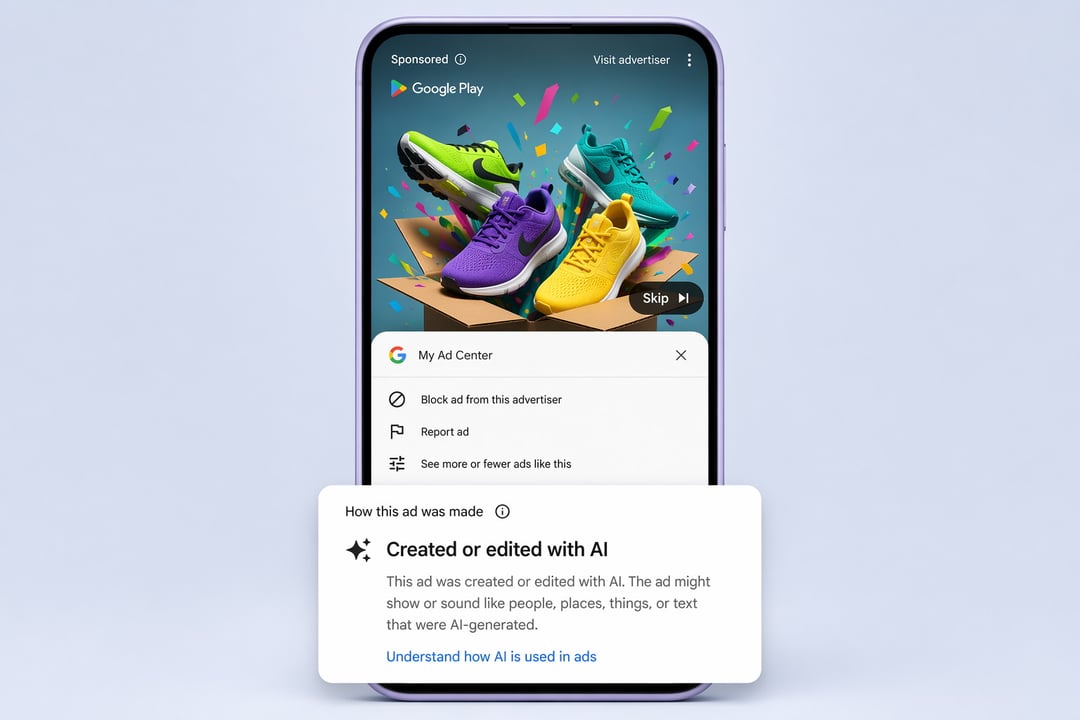
Google has rolled out a new feature that lets you see whether an ad was built or edited using generative AI. The label appears inside My Ad Center and is currently expanding across Google Search, YouTube, and Discover on a global basis. Instead of guessing whether an ad's visuals came from a human creative team or an AI tool, users now have a built-in way to check.
Where to Find the AI Disclosure on an Ad
Checking an ad's origin only takes a couple of taps.
- Open the three-dot menu or info icon attached to the ad.
- Look for the "How this ad was made" section.
- If generative AI was involved, you'll see a note reading "Created or edited with AI."
What Triggers the Label
Not every ad will carry this note — only ones where AI played a role in creating or modifying the creative.
How Google Decides Which Ads Get Labeled
The labeling process works differently depending on which tools were used to build the ad.
Ads Made With Google's Own AI Tools
When an advertiser uses Google's built-in generative AI advertising tools, the disclosure is applied automatically. There's no extra step for the advertiser and no reliance on them to self-report it.
Ads Made With Third-Party AI Tools
If an advertiser instead uses an outside AI tool to produce the ad, the label isn't automatic. In that case, the advertiser has to manually add the disclosure themselves through My Ad Center.
Regional Rules May Add On-Ad Labels
In certain countries, local regulations may go a step further and require the AI disclosure to appear directly on the ad creative itself, rather than only inside the ad information panel.
Why Google Is Rolling Out AI Labels for Ads Now
The push for clearer labeling comes as AI-generated images and video keep getting more realistic, making it increasingly difficult to tell how a given piece of advertising content was actually produced. Google frames the new labels as a way to give people more transparency into ad creation while also helping advertisers stay aligned with where industry standards are heading.
Part of a Broader AI Transparency Effort
This isn't Google's first move toward labeling AI-influenced content. The company has already put disclosure requirements in place for digitally altered political ads, and it has been expanding its use of SynthID — the same underlying technology behind the AI watermarks used in Google Photos. Google is also extending support for C2PA, a content-authenticity standard, bringing it to Google Messages so users can identify AI-generated images inside their chats.
Beyond ads and messaging, Google has been testing AI-generated image labels directly within Google Search results and has broadened Gemini's capabilities to help people spot AI-generated video. The new ad transparency labels build directly on top of these existing efforts, extending the same kind of disclosure into commercial advertising.