
OpenAI's Plan to Bring Sora to ChatGPT
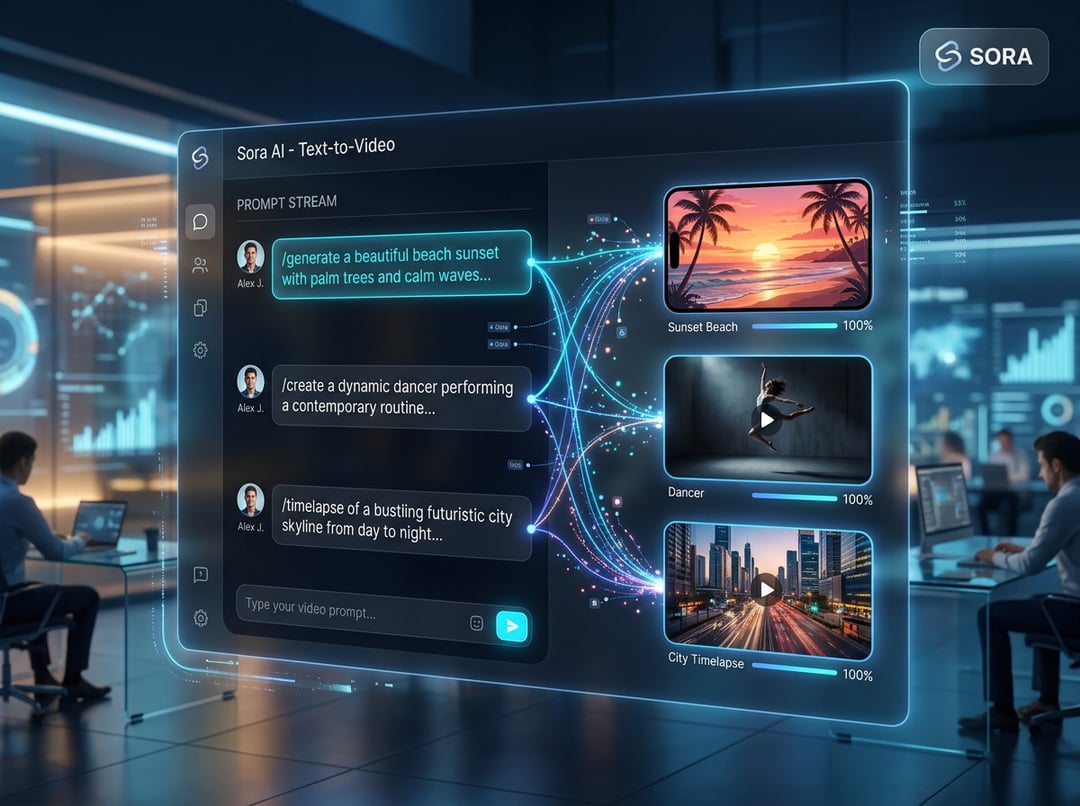
OpenAI is reportedly preparing to integrate its AI video generator Sora directly into the ChatGPT interface, marking a significant expansion of the platform's multimodal capabilities. According to reports from The Information, people familiar with OpenAI's plans indicate the company intends to launch Sora within ChatGPT in the near future. This integration would allow users to generate short videos using simple text prompts without leaving the chat environment they already use daily for writing, coding, and image generation.
The move represents a strategic shift in how OpenAI delivers its most advanced generative AI tools to users. Rather than requiring users to switch between separate applications, the integration would place video creation capabilities within the same workflow that millions of people already rely on for their daily AI-assisted tasks. Users would be able to describe the video they want to create, and ChatGPT would generate it directly within the conversation, similar to how the platform currently handles text responses and image generation through DALL-E.
OpenAI first released Sora as a standalone application in September, offering users a platform to generate and share AI-created videos in a format resembling a social media feed. The standalone app allowed for video generation, content remixing, and sharing within a community environment. However, bringing Sora into ChatGPT would dramatically expand access to this technology, reaching the massive user base that already uses ChatGPT for various purposes.
Making Video Generation More Accessible
Bringing Sora directly into ChatGPT could transform video creation from a specialized skill requiring separate tools into something any user can accomplish with a simple text description. The integration would eliminate the friction of switching between applications, allowing content creators, marketers, and everyday users to generate videos as part of their existing workflow. Someone writing marketing copy could seamlessly request a video to accompany their text without opening a different program or learning a new interface.
This accessibility aligns with OpenAI's broader mission of making advanced AI technologies available to a wide audience. Text-based AI tools have already achieved widespread adoption in both professional and personal settings, with ChatGPT becoming a daily utility for millions of users. Video generation represents the next frontier in this evolution, and integrating it into an interface people already know could accelerate adoption significantly.
The integration would also lower the barrier to entry for video content creation. Traditional video production requires equipment, software expertise, editing skills, and significant time investment. AI-generated video from text prompts fundamentally changes this equation, potentially allowing anyone with an idea to produce a visual representation in minutes rather than hours or days.
OpenAI's Multimodal AI Strategy
The Sora integration represents a deepening of OpenAI's push toward truly multimodal AI systems capable of handling text, images, audio, and video within a single interface. This strategy reflects a broader industry trend toward AI assistants that can work across multiple media types, rather than specializing in just one domain. Users would have access to a comprehensive creative toolkit without needing to learn multiple different platforms.
The text-to-video model Sora allows users to create high-resolution videos up to 60 seconds in length using simple text prompts. The technology has undergone significant evolution since its initial release, with Sora 2 bringing improvements in physics simulation, audio synchronization, and motion consistency. These enhancements have made the generated videos more realistic and useful for practical applications.
Even with Sora integrated into ChatGPT, OpenAI is expected to continue maintaining the standalone Sora application. This approach allows the company to serve different user segments—those who want a simple, integrated experience within ChatGPT and those who prefer the dedicated social-media-like environment of the standalone app with its community features and sharing capabilities.
Overview of AI Video Generation Competitors
The integration would help OpenAI compete more aggressively in the rapidly evolving text-to-video space, where rival AI companies have released similar tools that turn written prompts into short videos. Companies like Runway, Pika, and Google have all developed their own video generation technologies, creating an increasingly competitive market. Bringing Sora to ChatGPT gives OpenAI a significant advantage in distribution—millions of users already have ChatGPT accounts and know how to use the interface.
The video generation sector is evolving quickly as companies attempt to move beyond traditional chatbots toward AI tools capable of producing complex multimedia outputs. Industry analysts view video-generation models as the next major phase of generative AI, with potential to reshape content creation, advertising, filmmaking, and social media. The ability to generate video from text represents a fundamental shift in how visual content can be produced.
OpenAI's decision to integrate Sora into its flagship product signals confidence in the technology's maturity and readiness for mainstream use. While early AI video tools often produced unrealistic or glitchy results, recent improvements have made the outputs significantly more usable for practical purposes. This progress has likely influenced OpenAI's decision to bring the technology to a broader audience through ChatGPT.
Impact on Content Creation Workflows
For content creators and professionals, the integration could streamline creative workflows considerably. A social media manager could generate video content to accompany text posts without leaving their primary working environment. A small business owner could create promotional videos without hiring a video production team or learning complex editing software. An educator could generate illustrative videos to explain complex concepts to students.
The integration would also benefit creative professionals who might use AI-generated video as a starting point for more refined projects. Rather than starting from scratch, they could use text prompts to generate initial concepts, then apply their own editing and refinement skills to produce final products. This hybrid approach combines AI efficiency with human creativity and judgment.
Marketing and advertising represent particularly promising use cases. The ability to quickly generate video variations for A/B testing or campaign development could significantly reduce production costs and turnaround times. Brands could respond more quickly to market trends or current events by generating relevant video content without the traditional lead times associated with video production.