
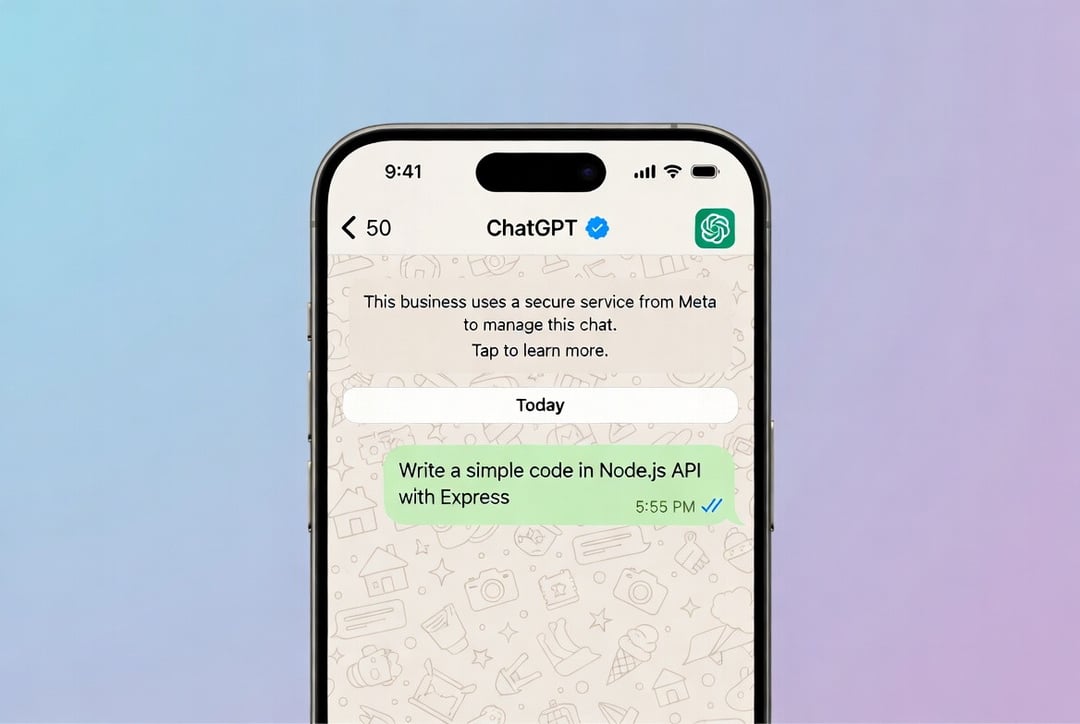
ChatGPT is once again reachable through WhatsApp for users across the European Economic Area, marking the end of a six-month lockout that began when Meta cut off third-party AI assistants from its messaging platform. The reversal traces directly back to a European Commission antitrust order that forced Meta's hand, requiring the company to reopen its WhatsApp Business API to competing AI providers at no cost.
How the WhatsApp Ban Started
The trouble began in October 2025, when Meta rewrote the terms of its WhatsApp Business Solution in a way that effectively shut out general-purpose AI assistants built by other companies. Meta AI remained the only assistant left standing on the platform. OpenAI responded by confirming that ChatGPT's WhatsApp integration would go dark after January 15, 2026, and told its user base to move any saved chat history over to the standalone ChatGPT app before the cutoff. The scale of the disruption was substantial: more than 50 million people worldwide had been using ChatGPT through WhatsApp before access was cut.
A Short-Lived, Paid Comeback
Meta didn't hold the line completely. In March 2026, it walked the policy back partway, letting third-party AI assistants return to WhatsApp — but only if they paid a fee. Regulators in Brussels didn't see that as a fair fix. The European Commission viewed the charge as anticompetitive behavior dressed up as a compromise, and that judgment set the stage for a formal investigation.
What the European Commission Ordered
The Commission's antitrust probe culminated in a ruling on June 9, directing Meta to restore rival AI access to WhatsApp under the exact same free conditions that existed before the October 2025 policy change. Meta wasn't given much room to stall: the order gave the company just five working days to comply.
How Long the Interim Measure Lasts
This isn't a one-time fix with an expiration date baked in for convenience — it's an interim measure tied to the underlying investigation. It stays in effect until the Commission wraps up its inquiry, or until June 2029, whichever comes first. Brussels has been clear that ordering interim access doesn't amount to a verdict; the broader investigation into Meta's conduct is still open, and the final outcome is still undetermined.
Using ChatGPT on WhatsApp Again
As of Monday, July 13, users in the EU, Iceland, Liechtenstein, Norway, and Switzerland can message ChatGPT directly on WhatsApp through its verified contact number, 1-800-CHATGPT (+1-800-242-8478). No separate ChatGPT account is required to start a conversation — you can simply message the number and begin chatting.
What the Integration Supports
The restored WhatsApp integration isn't a stripped-down version of the assistant. It handles:
- Text conversations across multiple languages
- Imported images sent directly in the chat
- Voice messages
- AI-generated images
Linking an existing ChatGPT account isn't mandatory, but it does come with a practical benefit — users who connect their account unlock higher usage limits than those chatting anonymously through the WhatsApp number alone.
Why This Dispute Reaches Beyond WhatsApp
The standoff between Meta and OpenAI has turned into something bigger than a single feature dispute. It's shaping up as a real test of how assertively European regulators are willing to act when a dominant platform tries to box out AI competitors trying to reach the same users.
The Cost of Getting This Wrong for Meta
The financial exposure for Meta isn't trivial. Reporting from Reuters indicates the company could be fined up to 10 percent of its global annual revenue if the investigation ultimately concludes it violated EU antitrust rules. Meta, for its part, isn't framing this as a simple compliance matter — a company spokesperson described the ruling as effectively letting "some of the world's largest firms" use Meta's paid WhatsApp Business service without paying for it. The Commission has pushed back on that framing implicitly by stressing that the interim order is about restoring a level playing field while the investigation runs its course, not handing out a free pass to any single competitor.