
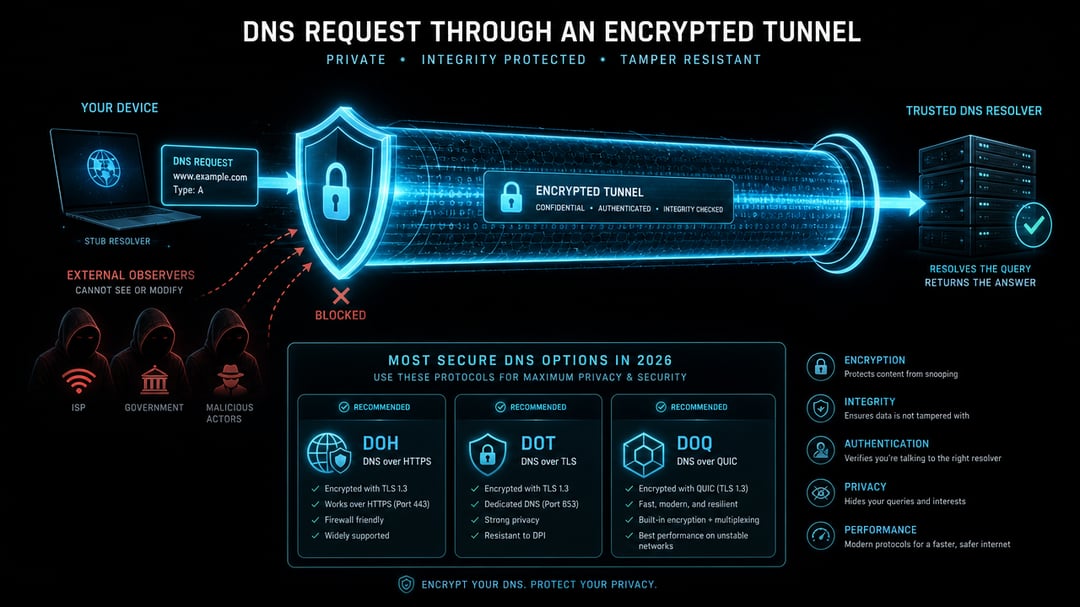
Every time you type a website name, your device asks a DNS resolver for the matching IP address. Without encryption that request travels in plain text. Your ISP, the Wi-Fi operator at a coffee shop, or anyone else on the path can see the full list of domains you visit. In 2026 that exposure is still the easiest surveillance vector most people leave open.
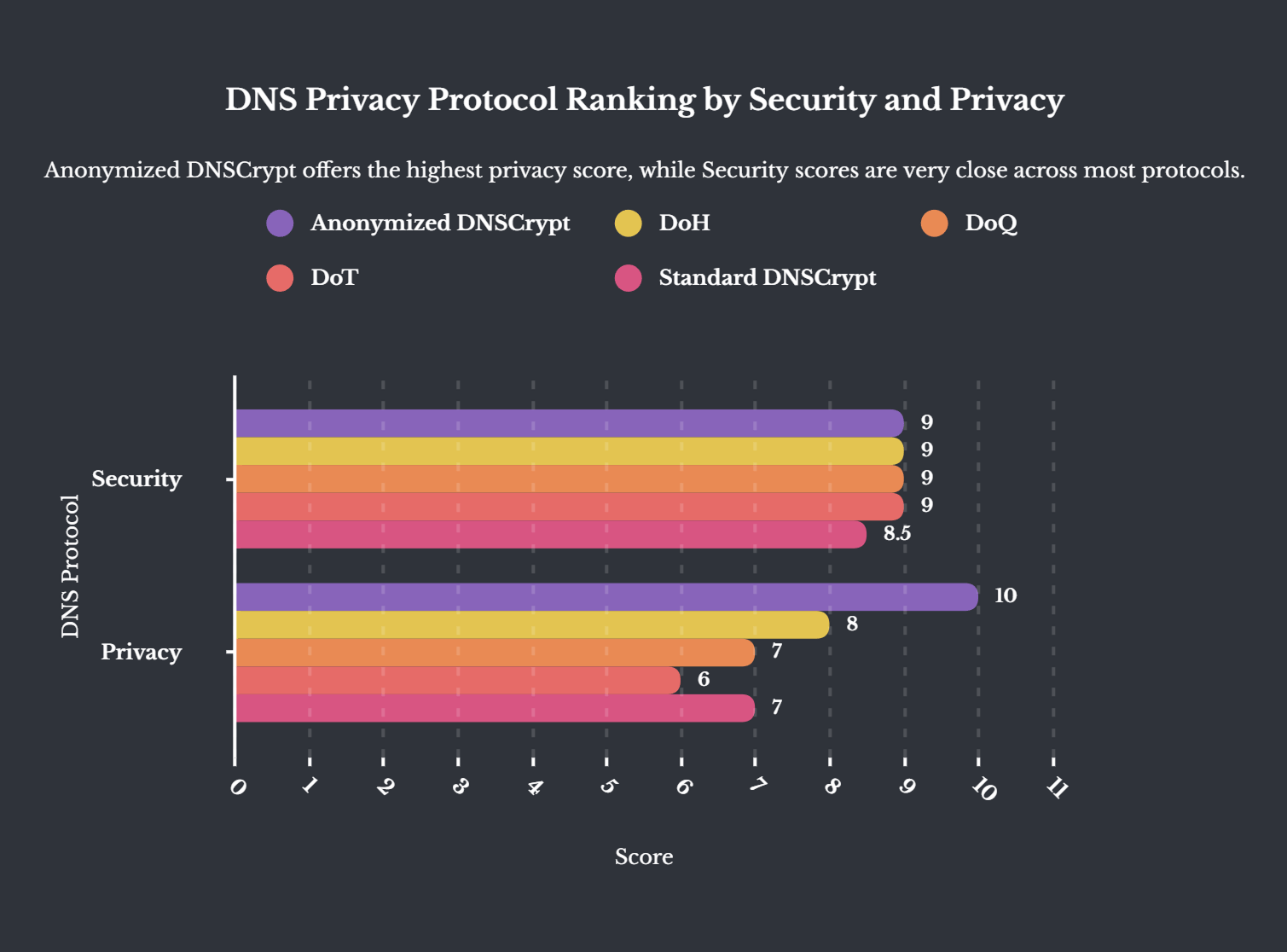
Encrypted DNS fixes the obvious problem. The harder choice is which protocol actually delivers strong security while remaining usable. Five options dominate the conversation: DNS over TLS (DoT), DNS over HTTPS (DoH), DNS over QUIC (DoQ), DNSCrypt, and Anonymized DNSCrypt. Security scores sit close together near the top. The real differences show up in privacy from the resolver, resistance to blocking, and how easy each one is to run.
Here is the ranking by security, with privacy and practical notes added from direct protocol comparisons.
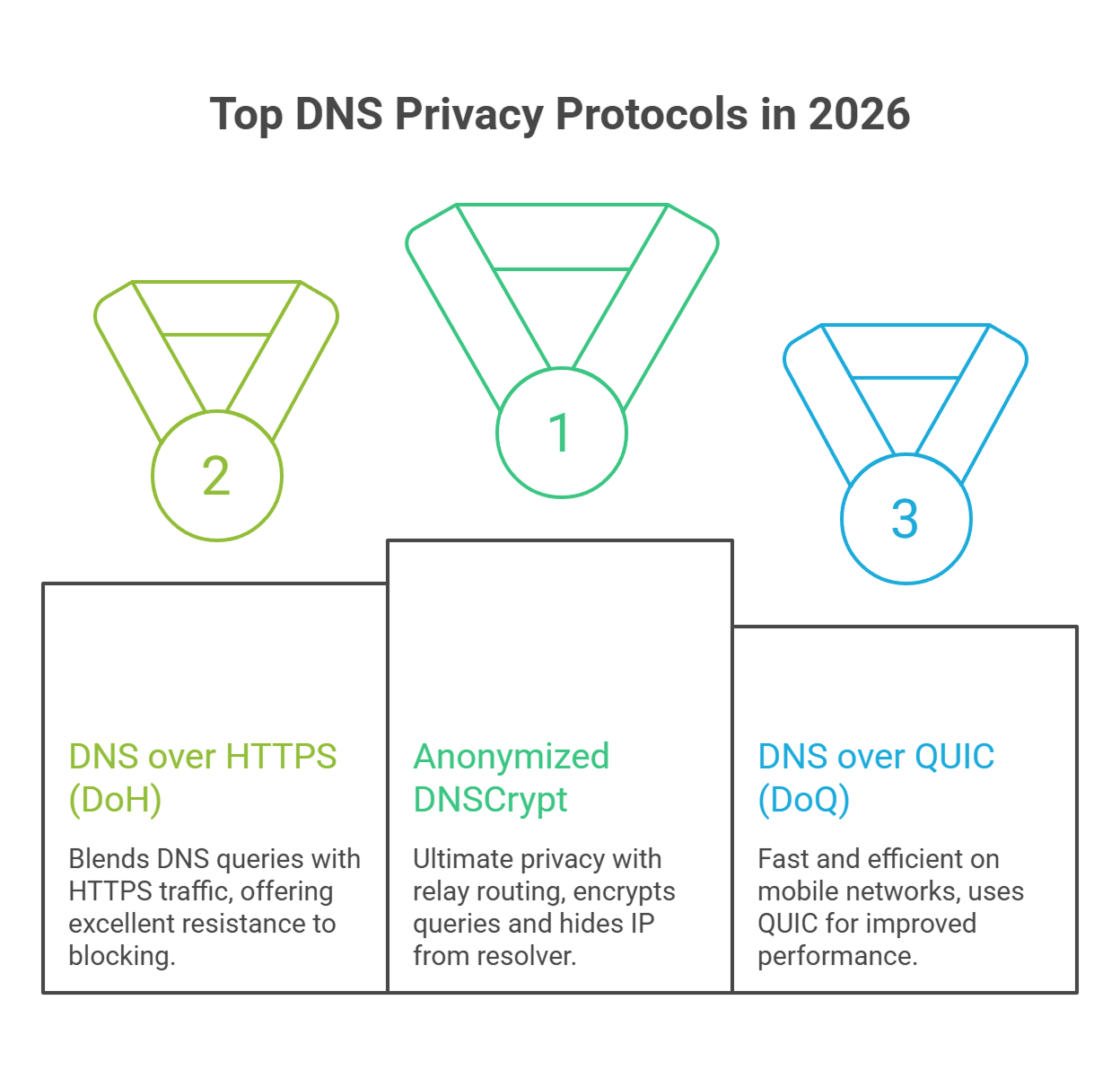
1. Anonymized DNSCrypt — Security 9/10, Privacy 10/10
Anonymized DNSCrypt sits at the top when both security and privacy matter. It encrypts the query and then routes it through an intermediate relay. The relay knows your IP address but cannot read the query. The final resolver can read the query but only sees the relay’s IP. That split removes the single point that normally links your identity to your browsing list.
It runs on flexible ports, which makes fingerprinting harder than a fixed port-853 service. You need a client such as dnscrypt-proxy. Native OS or browser support does not exist, so the setup is more involved than flipping a switch. For anyone who treats the resolver itself as a potential adversary, this remains the strongest practical option available in 2026.
2. DNS over HTTPS (DoH) — Security 9/10, Privacy 8/10
DoH wraps DNS queries inside ordinary HTTPS traffic on port 443. To the network it looks like regular web browsing. That blending gives it excellent resistance to blocking and censorship. Security against tampering is high because the connection uses modern TLS.
The trade-off is simple: the resolver still sees your IP address. Most people accept that trade when they choose a resolver with a clear no-logs policy. DoH is built into Firefox, Chrome, Edge, and recent versions of Windows. Setup takes seconds. For the majority of users who mainly want to stop their ISP from reading every domain, DoH is the practical winner.
3. DNS over QUIC (DoQ) — Security 9/10, Privacy 7/10
DoQ is the newest standardized protocol (RFC 9250). It carries DNS over QUIC, usually on UDP port 853. QUIC’s 0-RTT handshakes and connection migration make it especially strong on mobile networks and lossy links. Security against path attacks matches the other top protocols.
The downside is visibility. Port 853 and the QUIC signature remain identifiable, so network operators can still detect and block it more easily than DoH. Support has grown—Quad9, AdGuard, and others now offer it—but it is not yet as universal as DoH or DoT. Choose DoQ when speed on the move matters and you already trust the resolver.
4. DNS over TLS (DoT) — Security 9/10, Privacy 6/10
DoT encrypts DNS over a dedicated TLS connection on port 853. The encryption is solid and the protocol is easy for operating systems to implement. Android’s Private DNS setting and many routers use it by default. Security against tampering is excellent.
The dedicated port is also its weakness. Firewalls and corporate networks can simply drop traffic on 853 without affecting the rest of the internet. Privacy is lower because the resolver sees your IP and the traffic is easy to identify. DoT works well when you control the network or the network will not interfere.
5. Standard DNSCrypt — Security 8.5/10, Privacy 7/10
DNSCrypt predates both DoH and DoT. It encrypts and authenticates traffic between client and resolver without relying on the public certificate system for bootstrap in its classic form. Ports are flexible, which helps against simple blocking.
It requires a dedicated client and lacks native OS or browser integration. The anonymized version is the one that pulls ahead on privacy. Plain DNSCrypt remains a solid choice for enthusiasts who want an independent encryption design, but it sits slightly behind the others on pure security scoring.
Side-by-Side Reality
All five protocols encrypt the query content so the path between you and the resolver cannot read the domains. Only Anonymized DNSCrypt (and the still-limited Oblivious DoH) hides your IP from the resolver itself. DoH and DNSCrypt on port 443 resist blocking best. DoT and DoQ are easiest for network admins to spot.
Picture the path: your device talks to the ISP, which sees either encrypted blobs or a recognizable port, then the traffic reaches the resolver. Without a relay the resolver sees both the query and your address. That single fact explains why the privacy scores diverge even when security scores look similar.
How to Choose
- Everyday use with a trusted resolver: start with DoH.
- Android or managed devices where you want system-wide control: DoT.
- Mobile devices that change networks often: DoQ where the resolver supports it.
- Maximum separation of identity from queries: Anonymized DNSCrypt.
- Heavy censorship environments: DoH first, then Anonymized DNSCrypt if you can run the client.
Always pair the protocol with a resolver whose logging policy you have actually read. Quad9, Mullvad, AdGuard, and a number of independent operators publish clear statements. Protocol choice matters less than resolver trust for most people.
Quick Setup Notes
Browsers let you turn on DoH in a few clicks. Android has a Private DNS field that accepts DoT hostnames. Windows 11 includes native DoH. For Anonymized DNSCrypt or full control, install dnscrypt-proxy and point it at a relay list plus a resolver you trust. Test after changes; some networks still break encrypted DNS in unexpected ways.
What Still Leaks
Encrypted DNS stops the ISP from reading your domain list. It does not hide the fact that you connect to a particular resolver. The subsequent HTTPS connection can still expose the site name through Server Name Indication unless Encrypted Client Hello is active on both ends. Stronger anonymity still needs a VPN or Tor on top of good DNS.
In 2026 the security ranking is tight at the top. Anonymized DNSCrypt leads when privacy from the resolver counts. DoH wins for most people who simply want encryption that works without extra software. Match the protocol to the actual threat you face, pick a resolver with a policy you accept, and the biggest DNS privacy gap closes.