
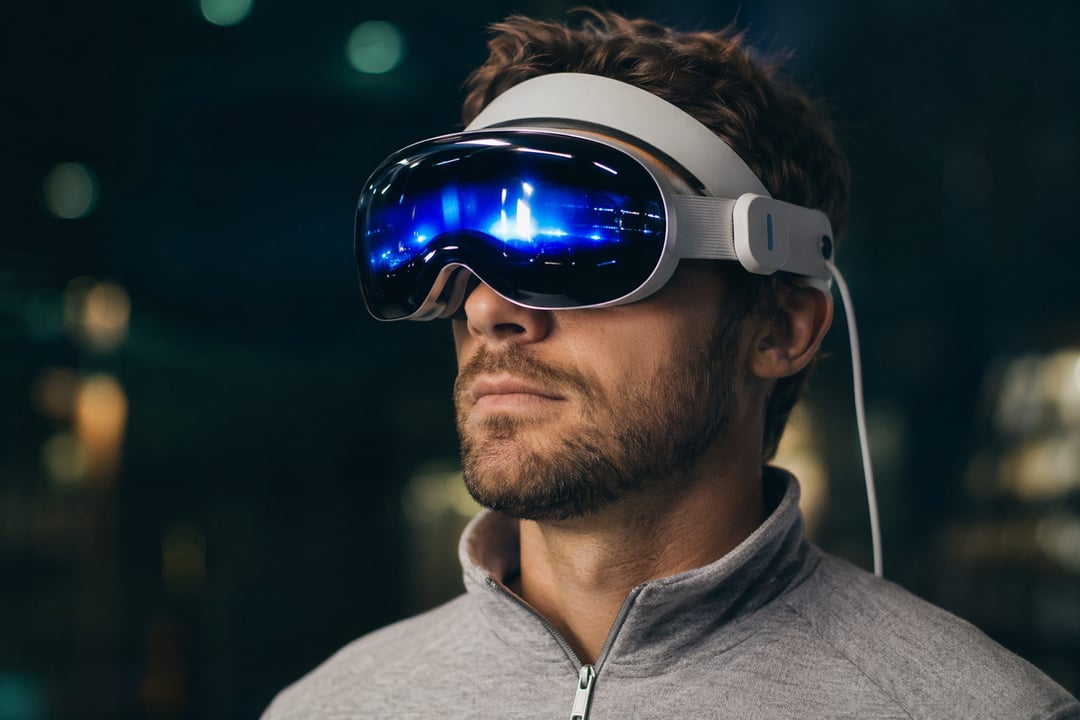
Apple’s Vision Lineup Goes From Seven Devices to Two
About a year ago, well-known Apple analyst Ming-Chi Kuo laid out a Vision product roadmap that included seven different devices. The latest version of that roadmap looks very different. Only two products are still standing.
Kuo says the overhaul has the sign-off of John Ternus, Apple’s incoming CEO, who officially steps into the role on September 1, 2026. So this isn’t a minor tweak buried in a spreadsheet somewhere. It’s a top-level call about where Apple’s head-worn computing ambitions are headed, made right as leadership changes hands.
Five of the seven planned products have been scrapped. Two made the cut.
What Survived the Cull
The first survivor is a pair of AI smart glasses aimed squarely at the Meta Ray-Ban lineup. Think everyday wearables with assistant features built in, not a bulky headset.
The second is a display-equipped pair of AR glasses that relies on optical waveguides, the tech that lets the lenses layer virtual content right on top of the real world in front of you.
Here’s the catch: the timelines are spread out. The AI glasses are expected sometime in 2027. The AR glasses, the more ambitious of the pair, aren’t projected to arrive until 2029 at the earliest.
What Got Cancelled
Pretty much everything else. That includes plans for a follow-up to the Vision Pro, plus the lighter Vision Air that had been floating around in the rumor mill. Both are gone. Apple’s framing, according to Kuo, is that the company is steering toward “smart glasses with greater mass-market potential” instead of doubling down on pricier mixed-reality hardware.
It’s hard to argue with the logic. The bigger question is whether the timing works in Apple’s favor.
Why Smart Glasses Beat Mixed-Reality Headsets as a Bet
The market data backs up the pivot. A Counterpoint Research report from February 2026 found that global smart glasses shipments jumped 139% year-over-year in the second half of 2025. That’s not a niche category limping along. That’s a segment taking off.
And there’s a clear leader. Meta, the company behind the most popular AI smart glasses on the planet, is out in front with a strong lineup, including the Meta Ray-Ban Display, and a steady stream of new AI-powered features.
How dominant is Meta right now? It held an 82% share of the market over that same stretch. A few things are driving that: a genuinely global footprint, partnerships with established eyewear brands, and hardware paired with software that just feels intuitive to use. Meta has basically proven the whole category can work, and the expectation is that it keeps growing from here.
So Apple wants in. That much is obvious. But Meta’s head start, and all the experience that comes with it, could end up being a real obstacle for the company.
Is Apple Already Too Late to the Smart Glasses Race?
Every month Apple spends reshuffling its roadmap is a month Meta spends actually selling products, refining them, and building out the retail presence that makes smart glasses feel like a normal thing to wear. That’s a meaningful gap, and it widens with time.
It gets more concerning when you look at the ship date. Apple’s smart glasses may not land until the end of 2027. That hands Meta at least another year and a half to release new products, sharpen its features, and dig its position in even deeper.
Apple’s “Late but Better” Playbook
Apple’s bet is familiar: enter the category late and win anyway on brand, design, and tight iPhone integration. That’s essentially the same approach the company used against established smartwatch makers back in 2015, and it worked.
But there’s a condition attached. Showing up late only works if Apple’s first AI glasses are as good as, or better than, whatever Meta happens to be shipping by then. Late and merely fine won’t cut it.
What Cancelling the Vision Pro Successor Really Signals
The Vision Pro always read more like a platform bet than a true consumer product, a way to plant a flag and build a foundation rather than something most people would actually buy. Ternus pulling the plug on its successor looks like a quiet admission that the strategy didn’t deliver at the speed Apple was hoping for.
To be clear, redirecting those resources toward smart glasses is almost certainly the right move. The harder question, and the one that actually matters, is whether Apple is already too far behind to catch up.