
The Subscription Problem Apple Is Finally Addressing
You know that moment when you're about to subscribe to an app, and you're staring down two options — the pricier monthly plan or the cheaper annual one that demands you hand over a big chunk of money upfront? It's genuinely annoying. You're not sure you'll even use the app in six months, but you also don't want to overpay month to month. That tension has existed forever, and Apple has finally done something about it... sort of.
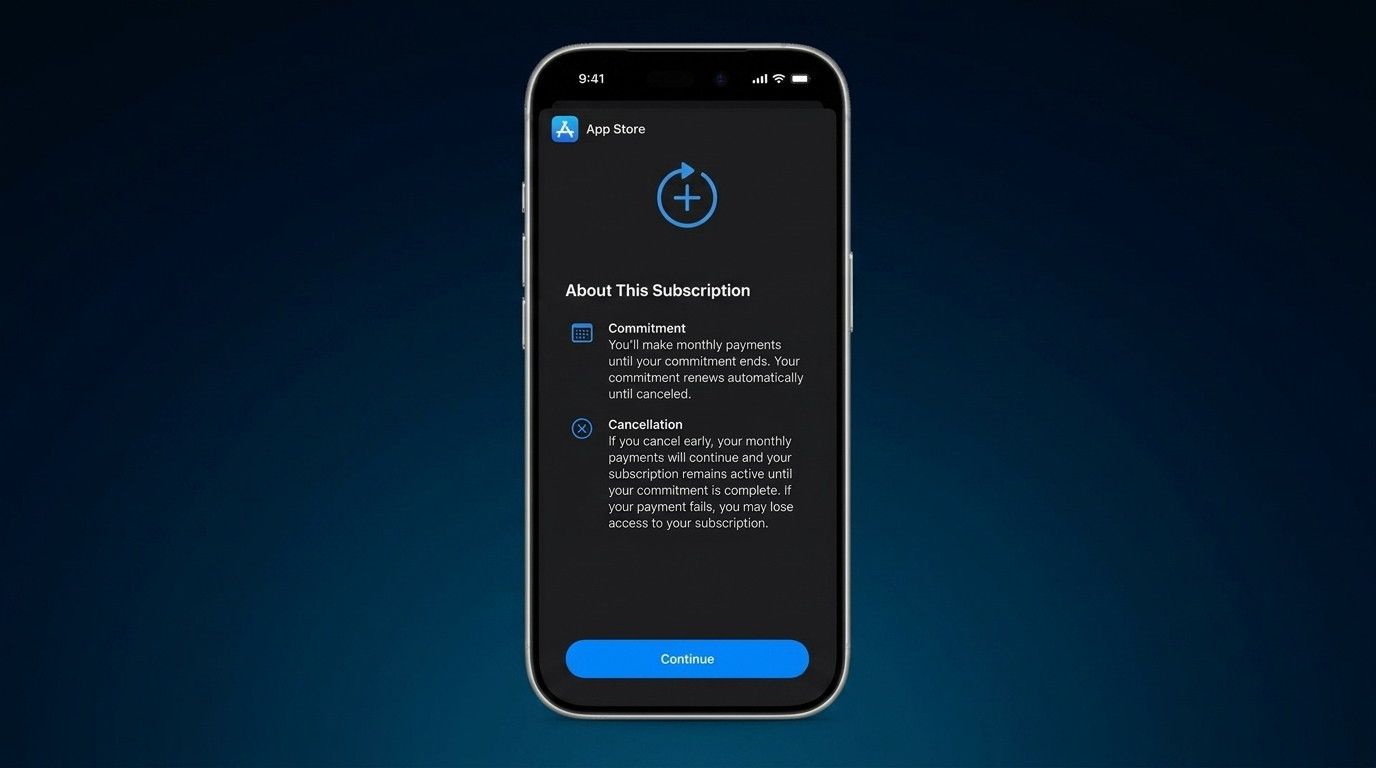
Apple has announced a brand-new App Store subscription type: monthly billing charged at the annual equivalent rate. So instead of paying a higher per-month price for flexibility or swallowing a lump-sum annual payment for the discount, you get the discounted rate broken into 12 monthly installments. On paper, it sounds like exactly what people have been asking for.
But — and this is the part worth slowing down for — those monthly payments come with a 12-month commitment. You're not getting flexibility. You're getting the appearance of flexibility.
How the New Monthly-Annual Billing Model Actually Works
Here's what it looks like in practice. Say an app costs $9.99 per month on a standard rolling subscription, or $90 if you pay annually upfront. Under the new model, that $90 annual price gets divided by 12, giving you a monthly charge of $7.50. You're paying less each month than the standard monthly plan, and you're not handing over $90 all at once.
Apple is also adding some useful transparency features alongside this. At any point, subscribers can see how many payments they've completed and how many remain in their 12-month cycle. On top of that, Apple will send reminder emails and push notifications before renewals kick in — the same way it handles regular subscriptions. That part is genuinely good.
Developers can already start testing the new subscription type inside App Store Connect and Xcode. For users, the feature goes live with iOS 26.4 and equivalent platform versions, rolling out next month.
The Catch That Changes Everything
So here's where it gets a little thorny. If you sign up for this model and then decide in month nine or ten that you're done with the app, you can't just cancel and walk away. You still owe the remaining installments — whether that's two months or three — to complete the full 12-payment cycle before you're free for the next period.
Think of it less like a monthly subscription and more like a 12-month contract you pay in installments. The commitment is still there. The annual obligation is still there. The only thing that's changed is when the money leaves your account.
That said, it's not really a trap in disguise. From the developer's side, they're still getting their full annual rate. From the subscriber's side, you're not shelling out the full annual price upfront, and you're paying less per month than the standard rolling plan. The model genuinely does find a middle ground — it just isn't the "cancel anytime" flexibility that the monthly framing might imply at first glance.
Why This Isn't Launching in the US or Singapore Yet
Here's the part that raises some eyebrows. Despite being announced now, the new subscription type isn't launching in the United States or Singapore at launch. Apple hasn't given an official timeline for when either market will be included.
It's hard not to read that as a response to regulatory pressure around subscription transparency — the kind of scrutiny that's been building in various markets around how companies communicate recurring charges to consumers. Whether that's the direct cause or not, the practical effect is clear: the new tier makes the economics of annual subscriptions more legible, letting users commit to a yearly rate without the upfront sticker shock.