
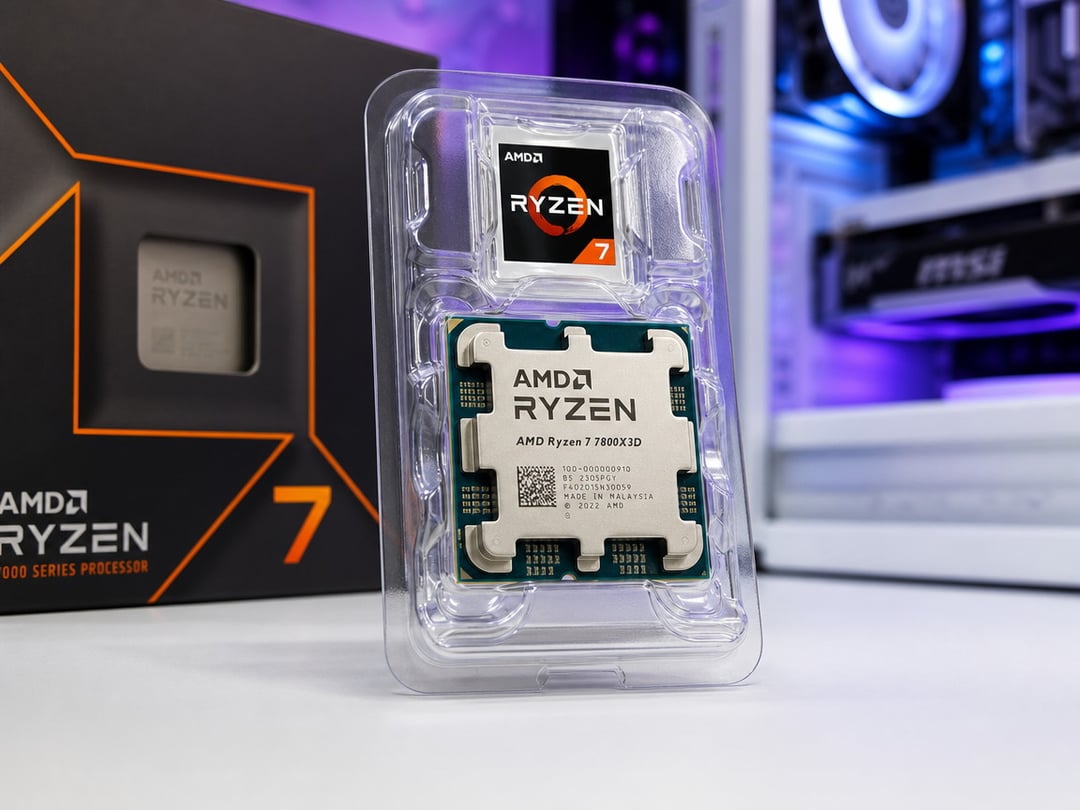
AMD accounted for 30.3% of x86 client CPU shipments in the second quarter, according to Mercury Research. The figure covers processors shipped for desktop and laptop PCs, while Intel held the remaining 69.7% of the x86 client CPU market.
The result puts AMD above the 30% mark for the first time in this shipment-based measure. It also continues a longer shift in the AMD-Intel split, with Intel’s share still larger but narrowing over time.
AMD Client CPU Share Increased From Q1 and Q2 2025
AMD’s 30.3% x86 client CPU shipment share was up 0.7 percentage points from the 29.6% reported in the first quarter. Compared with the second quarter of 2025, when AMD held 23.9%, the company’s share rose by 6.4 percentage points.
The gains came from both desktop and mobile processors. That matters because the client CPU category includes the chips used across desktop PCs and laptops rather than focusing on only one part of the PC market.
AMD had already exceeded 30% in client CPU revenue share. Its revenue share reached 31.4% in the first quarter, which is a separate measure from unit shipments into the supply chain.
What the 30.3% AMD Market Share Figure Measures
The 30.3% result refers to unit shipments entering the supply chain. It does not show how many PCs currently in use contain AMD or Intel processors.
It also does not represent AMD’s share of every processor shipped in the broader PC market. The measurement covers the AMD-Intel x86 split and excludes Arm-based processors.
That distinction is important because Arm processors are part of the wider client PC market. Mercury estimated that Arm held 14.4% of that broader market in the first quarter, including processors such as Apple Silicon and Qualcomm Snapdragon chips.
Client CPU Shipments Rose During the Quarter
The AMD market-share milestone came during a stronger-than-expected quarter for processor shipments. Mercury Research reported that total x86 and Arm CPU results rose strongly, with sequential quarterly growth for the overall market exceeding 10%.
According to the research note, that level of growth was well above typical seasonal patterns. The second quarter usually brings a slight quarter-over-quarter decline rather than a substantial increase.
Jon Peddie Research also reported growth in client CPU shipments during the quarter. Its figures put quarterly growth at 9.4%, though shipments were still down 1.1% compared with the same quarter a year earlier.
The report noted that the second quarter is generally a weaker period for client CPUs, as PC manufacturers and retailers work through older inventory.
OEM Inventory Rebuilding Affected CPU Shipment Results
Client CPU units and revenue appeared solid during the quarter, but inventory rebuilding was part of the picture. Jon Peddie Research said some of the performance reflected OEMs replenishing inventories rather than purely stronger demand.
The context matters. Intel experienced a difficult supply quarter in the first quarter, and OEM inventories declined. The later build-up largely restored inventory levels that had fallen below normal.
So while the shipment numbers were strong, they should not be treated as a direct measure of end-user PC demand.
Memory Prices Continued to Pressure New PC and Upgrade Costs
Rising DRAM and SSD prices continued to affect the PC market. Higher memory and storage costs made new computers and upgrades more expensive, especially for the DIY segment.
Jon Peddie Research said many enthusiasts moved purchases forward into the fourth quarter of 2025 before expected price increases. That left retail demand weaker in the second quarter, even while manufacturers rebuilt depleted inventories.
The contrast is clear: supply-chain shipments improved during the quarter, while retail demand remained under pressure in part because of higher component prices.
AMD Client Revenue and Ryzen Pro Sales
AMD’s client business generated $3.1 billion in the second quarter, up 23% year over year. The company also reported that Ryzen Pro sales increased by more than 50% from a year earlier as it secured new enterprise customers.
AMD said its first-half performance was very strong. It also expected the market to decline in the second half, although the market had held up better than many expected at that point.
The company’s rising client CPU shipment share, revenue growth, and Ryzen Pro sales growth all point to continued momentum across its client business. Still, the wider market includes supply-chain conditions, inventory adjustments, memory pricing, and processors outside the AMD-Intel x86 category.