
Morgan Stanley's Forecast for the Data Center Race
Financial modeling indicates a significant shift approaching the data center processor market. By 2027, AMD's next-generation EPYC Venice processors are expected to reach 6.75 million shipped units. In comparison, Nvidia's competing Vera CPUs are projected to hit 5.75 million units during the same timeframe. This trajectory puts AMD ahead by approximately one million processors, outselling Nvidia's server CPUs by roughly 17%.
Technical Specifications and Production Ramps
The Growth Trajectory of AMD's Zen 6 Architecture
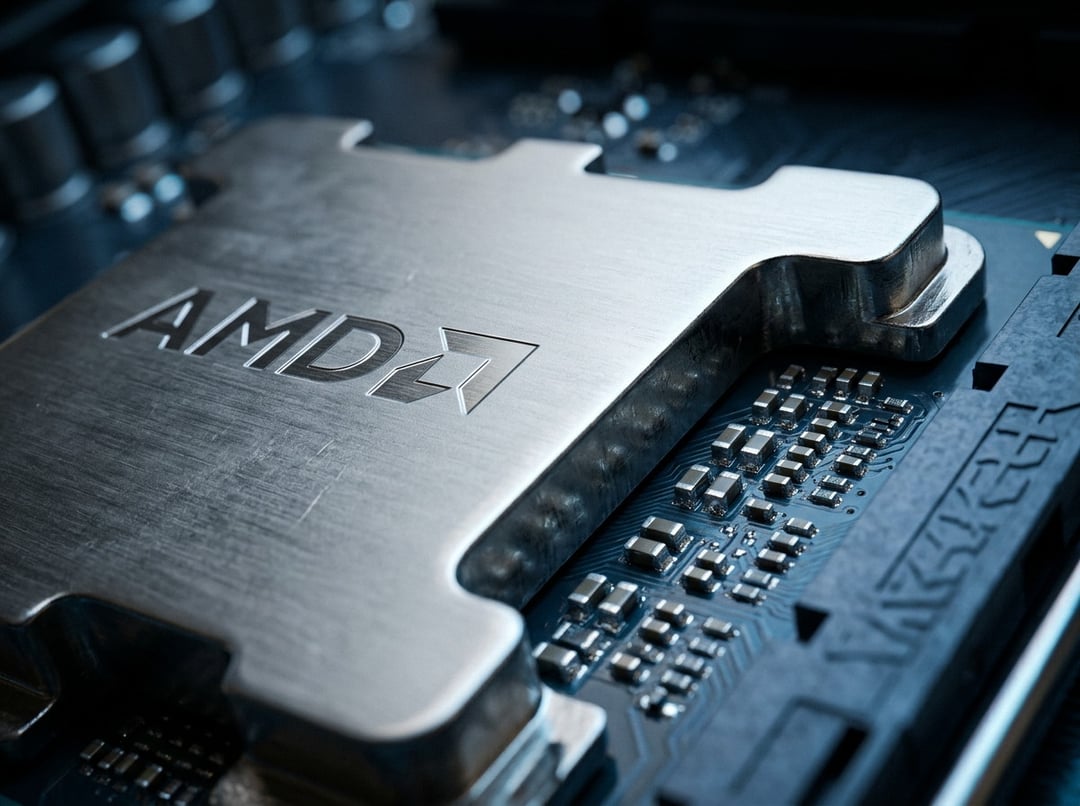
The upcoming Venice processors will utilize AMD's Zen 6 architecture and rely on TSMC's 2-nanometer manufacturing process. The production scale for these chips is set to ramp up sharply. Output is estimated to begin at 1.25 million units in 2026 before experiencing a more than fivefold increase to reach the 6.75 million mark the following year.
Nvidia's Vera Chips and AI GPU Expansion
Nvidia's Vera CPUs, which incorporate TSMC's CoWoS-R packaging technology, are also on a steep growth path, with output forecast to double year-over-year. Even as AMD takes the lead in standalone server CPU volume, Nvidia's overall data center revenue is projected to grow by approximately 52% in 2027. This financial growth will be driven predominantly by its core AI GPU business.
Wall Street Upgrades and Revenue Projections
Financial institutions are increasingly confident in AMD's competitive trajectory against both Intel and Nvidia in the data center infrastructure space. UBS recently elevated its price target for AMD from $455 to $670, a revision that reflects anticipated market share gains in the server CPU sector.
Revenue estimates for AMD's server CPUs have simultaneously been revised upward. Financial models project $16 billion in revenue for 2026, climbing to $23 billion in 2027—an increase from previous $21 billion estimates—and reaching $50 billion by 2030, up from the prior $41 billion forecast. These figures factor in a 60/40 deployment split between x86 and ARM architectures in standalone servers, positioning AMD to secure substantial market share as agentic AI workloads continue to expand. Firms including TD Cowen, Loop Capital, and KeyCorp have also raised their price targets for the processor manufacturer.
Advanced Packaging Capacity and Supply Chain Impact
The intensifying competition between chipmakers translates directly into massive demand for advanced foundry services. Both the Venice and Vera product lines rely heavily on TSMC's advanced packaging capabilities, establishing the Taiwanese manufacturer as a central beneficiary of the processor volume race. Total advanced packaging capacity at TSMC is projected to reach approximately 200,000 wafers per month by 2027.
Despite AMD's projected lead in specific server CPU units, Nvidia will remain TSMC's largest overall customer. To support its next-generation Blackwell and Rubin AI GPUs, Nvidia will require extensive CoWoS-L packaging capacity. Estimates suggest these AI GPU units will hit 910,000 in 2027, representing an approximate 40% increase from the prior year.