
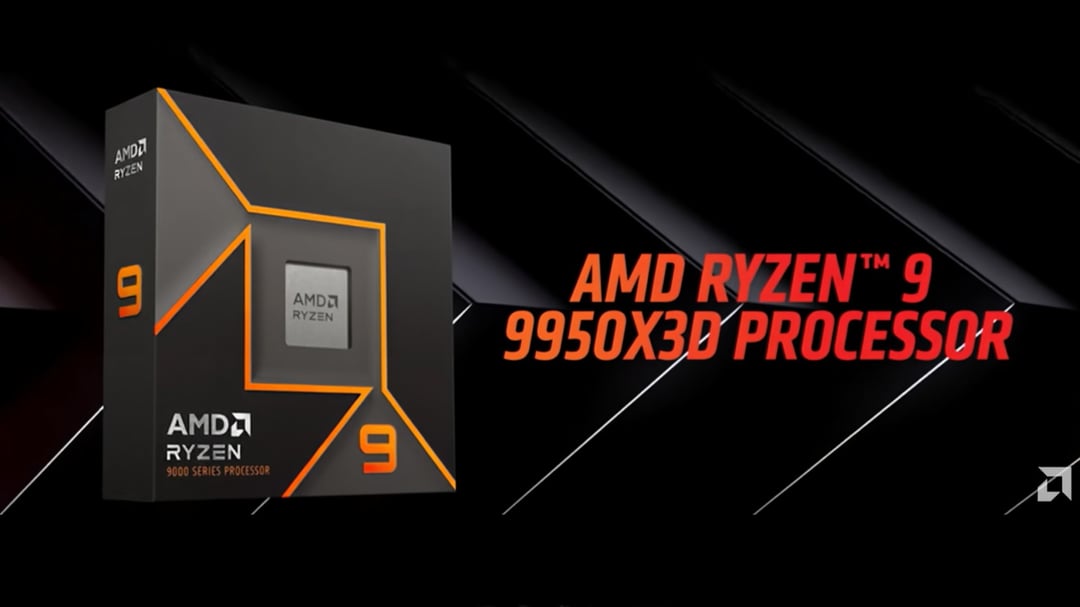
AMD unveils its first dual 3D V-Cache Ryzen processor
AMD has introduced the Ryzen 9 9950X3D2 Dual Edition as its most advanced desktop processor so far, with cache now positioned at the center of its performance strategy.
The chip is built on the Zen 5 architecture and combines 16 cores with a total of 208MB of cache. AMD describes it as the world’s first dual AMD 3D V-Cache technology enabled processor. That dual-chiplet approach is a major part of the product’s positioning, especially for heavier mixed workloads where memory behavior can directly affect responsiveness.
Dual 3D V-Cache design and what it changes
How stacked cache improves memory proximity
AMD’s 3D V-Cache design places additional memory directly on top of the processor die. The practical goal is simple: reduce the distance data needs to travel.
By shrinking that path, the design is intended to improve latency and throughput in demanding workloads. And with both chiplets using this approach, AMD is framing the result as more than a small tuning pass. The emphasis is on a noticeable change in responsiveness rather than a purely theoretical specification bump.
Why both chiplets matter for mixed workloads
The dual-chiplet implementation is the key distinction here. AMD says that with both chiplets using the stacked-cache design, the processor is better positioned for heavier mixed tasks. That makes the chip feel less like a narrow, single-purpose release and more like a broader desktop performance play.
The company’s message is clear: cache size is no longer a side detail. It is becoming a central lever in how desktop performance is delivered.
Zen 5 architecture and desktop performance focus
The Ryzen 9 9950X3D2 Dual Edition is based on Zen 5, and AMD pairs that architecture with expanded cache to push a new performance focus. Rather than presenting this as a complete overhaul, the framing leans toward refinement.
That matters because the gains being discussed are not positioned as dramatic leaps. Instead, the chip appears aimed at improving how demanding workloads behave in real use, especially when responsiveness matters as much as raw compute capability.
Claimed performance gains in creative and development workloads
According to AMD, the processor delivers between 5% and 10% over its predecessor in workloads that include:
- DaVinci Resolve
- Blender
- Large code compilation projects
Those gains are modest on paper. But they point to incremental improvement in areas where latency, memory access, and sustained responsiveness all play a role.
AMD also says that expanded on-chip memory helps reduce latency and keep demanding workflows responsive, including complex timelines, large datasets, parallel builds, and simulations. That wording reinforces the chip’s focus on mixed professional and enthusiast desktop use rather than a single narrow performance category.
Ryzen 9 9950X3D2 Dual Edition positioning
A processor aimed at heavier mixed workloads
AMD introduces this processor as a dual V-cache desktop chip designed for heavier mixed workloads. That positioning matters because it suggests a balance between creative software, compilation tasks, and other demanding desktop scenarios where quick data access can matter just as much as core count.
Incremental refinement instead of a complete redesign
The performance message is measured. AMD is not presenting the chip as a total reset. The claimed uplift of 5% to 10% suggests a more careful evolution, where the main story is refinement through cache expansion and improved data proximity.
Honestly, that makes the launch feel pretty focused. The appeal is not about flashy reinvention. It is about squeezing more responsiveness out of an already high-end desktop design.