
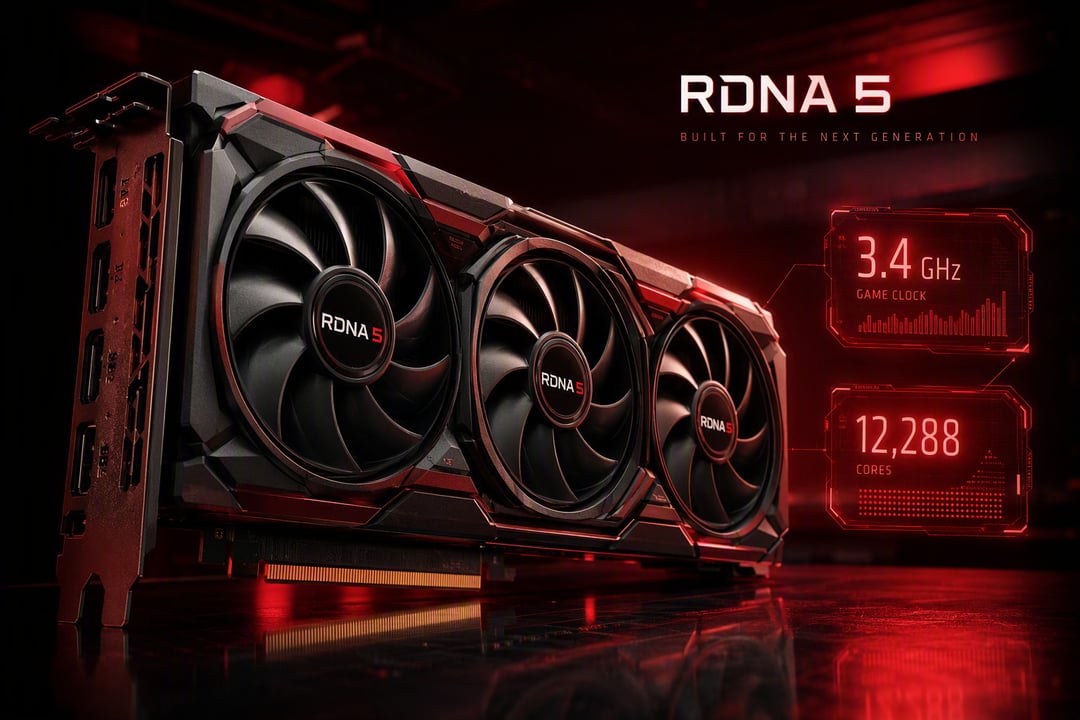
AMD is working on its RDNA 5 graphics architecture as the follow-up to the RDNA 4-based Radeon 9000 series. A tipster known for solid track records has shared details pointing to clock speeds that could reach 3.4 GHz on the next generation of Radeon cards.
According to a post on the AnandTech Forums by leaker Kepler_L2, internal AMD documents list a target frequency range of 3.1 to 3.4 GHz for RDNA 5. That sits roughly 15% above the 2.97 GHz boost clock of the current RDNA 4 flagship, the Radeon RX 9070 XT. Kepler_L2 did not specify whether the range covers the entire architecture or just certain models. Because RDNA 5 is expected to power discrete GPUs, integrated graphics, and console chips, higher clocks above 3 GHz will probably land only on the top SKUs. Lower-tier parts should run at reduced frequencies.
Flagship Navi 5X Specs from Leaks
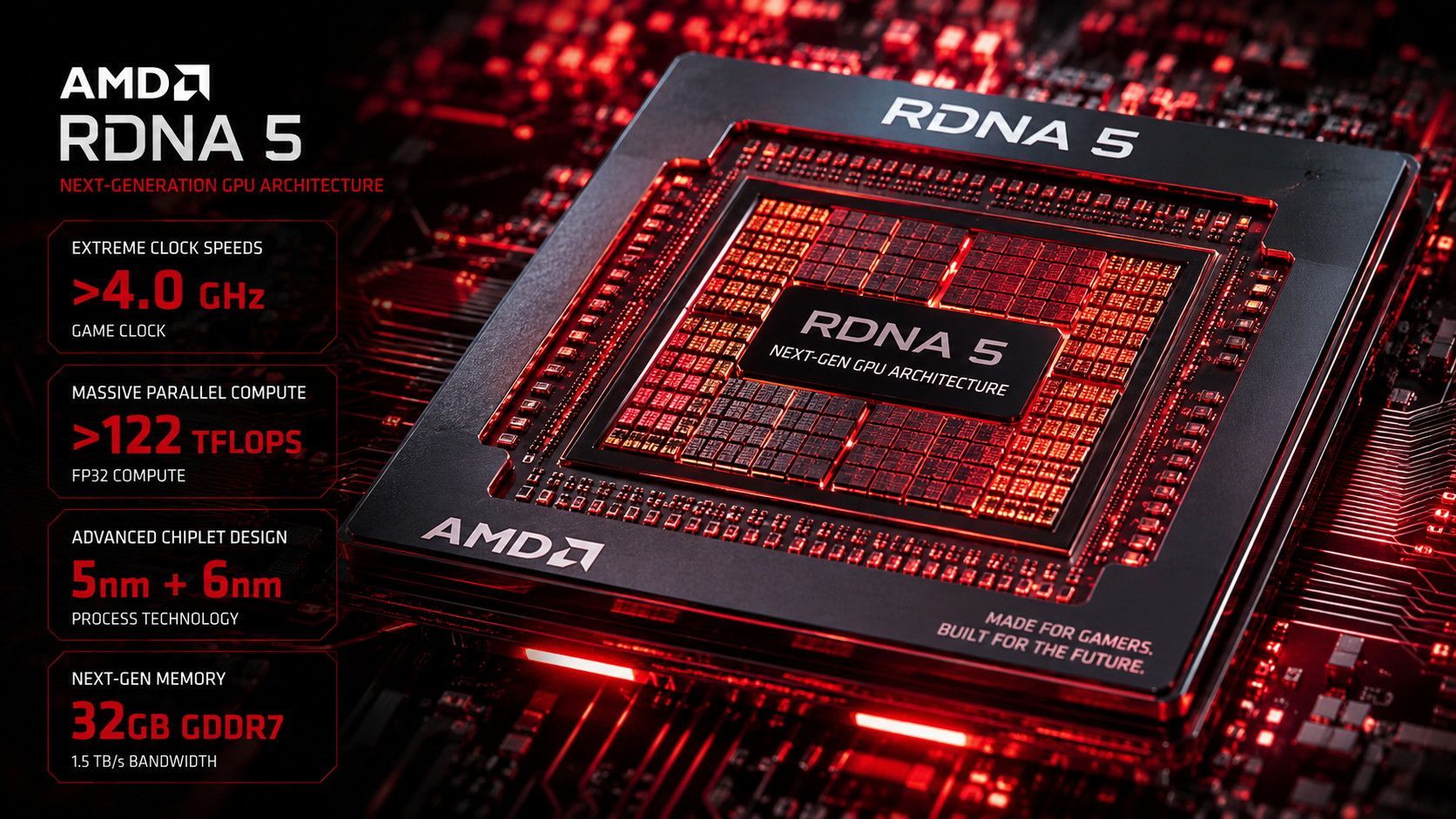
Earlier information points to a high-end Navi 5X die with as many as 96 compute units. Each unit holds 128 cores, which adds up to 12,288 cores in total. The same chip is expected to use a 384-bit memory bus. That is 50% wider than the 256-bit bus on the RX 9070 XT. Paired with denser VRAM dies, the wider bus could support up to 32 GB of GDDR7 memory on the flagship card.
Mid-Range and Lower Tier Configurations
The mid-tier die is said to carry 40 compute units and 5,120 cores. Its memory bus may scale as high as 384-bit and support as much as 24 GB of memory.
One step down, the low-tier die reportedly includes 24 compute units for 3,072 cores. Memory bus width ranges from 256-bit down to 128-bit, with VRAM capacity between 8 GB and 16 GB.
At the entry level, the smallest die is tipped to feature 12 compute units and 1,536 cores total. It would use a 64-bit memory bus and between 8 GB and 16 GB of VRAM.
If these figures hold, the jump from RDNA 4 is substantial. That architecture tops out at 64 cores per compute unit. AMD still has room to adjust the final lineup. Ongoing rises in memory prices make the outcome less certain. Those prices show little sign of dropping soon, so it is unclear whether a 32 GB graphics card will arrive with this generation or whether buyers will need to wait longer.
Expected Launch Window
AMD is now projected to show RDNA 5 in late 2027 or early 2028. Board partners had planned for a mid-2027 reveal, but the memory supply situation pushed the schedule back. Nvidia was also expected to bring out its Rubin-based gaming GPUs sometime in 2027, though the company has stayed quiet on the topic for months.


