
Which Devices Are Getting the Update
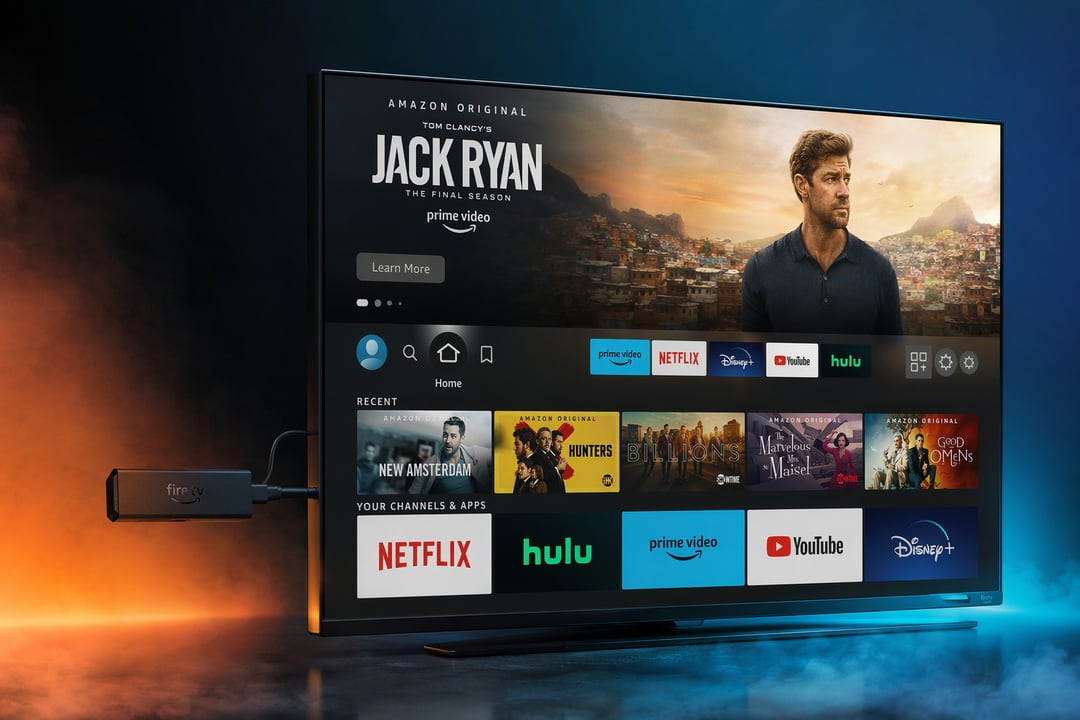
Amazon has officially started pushing its redesigned Fire TV experience to more devices, months after first showing it off at CES 2026. If you own a current-generation Fire TV Stick, a Fire TV Cube, or one of Amazon's Ember smart TVs, the update is either already waiting for you or heading your way soon.
And look, this isn't just Amazon shuffling some icons around and calling it new. It's a fundamentally different philosophy for how the whole thing works — how you navigate, how you browse, and most importantly, how you actually land on something to watch.
A Home Screen Built Around Content, Not App Icons
The biggest change here is structural. Instead of dropping you into a wall of streaming app logos and leaving you to figure it out, the redesigned Fire TV organizes everything into dedicated sections: Movies, TV Shows, Sports, Live TV, and News.
Think about what that actually fixes. Right now, the experience on most streaming devices goes something like this — you stare at a row of apps, open Netflix, scroll for ten minutes, find nothing, close it, open Prime Video, repeat. The whole process is friction stacked on top of friction.
Amazon's redesign is trying to cut through that. By surfacing content from across all your services in one place — rather than making you hunt app by app — the goal is to get you watching something faster, with far less clicking around.
Alexa+ Is No Longer a Side Feature. It's the Core.
Here's what makes this update genuinely interesting. The redesign isn't just visual — it's about making Alexa+ the connective tissue running through the entire experience.
Amazon says the decision to go deeper on Alexa+ wasn't arbitrary. Users have reportedly been interacting with the upgraded assistant more than twice as often as the previous version. That's a real signal: when the assistant actually works well, people use it. So Amazon is building it directly into how recommendations are surfaced, how content categories are organized, and how search results come back — not as a voice feature you trigger occasionally, but as something woven into every part of the interface.
Faster, Cleaner, More Modern
Beyond the structural shift, Amazon is also promising a meaningfully better experience in terms of raw performance. Navigation is reportedly snappier, responsiveness is improved, and the overall design has been modernized in ways that put it closer to platforms like Google TV and webOS than older Fire TV software.
Early previews of the redesign have drawn those comparisons favorably. Whether the version that actually ships to millions of devices lives up to the previews is the real question — but the intent is clearly to close the gap with the more polished TV operating systems that have made Google TV and webOS feel premium by comparison.
Why This Is Really a Play for Content Discovery
But here's the thing the company isn't leading with in its own press release: Amazon isn't just updating an interface. It's making a move to become the layer where people decide what to watch next — not inside Netflix or Prime Video or Disney+, but at the Fire TV home screen level, before any individual app is even opened.
That's a meaningful shift. And Amazon isn't alone in making it.
The Entire TV OS Industry Is Moving the Same Direction
Google TV, Roku, Samsung's Tizen, and LG's webOS have all been steadily transforming their home screens from simple app launchers into full-on recommendation engines. The idea is the same across all of them: spend less time navigating between apps, and let the OS itself guide you toward your next watch.
Amazon is now making that same move, but with Alexa+ as its differentiator — the thing that's supposed to make Fire TV's discovery experience feel smarter and more personal than a standard algorithmic grid.
Whether users actually embrace that is still an open question. But one thing is already clear: the battle for your next binge-watch isn't happening inside individual streaming apps anymore. It's happening on the home screen, and every major TV platform is competing for that real estate.