
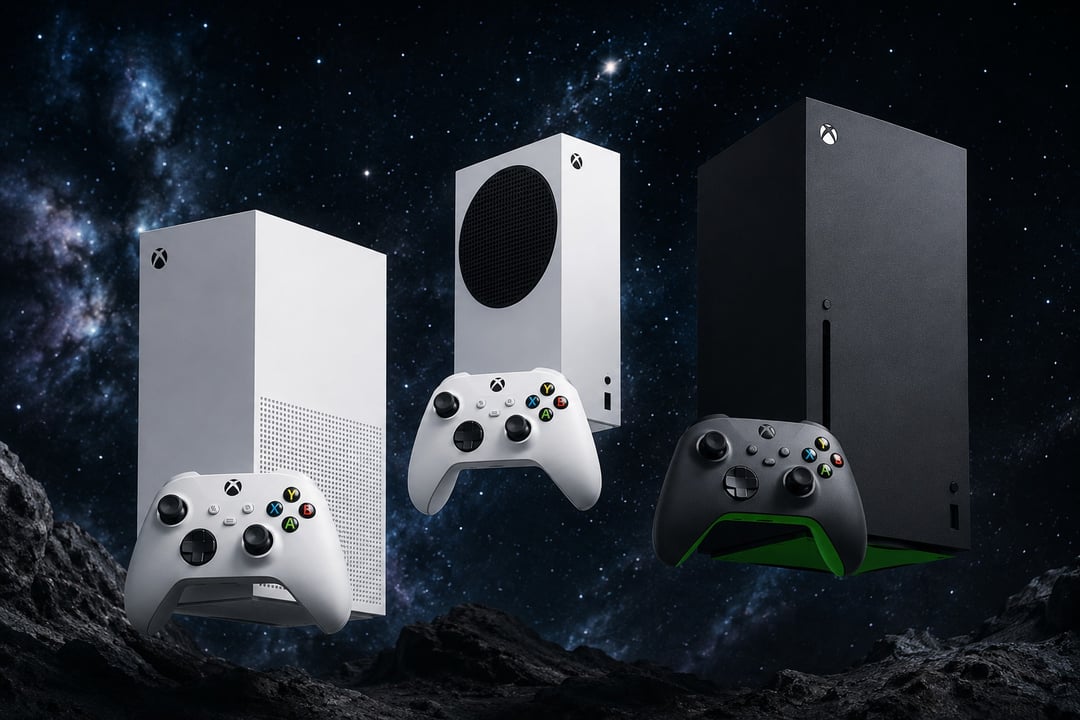
Microsoft's next Xbox console, codenamed Project Helix, could run games from every Xbox generation released so far. That comes from an internal document Microsoft reportedly sent to publishers, obtained by The Verge. The memo outlines plans for Helix to play original Xbox, Xbox 360, Xbox One and Xbox Series titles, on top of new Helix games and PC games. A library that wide would be the biggest on any console.
The complication sits in how that library gets assembled. Most of it depends on publishers agreeing, one title at a time.
The memo is a pitch, not a spec sheet
Microsoft is asking publishers to sign off on backward compatibility for their older catalogs. That permission would not be needed if the only goal were letting people replay discs they already own, which points to digital sales as the actual subject of the request. The memo reportedly says so directly. One section, titled "Why publishers win," states that publishers benefit by reselling their old titles.
So the document functions as a sales case aimed at rights holders. Microsoft supplies the platform and the reach; publishers supply the approvals and, in return, get another shot at revenue from games they shipped years ago.
Disc-to-Digital covers Xbox One and Xbox Series games without an opt-in
Not every part of the plan runs through publisher approval. Xbox One and Xbox Series titles are expected to convert into portable digital licenses through Microsoft's planned Disc-to-Digital program. According to the document, that program requires no publisher action on a per-title basis, and the resulting licenses would carry over to any Xbox device, Helix included.
The distinction matters for anyone with a shelf of recent discs. Those games move forward as licenses rather than as a technical backward compatibility problem, so they sidestep the negotiation entirely. A separate leaked roadmap points to an August rollout for Disc-to-Digital.
Original Xbox and Xbox 360 titles are where approval becomes a bottleneck
Games from the first two Xbox generations are a different job. Running them on Helix means real technical backward compatibility, not a license swap, and the memo puts each of those titles in front of its publisher individually.
For every game, a publisher has to:
- approve that specific title for Helix
- set its price
- decide whether it goes into Xbox Game Pass or stays a standalone purchase
Three separate decisions, repeated across catalogs that can run to hundreds of games, held by companies with their own release schedules and legal reviews. The leaked roadmap reflects that pace. A gradual Xbox 360 rollout is expected to begin only in 2027.
The rollout timeline in the leaked roadmap
The roadmap Microsoft sent to publishers gives three markers:
- August: general availability for Disc-to-Digital
- October: full launch of original Xbox games on PC
- 2027: the start of a gradual Xbox 360 rollout
Those dates cover the programs around Helix rather than the console itself, and they come from a document written for publishers, not a public announcement.
The disc drive is still an open question
Playing an old Xbox game on Helix will not necessarily be as simple as putting a disc in the console. Microsoft reportedly has not settled on whether Helix will include a disc drive at all.
That uncertainty sits underneath the whole backward compatibility pitch. Disc-to-Digital already assumes a shift away from physical media by turning discs into licenses tied to an account, and the per-title approvals for older games are about digital storefront listings rather than shelves.
What decides how big the Helix library gets
Helix could arrive carrying four generations of Xbox history. Whether it does has less to do with what the hardware can handle than with how many publishers Microsoft can talk into saying yes, one game at a time.