
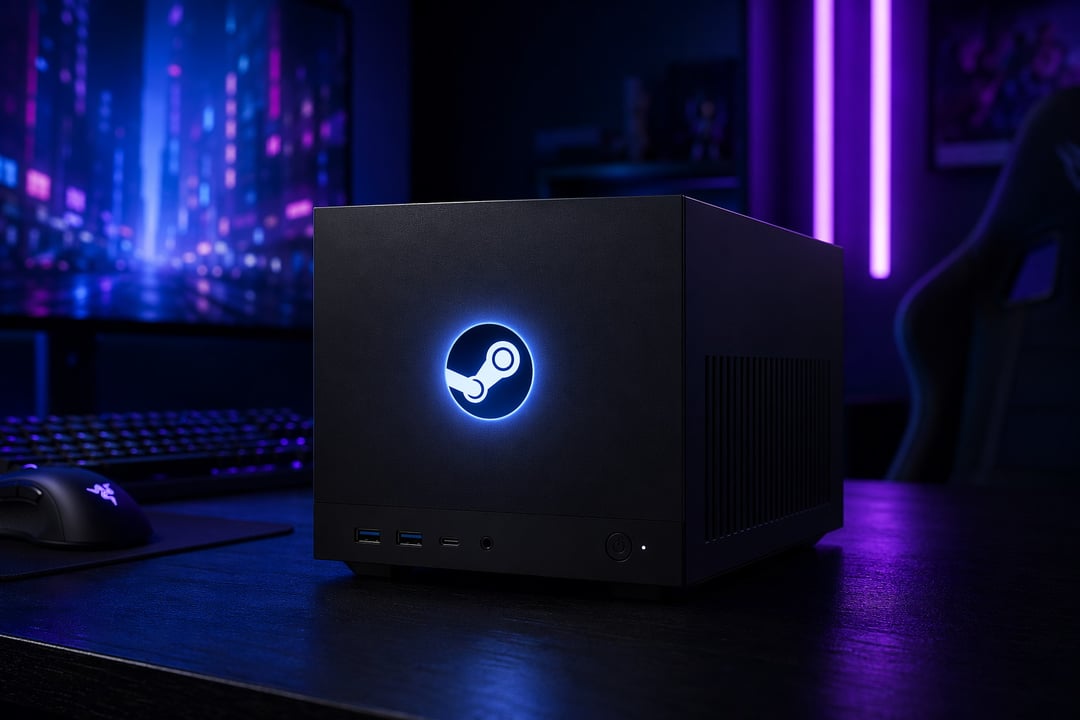
The Starting Price That Reframes the Whole Conversation
$1,049. That's where it begins.
After months of speculation, Valve has finally confirmed what the Steam Machine will cost — and if you were hoping for a budget-friendly living room PC, this isn't it. The base model with 512GB of storage starts at $1,049, while the 2TB version pushes up to $1,349. And if you don't already own Valve's Steam Controller, add another $79 on top of that.
Here's the full picture when you factor in the controller:
|
Configuration
|
Price
|
|
Steam Machine 512GB
|
$1,509
|
|
Steam Machine 512GB + Controller
|
$1,628
|
|
Steam Machine 2TB
|
$1,919
|
|
Steam Machine 2TB + Controller
|
$2,038
|
Reservations are open right now through a randomized sign-up system, with shipping expected to start before the end of the month.
Why Valve Isn't Subsidizing the Hardware
Here's the thing most people miss when they see that price tag and immediately compare it to a $499 PS5.
Sony and Microsoft don't actually sell their consoles at full component cost. They sell them at a loss — or very close to it — and make up the difference through game sales, subscriptions, and a tightly controlled ecosystem. It's a model that works, but it comes with strings attached.
Valve is doing something different. The company says it's selling the Steam Machine at essentially what it costs to build — no subsidies, no hidden recovery plan. Their reasoning? Subsidizing hardware pushes manufacturers to lock things down. Closed ecosystems are, at least in part, a financial consequence of selling hardware cheap. Valve is betting that the people who buy a Steam Machine would rather pay more upfront and own a genuinely open device than get a discount and hand over control.
You might not agree with that trade-off. But it's a coherent position.
What $1,049 Actually Gets You
The Steam Machine runs SteamOS — Valve's own Linux-based operating system — and it brings your existing PC game library with it. That's a meaningful distinction. You're not starting over. The games you already own, the hours you've already logged, they're all there.
But it goes further than that. This isn't really a console in the traditional sense. It's a full-fledged Linux PC that happens to sit in your living room. You can customize it, use it beyond gaming, and treat it like actual hardware you own rather than a locked box with a controller.
The SteamOS experience is where Valve's real work shows. The interface is polished. Controller navigation feels natural. Quick resume is built in. The overall fluidity is something that's genuinely hard to replicate on a standard Windows gaming setup, where the couch-gaming experience has always felt like an afterthought. In that sense, the Steam Machine is doing what the Steam Deck did before it — taking the best parts of PC gaming and removing the friction that usually comes with it.
This Isn't Really a Console Competitor Anymore
At over a thousand dollars, the Steam Machine has moved out of console territory and into a different conversation entirely.
The PS5 and Xbox Series X aren't really in the same category here. When you're spending this kind of money, the natural comparison shifts to compact gaming desktops and well-specced gaming laptops — products where buyers expect real horsepower and real flexibility. That's the market Valve is entering, whether it planned to or not.
And honestly, that might be fine. The Steam Machine was never going to win on price. It's not built for the buyer who wants the cheapest way into gaming. It's built for the enthusiast — the person who wants the openness of a PC, the simplicity of a console, and the convenience of a living room setup that actually works. That's a real audience. Whether it's a large enough audience to justify a four-figure entry point is the question Valve is about to find out the answer to.
One thing is clear: Valve isn't chasing the console wars by being the cheapest option on the shelf. It's not trying to be.